
Lokpal and Lokayuktas Act, 2013: Composition, Selection, Jurisdiction and Weaknesses (UPSC Notes + PYQs)
UPSC has already asked about this. Read the story with these questions in mind.
Background: the ombudsman idea
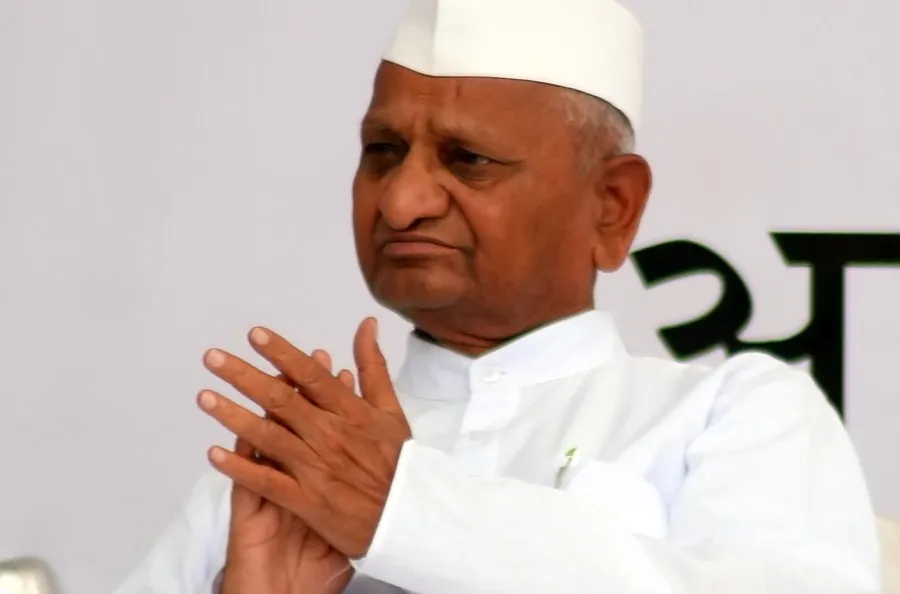
The ombudsman began in Sweden in 1809 as an officer who heard citizens’ complaints against the administration. Finland, Denmark, Norway, New Zealand and the United Kingdom followed. In India, L.M. Singhvi coined the terms Lokpal and Lokayukta in 1963, and the First Administrative Reforms Commission under Morarji Desai recommended both bodies in 1966. A Lokpal Bill was introduced eight times between 1968 and 2011, but each lapsed or was dropped. The breakthrough came after the anti-corruption movement of 2011 led by Anna Hazare, which put the demand at the centre of national debate. The Lokpal and Lokayuktas Act, 2013 received assent on 1 January 2014, and the first Chairperson, Justice Pinaki Chandra Ghose, took office in March 2019.
A long road
The term “Lokpal” was coined by L.M. Singhvi in 1963. The First Administrative Reforms Commission (1966) recommended a Lokpal and Lokayuktas; Bills lapsed eight times between 1968 and 2011. The 2011 India Against Corruption movement finally pushed Parliament to pass the Act in December 2013. Maharashtra had set up a Lokayukta back in 1971.
- 1963L.M. Singhvi coins the term
- 1966First ARC recommends Lokpal
- 1968First Lokpal Bill
- 2011Anna Hazare movement
- 2014Act in force (1 January)
- 2019First Chairperson appointed
Composition and selection
- Chairperson: a former CJI, Supreme Court judge, or an eminent person with 25 years’ anti-corruption expertise.
- Up to eight members; at least 50% judicial, and at least 50% from SC, ST, OBC, minorities and women.
- Selection committee: Prime Minister, Lok Sabha Speaker, Leader of the Opposition (or largest opposition party leader), the CJI or a judge nominated by the CJI, and an eminent jurist.
- Term five years or age 70.
Jurisdiction
Covers the Prime Minister (except on international relations, security, public order, atomic energy and space; inquiry needs a full bench and two-thirds approval, held in camera), ministers, MPs, Group A to D officers, and bodies receiving government funds or foreign contributions above set limits. It can order the CBI to investigate and has its own inquiry and prosecution wings on paper.
- ChairPrime Minister
- SpeakerLok Sabha Speaker
- OppositionLeader of the largest Opposition party
- JudiciaryCJI or a judge nominated
- JuristEminent jurist nominated by the President
Working record
Justice Pinaki Chandra Ghose became the first Lokpal in March 2019; Justice A.M. Khanwilkar took over in 2024. Most complaints have been rejected for not being in the prescribed format. The prosecution wing took years to staff, so the Lokpal leans on the CBI and CVC. In 2025 the Supreme Court stayed a Lokpal order that had treated sitting High Court judges as within its reach.
Lokpal, CVC and CBI: who does what
| Point | Lokpal | Central Vigilance Commission | CBI |
|---|---|---|---|
| Legal basis | Lokpal and Lokayuktas Act, 2013 | CVC Act, 2003 | Delhi Special Police Establishment Act, 1946 |
| Nature | Statutory ombudsman | Statutory vigilance body | Investigating agency |
| Covers | PM, Ministers, MPs, Group A-D officials, bodies funded by Government | Central government officials | Offences referred or notified |
| Link with Lokpal | Itself | Conducts preliminary inquiry of Group C and D on Lokpal reference | Lokpal can refer cases and supervise them |
| Prosecution | Prosecution Wing under the Act | Advises; does not prosecute | Prosecutes in court |
Lokayuktas and reform
Section 63 asked every State to set up a Lokayukta within a year. Most have, but powers differ widely; Karnataka’s was among the strongest when Justice Santosh Hegde’s report on illegal mining came out in 2011. Reform ideas: independent investigation staff, simpler complaint rules, time-bound sanction for prosecution, and coverage of the Prevention of Corruption Act amendments of 2018.
Prime Minister and safeguards
The Act brings the Prime Minister within the Lokpal’s reach, but with careful limits. An allegation relating to international relations, external or internal security, public order, atomic energy or space cannot be inquired into. Any other complaint against the Prime Minister can be taken up only if the full bench of the Lokpal considers it and at least two-thirds of the members agree. The inquiry is held in camera, and if the complaint is dismissed, the records are not published. These rules try to balance accountability with the need to protect the head of government from frivolous or politically motivated complaints. Members of Parliament are covered too, but not for anything said or any vote given in the House, which is protected by Article 105.
Strengths and weaknesses
| Strengths | Weaknesses |
|---|---|
| Covers the Prime Minister and MPs | Not a constitutional body; depends on government for staff and funds |
| Half the members must be judicial; at least half from SC, ST, OBC, minorities and women | Selection committee dominated by the executive side |
| Power to attach property obtained by corruption | Long delays in setting up and in filling posts |
| Time limits for inquiry and investigation | Complaints must follow a set format; many rejected on form |
| Protects honest officials against false complaints | Punishment for false complaints may deter whistle-blowers |
For Mains, link the Lokpal with other parts of the integrity framework: the Prevention of Corruption Act as amended in 2018, the Whistle Blowers Protection Act 2014, the CVC, and State Lokayuktas. An ombudsman works only when it is independent, adequately staffed and trusted by citizens.
How a complaint is handled
A complaint to the Lokpal must be filed in the prescribed form, with an affidavit and supporting details. The Lokpal first scrutinises it and may close it if it is vague, outside jurisdiction or already being handled elsewhere. If there is a case to look into, it orders a preliminary inquiry through its own Inquiry Wing or through an agency such as the CBI or, for lower-level officials, the CVC. The public servant gets a chance to be heard at this stage. If a prima facie case emerges, the Lokpal orders a full investigation, departmental proceedings, or closure. After investigation, it can direct its Prosecution Wing or the agency to file a charge sheet before a Special Court. The Act prescribes time limits for each stage, and Special Courts are expected to finish trials within a year, extendable to two. Property acquired through corruption can be provisionally attached during the process and confiscated on conviction.
The design reflects a lesson from earlier vigilance systems: inquiry without power to prosecute produces reports that gather dust. By joining inquiry, investigation and prosecution under one supervising body, the Act tries to close that gap.
Lokpal: UPSC angle
For UPSC CSE
Prelims: composition, selection committee, PM coverage, statutory status. Mains GS-II/IV: institutional design against corruption, probity in governance.
Lokpal UPSC PYQs (Prelims)
Questions UPSC has actually asked, from the official papers. Pick an option to check yourself.
Consider the following statements about Lokpal :
– I. The power of Lokpal applies to public servants of India, but not to the Indian public servants posted outside India.
– II. The Chairperson or a Member shall not be a Member of the Parliament or a Member of the Legislature of any State or Union Territory, and only the Chief Justice of India, whether incumbent or retired, has to be its Chairperson.
– III. The Chairperson or a Member shall not be a person of less than forty-five years of age on the date of assuming office as the Chairperson or Member, as the case may be.
– IV. Lokpal cannot inquire into the allegations of corruption against a sitting Prime Minister of India.
Which of the statements given above is/are correct?
The Lokpal and Lokayuktas Act, 2013 covers public servants in India and abroad. The Chairperson can be a former Chief Justice, a former Supreme Court judge, or an eminent person, so “only the CJI” is wrong. The 45-year minimum age is correct. The Prime Minister is covered, with special safeguards (for example, nothing on national security or foreign relations). Answer as per the official UPSC key · Battle IAS PYQ bankAnswer (a) & why
Mains PYQs on this topic
No UPSC Mains question from 2023-2026 is directly on this topic. Older papers (2013-2022) will be added as the Mains bank grows.
Quick quiz
The maximum number of Lokpal members (besides the chairperson) is
Half of them judicial.Answer (c)
Who is NOT on the Lokpal selection committee?
The fifth member is an eminent jurist.Answer (d)
The first Lokpal of India was
March 2019.Answer (b)
FAQs
Is the Lokpal a constitutional body?
No. It is statutory, created by the Lokpal and Lokayuktas Act, 2013.
Can the Lokpal inquire into the Prime Minister?
Yes, except on certain subjects, and only with full-bench approval by a two-thirds majority, in camera.
Does the Lokpal cover NGOs?
Yes, bodies receiving government funds or foreign contributions above prescribed limits.
Which State first set up a Lokayukta?
Maharashtra, in 1971.
Who recommended the Lokpal first?
The First Administrative Reforms Commission (1966), chaired by Morarji Desai and later K. Hanumanthaiya.
What is the tenure of the Lokpal Chairperson?
Five years from taking office or until the age of 70, whichever is earlier.
Can a Lokpal member be re-appointed?
No. A Chairperson or member is not eligible for re-appointment, and cannot hold certain government posts after demitting office.
Spotted an error? Tell us. We correct within 48 hours.
Image: ramesh_lalwani, Wikimedia Commons, CC BY 2.0
How to use this in Mains
If asked: Has the Lokpal fulfilled its purpose? Critically examine. (GS-II)
Quote: “For Mains, link the Lokpal with other parts of the integrity framework: the Prevention of Corruption Act as amended in 2018, the Whistle Blowers Protection Act 2014, the CVC, and State Lokayuktas.”
Use it: Ideal for linking Lokpal to the wider integrity framework in the conclusion.
In the news

Supreme Court: no prior approval under Section 17A needed to probe a bribe demand
In a judgment of 16 October 2026, a Supreme Court Bench of Justices S.V.N. Bhatti and N.V. Anjaria held that investigating a bribe demand by a public servant does not need prior approval under Section 17A of the Prevention of Corruption Act. Asking for a bribe, the court said, is not part of discharging official duties.
19 Oct 2026
CCPA acts against online sale of explosives: 3,940 sellers delisted from seven platforms
The Central Consumer Protection Authority (CCPA) said on 19 October 2026 that 3,940 sellers of regulated explosives such as ammonium nitrate, picric acid and PETN have been delisted from seven online platforms after its action. It has fined Dial4Trade and ExportersIndia ₹10 lakh per order, and other cases are under hearing or investigation.
19 Oct 2026
India to host 61st CIML meeting on legal metrology in New Delhi, 26–28 October
India will host the 61st meeting of the International Committee of Legal Metrology (CIML) for the first time, in New Delhi from 26 to 28 October 2026. The Department of Consumer Affairs is organising it with the International Organization of Legal Metrology (OIML), and more than 100 delegates are expected, PIB said on 19 October.
19 Oct 2026
NMC withdraws MSMER-2023: medical colleges lose the fixed penalty rulebook, annual disclosure stays
The National Medical Commission (NMC) has de-notified the Maintenance of Standards of Medical Education Regulations, 2023 (MSMER-2023) by a notification dated 14 October 2026, published in the Gazette on 16 October. Its fixed penalties, including seat cuts and fines of up to ₹5 lakh for false records, go with it. The Annual Disclosure Report stays.
19 Oct 2026