
Comptroller and Auditor General of India (Articles 148-151): Appointment, Independence, Duties and Reform (UPSC Notes + PYQs)
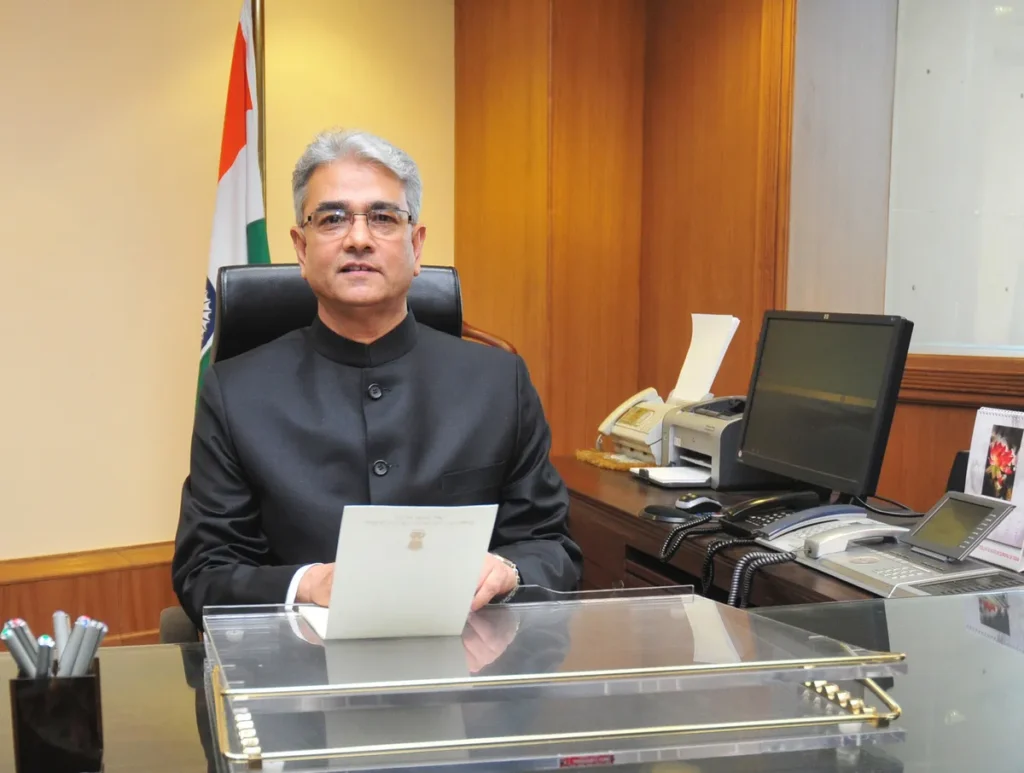
UPSC has already asked about this. Read the story with these questions in mind.
Background: the guardian of the public purse
Dr B.R. Ambedkar called the Comptroller and Auditor General probably the most important officer under the Constitution, because Parliament’s control over money is real only if someone checks how the executive spent it. The office dates back to 1860, when Sir Edward Drummond became the first Auditor General of India. The Constitution placed it in Part V (Articles 148-151) and gave it independence comparable to a Supreme Court judge. The CAG heads the Indian Audit and Accounts Department and audits the Union, the States, Union Territories with legislatures, and bodies financed by them. Its reports are examined by the Public Accounts Committee, so the CAG is often described as the friend, philosopher and guide of the PAC. The law that spells out its duties is the CAG (Duties, Powers and Conditions of Service) Act, 1971.
Why the CAG matters
Ambedkar called the CAG probably the most important officer in the Constitution. Parliament votes money; the CAG checks whether it was spent as voted, lawfully and with value for money. Reports on 2G spectrum (2010) and coal block allocation (2012) showed how much an audit can shape public debate.
Independence safeguards
- Removal only on proved misbehaviour or incapacity, by the same procedure as a Supreme Court judge.
- Salary and conditions fixed by Parliament and cannot be varied to the CAG’s disadvantage.
- Not eligible for further office under the Union or any State after tenure.
- Administrative expenses charged on the Consolidated Fund of India.
- Art 148Appointment, removal, salary
- Art 149Duties and powers
- Art 150Form of accounts
- Art 151Reports to legislature
Duties
- Audits receipts and expenditure of the Union, States and UTs with legislatures.
- Audits government companies and bodies substantially financed by government, under the CAG (DPC) Act, 1971.
- Submits Union reports to the President (Art. 151(1)) and State reports to the Governor (Art. 151(2)), who lay them before the legislature.
- Certifies the net proceeds of taxes.
Types of audit
Compliance audit (were rules followed?), financial audit (are accounts true and fair?) and performance audit (did the scheme achieve its goals economically and efficiently?). Performance audits are not explicitly in the Constitution but grew through practice.
Legality, regularity and propriety
The CAG’s work goes beyond checking whether money was spent according to law. Legal and regularity audit asks whether the expenditure was authorised by the legislature and followed the rules. Propriety audit asks whether it was wise, faithful and economical: whether an officer spent public money as carefully as a prudent person would spend his own. Performance audit asks whether a scheme achieved its aims efficiently and effectively. Propriety and performance audits are discretionary, not compulsory, but they produce the reports that draw most public attention, on spectrum allocation, coal blocks, defence purchases and flagship schemes. In a Mains answer, use these three layers to show that the CAG examines the quality of spending, not just its arithmetic.
| Type | Question asked | Mandatory? |
|---|---|---|
| Legal and regularity | Was it authorised and per rules? | Yes |
| Propriety | Was it prudent and economical? | No (discretionary) |
| Performance | Did it achieve results efficiently? | No (discretionary) |
| Commercial | Accounts of government companies | Yes, with statutory auditors |
Limits and reforms
- No power to audit secret service expenditure in detail.
- Accounts and audit were separated in 1976, but delays in reports reduce impact.
- Panchayats and municipalities: CAG gives technical guidance, but coverage is thin.
- Suggestions: audit of PPP projects and bodies receiving public money; a time limit for governments to respond.
- 1CAG audits accounts
- 2Report to President or Governor
- 3Laid before legislature
- 4Public Accounts Committee examines
- 5Action taken notes by ministries
CAG and Parliament: the accountability chain
Under Article 151, the CAG’s reports on Union accounts go to the President, who lays them before Parliament; State reports go to the Governor and the State legislature. Three kinds of reports are commonly mentioned: on appropriation accounts, on finance accounts and on public undertakings. The Public Accounts Committee, chaired by convention by a member of the Opposition, examines them, calls officials, and reports to the House. Ministries must then submit action taken notes. The CAG also certifies the net proceeds of taxes under Article 279, which is why the 16th Finance Commission asked for this certified figure to be disclosed every year.
CAG compared with auditors abroad
| Feature | India (CAG) | UK (Comptroller and Auditor General) |
|---|---|---|
| Role | Auditor; earlier also kept accounts | Auditor and controller of issues |
| Control over release of funds | None | Yes, approves withdrawals |
| Relation to legislature | Reports to Parliament through President | Officer of the House of Commons |
| Supporting office | Indian Audit and Accounts Department | National Audit Office |
The Indian CAG is a “comptroller” in name only: it cannot stop money from being withdrawn, it can only audit afterwards.
Debates and reforms for Mains
- Overreach charge: governments argue that presumptive loss figures, as in the 2G report, hurt decision-making and make officials risk-averse.
- Gaps: limited audit of PPPs, panchayats and bodies with private partners; delays in tabling State reports; the CAG is appointed by the executive without a collegium-type committee.
- Ideas: a statutory selection committee, audit of PPP projects, time limits for tabling and for action taken notes, and greater use of data analytics for real-time audit.
Cag: UPSC angle
For UPSC CSE
Prelims: term, removal, to whom reports go, PAC link. Mains GS-II: accountability institutions; performance audit; “policy audit” debate.
Cag UPSC PYQs (Prelims)
Questions UPSC has actually asked, from the official papers. Pick an option to check yourself.
In India, other than ensuring that public funds are used efficiently and for intended purpose, what is the importance of the office of the Comptroller and Auditor General (CAG)?
– 1. CAG exercises exchequer control on behalf of the Parliament when the President of India declares national emergency/financial emergency.
– 2. CAG reports on the execution of projects or programmes by the ministries are discussed by the Public Accounts Committee.
– 3. Information from CAG reports can be used by investigating agencies to press charges against those who have violated the law while managing public finances.
– 4. While dealing with the audit and accounting of government companies, CAG has certain judicial powers for prosecuting those who violate the law.
Which of the statements given above is/are correct?
CAG reports go to the Public Accounts Committee, and agencies such as the CBI have used them to build cases (2G, coal). The CAG has no exchequer control (unlike Britain’s Comptroller), even in an emergency, and no judicial or prosecuting powers. Answer as per the official UPSC key · Battle IAS PYQ bankAnswer (c) & why
Consider the following statements :
The Parliamentary Committee on Public Accounts
– 1. consists of not more than 25 Members of the Lok Sabha
– 2. scrutinizes appropriation and finance accounts of the Government
– 3. examines the report of the Comptroller and Auditor General of India
Which of the statements given above is/are correct?
The PAC has 22 members: 15 from the Lok Sabha and 7 from the Rajya Sabha. It examines the government’s appropriation and finance accounts and the CAG’s audit reports. The “25 Lok Sabha members” figure is wrong. Answer as per the official UPSC key · Battle IAS PYQ bankAnswer (b) & why
Mains PYQs on this topic
Questions from the official UPSC Mains papers (2023-2026 in the Battle IAS Mains bank), newest first. Each links to a model answer.
- UPSC Mains 2024 · GS Paper II · Q4 · 10 marks
“The duty of the Comptroller and Auditor General is not merely to ensure the legality of expenditure but also its propriety.” Comment.
Quick quiz
The term of the CAG is
Under the CAG (DPC) Act, 1971.Answer (b)
The CAG submits audit reports relating to the Union to
Article 151(1).Answer (c)
The CAG is removed
Article 148(1).Answer (b)
FAQs
Who appoints the CAG?
The President, by warrant under hand and seal.
Can the CAG hold another government post after retirement?
No. Article 148(4) bars further office under the Union or any State.
Which committee examines CAG reports?
The Public Accounts Committee (and COPU for public undertakings).
Does the CAG audit panchayats?
The CAG provides technical guidance and supervision; primary audit is often by State local fund audit departments.
Who appoints the CAG?
The President, by warrant under hand and seal. There is no statutory selection committee.
Does the CAG audit private companies?
Not ordinarily. It audits government companies and bodies substantially financed by government, and can audit others only where law or agreement provides.
What is propriety audit?
An audit that asks whether spending was prudent and economical, beyond whether it was legally authorised.
Spotted an error? Tell us. We correct within 48 hours.
Image: Ministry of Finance of India, Wikimedia Commons, GODL-India
How to use this in Mains
If asked: UPSC Mains 2024, GS-II: “The duty of the Comptroller and Auditor General is not merely to ensure the legality of expenditure but also its propriety.” Comment.
Quote: “Ambedkar called the CAG probably the most important officer in the Constitution.”
Use it: Use as your intro line.
In the news

Supreme Court: no prior approval under Section 17A needed to probe a bribe demand
In a judgment of 16 October 2026, a Supreme Court Bench of Justices S.V.N. Bhatti and N.V. Anjaria held that investigating a bribe demand by a public servant does not need prior approval under Section 17A of the Prevention of Corruption Act. Asking for a bribe, the court said, is not part of discharging official duties.
19 Oct 2026
CCPA acts against online sale of explosives: 3,940 sellers delisted from seven platforms
The Central Consumer Protection Authority (CCPA) said on 19 October 2026 that 3,940 sellers of regulated explosives such as ammonium nitrate, picric acid and PETN have been delisted from seven online platforms after its action. It has fined Dial4Trade and ExportersIndia ₹10 lakh per order, and other cases are under hearing or investigation.
19 Oct 2026
India to host 61st CIML meeting on legal metrology in New Delhi, 26–28 October
India will host the 61st meeting of the International Committee of Legal Metrology (CIML) for the first time, in New Delhi from 26 to 28 October 2026. The Department of Consumer Affairs is organising it with the International Organization of Legal Metrology (OIML), and more than 100 delegates are expected, PIB said on 19 October.
19 Oct 2026
NMC withdraws MSMER-2023: medical colleges lose the fixed penalty rulebook, annual disclosure stays
The National Medical Commission (NMC) has de-notified the Maintenance of Standards of Medical Education Regulations, 2023 (MSMER-2023) by a notification dated 14 October 2026, published in the Gazette on 16 October. Its fixed penalties, including seat cuts and fines of up to ₹5 lakh for false records, go with it. The Annual Disclosure Report stays.
19 Oct 2026