
UPSC Mains 2020 GS Paper 3 Q4: model answer
What are the challenges and opportunities of food processing sector in the country? How can income of the farmers be substantially increased by encouraging food processing?
What the question wants
Discuss the challenges and opportunities of food processing, and how promoting it can substantially raise farmers' incomes.
How to structure it
Challenges, opportunities, income.
- Status
- Challenges
- Opportunities
- Income link
- Way forward
How to think it through
Challenges: low processing, cold chain, fragmented supply, regulation, credit. Opportunities: large output base, young consumers, exports, PLI and PMFME, millets and ready-to-eat demand. Income: value addition, lower wastage, assured buyers, rural jobs, FPO-owned units.
Model answer
India is the world's largest milk producer and second in fruit and vegetables, yet only a small share of its produce is processed. That gap is both the challenge and the opportunity.
Challenges
- Low processing level and high wastage.
- Cold chain gaps and seasonal, fragmented raw material.
- Costly credit, multiple licences and weak branding for small units.
Opportunities
- Huge raw material base and a young, urbanising market.
- Ready-to-eat and millet foods; quick-commerce growth.
- Exports of marine products, spices and processed fruit.
- Policy support: PLI, PMFME and 100% FDI.
How processing raises farmers' income
- Value addition: tomato to puree, milk to cheese.
- Less distress sale in gluts.
- Assured buyers through contracts with processors.
- Rural jobs for family members.
- Better prices for B-grade produce that the table market rejects.
- FPO-owned units, as with Sahyadri Farms in Nashik, keep the processing margin with farmers.
Way forward
Cluster-level pack houses, steady contracts and cheap credit for farmer-owned units.
Processing turns a perishable crop into a storable asset; that is where farm income grows.
Draw: A value-addition ladder: raw crop → graded → processed → branded, with price at each step.
Keywords, cases and data to drop in
processing level, value addition, PLISFPI, PMFME, ODOP, Operation Greens, contract farming, FPO-owned units, exports.
Where most answers lose marks
- Skipping the farmer-income part, which the question emphasises.
Related Mains PYQs
- Explain by giving two examples, how biotechnology has helped the Indian farmers in processing their perishable crops. UPSC 2026 · GS-III
- Examine the scope of the food processing industries in India. Elaborate the measures taken by the government in the food processing industries… UPSC 2025 · GS-III
- Elaborate the scope and significance of the food processing industry in India. UPSC 2022 · GS-III
- What are the main bottlenecks in upstream and downstream process of marketing of agricultural products in India? UPSC 2022 · GS-III
Fresh examples from current affairs
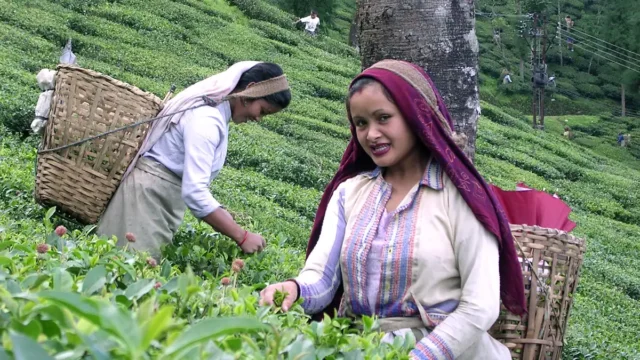
FSSAI proposes residue limits for acetamiprid and imidacloprid in tea
On 17 October 2026 FSSAI explained draft limits for two insecticides in tea: 20 ppm for acetamiprid and 50 ppm for imidacloprid. The draft, published in the Gazette on 16 October, amends the rules on contaminants, toxins and residues. India’s proposed acetamiprid limit is lower than Japan’s 30 ppm and the USA’s 50 ppm.
UPSC angle: Prelims: MRL, neonicotinoids, Insecticides Act 1968, FSS Act 2006. · Mains GS-III: pesticide regulation and food safety.
17 Oct 2026
Backgrounder: makhana, from wetland crop to superfood
A PIB Backgrounder of 19 August 2026 traces makhana's rise from a Bihar wetland crop to a global superfood. India is the largest producer, with 80,590 tonnes in 2025-26 as per second advance estimates. A National Makhana Board was launched in Bihar in September 2025, and a ₹476.03 crore Central Sector Scheme runs from 2025-26 to 2030-31.
UPSC angle: Prelims: makhana facts.
19 Aug 2026
Codex adopts three Indian-led spice standards: large cardamom, coriander, vanilla
The Codex Alimentarius Commission adopted three global standards, for large cardamom, coriander and vanilla, at its 49th session (CAC49) in Geneva from 6 to 10 July 2026, the Commerce Ministry said on 16 July. They were finalised by the India-hosted Codex Committee on Spices and Culinary Herbs. India will also co-chair a new working group.
UPSC angle: Prelims: Codex.
16 Jul 2026
PMFME crosses 2 lakh credit-linked beneficiaries
The Pradhan Mantri Formalisation of Micro Food Processing Enterprises (PMFME) Scheme has sanctioned loans to more than two lakh micro food processing enterprises, MoFPI said on 11 July 2026. Project investment exceeds ₹20,300 crore. Nearly 90% of beneficiaries are first-generation entrepreneurs and 44% are women; the scheme has created nearly 11 lakh jobs.
UPSC angle: Prelims: PMFME.
11 Jul 2026Learn the concept
Question text as printed in the official UPSC Civil Services (Main) question paper. The model answer is original Battle IAS work; use it to learn structure, not to memorise.
Want every PYQ in one place? See the Battle IAS PYQ Book.