
UPSC Mains 2026 GS3 Q5: model answer
Explain by giving two examples, how biotechnology has helped the Indian farmers in processing their perishable crops.
What the question wants
Exactly what is asked: two worked examples of biotechnology in post-harvest processing of perishables, each with the farmer benefit.
How to structure it
Intro: scale of post-harvest loss. Body: example 1 and example 2 in depth, with one or two shorter mentions. Conclusion: scale through FPOs and food parks.
- 1Example 1 and example 2 in depth, with one or two shorter mentions
Model answer
Fruit, vegetables and milk are where Indian farmers lose most after harvest. Biotechnology slows spoilage and turns surplus into longer-lasting products.
- 1Perishable crop at harvest
- 2Ethylene-controlled ripening / 1-MCP delay
- 3Starter cultures and enzymes for processing
- 4Longer shelf life, higher-value product
- 5Better price for the farmer
Example 1: controlled ripening. Ripening is driven by the hormone ethylene. Calcium carbide, once common, is banned by FSSAI. Ethylene chambers now ripen mangoes and bananas evenly, and 1-MCP delays ripening for long hauls. Banana growers in Maharashtra and Andhra Pradesh reach distant cities and exporters this way.
Example 2: fermentation and enzymes. Indian-developed starter cultures turn surplus milk into curd, cheese and probiotic drinks for cooperatives. Pectinase and cellulase raise juice yield, so over-ripe fruit is not wasted.
Also: CFTRI's edible coatings and BARC's irradiation that stops onions and potatoes sprouting.
These reach farmers fastest through FPOs and PM Kisan Sampada units; one grower cannot afford a ripening chamber alone.
Keywords, cases and data to drop in
post-harvest loss ethylene ripening chambers calcium carbide ban (FSSAI) 1-MCP starter cultures enzymes: pectinase edible coatings (CSIR-CFTRI) radiation processing (BARC) PM Kisan Sampada Yojana
Where most answers lose marks
- Giving production examples (Bt cotton, tissue culture) when the question asks about processing perishables.
- Giving more than two examples superficially instead of two in depth.
- Forgetting to state the benefit to the farmer.
Same theme in Prelims
Which of the following statements with regard to genetic medicine is/are correct ?
- 1. Genetic medicines correct/compensate for the faulty genes responsible for disease.
- 2. Engineered viruses and lipid nanoparticles are used as carriers of the genetic medicine.
- 3. Genetic medicines alter the entire DNA sequence.
Select the answer using the code given below :
Answer (c) & explanation
Statements 1 and 2 are correct (c). Statement 1 is right: genetic medicines correct or make up for the faulty genes behind a disease, by adding a working copy, silencing a bad gene or editing a small stretch. Statement 2 is right: they are delivered by engineered viruses, such as AAV, or lipid nanoparticles, the carrier used in mRNA vaccines. Statement 3 is wrong: no therapy rewrites the entire genome. So options (a), (b) and (d) fail.
Notice India's progress: its first home-grown CAR-T cell therapy for cancer, NexCAR19 (2023), and a successful gene therapy trial for haemophilia at CMC Vellore. CRISPR-based Casgevy was the first approved gene-editing cure, for sickle cell disease.
Answer as per the official UPSC answer key.
Which of the following statements with regard to GenomeIndia Project is/are correct ?
- 1. It is a part of the Human Genome Project.
- 2. The project is funded by the Department of Biotechnology (DBT), Government of India.
- 3. Its primary aim is to build a catalogue of genetic diversity of the Indian population.
Select the answer using the code given below :
Answer (b) & explanation
Statements 2 and 3 are correct (b). Statement 2 is right: GenomeIndia (2020) is funded by the Department of Biotechnology. Statement 3 is right: it sequenced 10,000 genomes from many Indian communities to build a catalogue of the country's genetic variation, and the data was released in 2025. Statement 1 is wrong: the international Human Genome Project was a separate effort that ended in 2003. So options (a), (c) and (d) fail.
Notice the uses: finding gene variants behind diseases common in India, such as sickle cell and thalassaemia, and building personalised medicine. The data is stored at the Indian Biological Data Centre in Faridabad. A larger follow-up aims to sequence one million genomes.
Answer as per the official UPSC answer key.
Which among the following is/are the objective(s) of the Rainfed Area Development (RAD) initiative under the National Mission for Sustainable Agriculture (NMSA) ?
- 1. Encouraging monoculture in rainfed areas
- 2. Increasing rice cultivation in irrigated regions
- 3. Enhancing productivity and minimising climatic risks through Integrated Farming Systems (IFS)
Select the answer using the code given below :
Answer (d) & explanation
Only objective 3 belongs to RAD (d). Item 3 is right: Rainfed Area Development (RAD), an area-based part of the National Mission for Sustainable Agriculture (NMSA), promotes Integrated Farming Systems. It grows crops along with horticulture, livestock, fishery and agro-forestry, so a farmer in a dry area has more than one income source when the rain fails. Item 1 is wrong: monoculture raises risk. Item 2 is wrong: irrigated rice has nothing to do with a rainfed programme.
Notice why it matters: about half of India's net sown area is rainfed, growing much of its pulses, millets and oilseeds. NMSA is one of the eight missions under the National Action Plan on Climate Change (2008). Related: Per Drop More Crop for micro-irrigation.
statement 2 talks of "irrigated regions" in a scheme named "Rainfed". Read the scheme's own name before the statements.
Answer as per the official UPSC answer key.
Fresh examples from current affairs
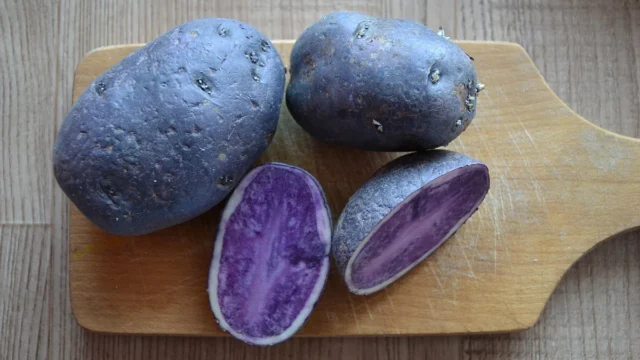
Kufri Jamunia: ICAR-CPRI’s purple potato to fight hidden hunger
A PIB backgrounder of 18 October 2026 puts the spotlight on Kufri Jamunia, a purple-fleshed potato bred by ICAR’s Central Potato Research Institute and released in 2024. It has nearly twice the Vitamin C of a common potato and several times more zinc and iron, along with antioxidants called anthocyanins. The idea is clever: instead of asking people to change what they eat, make the food they already eat more nutritious. That is biofortification.
UPSC angle: Prelims: Kufri Jamunia, CPRI, anthocyanins, biofortification vs fortification. · Mains GS-III: nutrition security; GS-II: hunger.
18 Oct 2026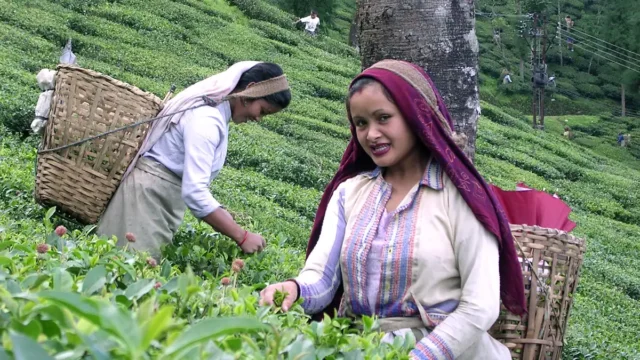
FSSAI proposes residue limits for acetamiprid and imidacloprid in tea
On 17 October 2026 FSSAI explained draft limits for two insecticides in tea: 20 ppm for acetamiprid and 50 ppm for imidacloprid. The draft, published in the Gazette on 16 October, amends the rules on contaminants, toxins and residues. India’s proposed acetamiprid limit is lower than Japan’s 30 ppm and the USA’s 50 ppm.
UPSC angle: Prelims: MRL, neonicotinoids, Insecticides Act 1968, FSS Act 2006. · Mains GS-III: pesticide regulation and food safety.
17 Oct 2026
First commercial bio-based PLA plastic under BioE3: Balrampur Chini Mills pilot
On 24 September 2026 the Department of Biotechnology launched the commercial use of bio-based biodegradable plastic made of Polylactic Acid (PLA) under the BioE3 framework. A ₹75 crore BIRAC grant supports a 100 TPA pilot R&D facility for PLA and co-polymers by Balrampur Chini Mills at Kumbhi, Uttar Pradesh.
UPSC angle: Prelims: PLA feedstock; BioE3 expansion.
24 Sep 2026
7th National Formulary of India launched; new Biovigilance Programme approved
On 21 September 2026 the Health Ministry launched the 7th edition of the National Formulary of India, with 653 drugs, and announced that the Government has approved a Biovigilance Programme of India. Under it, the Indian Pharmacopoeia Commission will monitor adverse events linked to medicines and biological products used in organ and tissue transplantation.
UPSC angle: Prelims: IPC's role; what pharmacovigilance means.
21 Sep 2026Learn the concept
Question text as printed in the official UPSC question paper: https://www.upsc.gov.in/sites/default/files/QP-CSM-26-010926-GENERAL-STUDIES-PAPER-III.pdf The model answer is original Battle IAS work; use it to learn structure, not to memorise.