
UPSC Mains 2023 GS1 Q4: model answer
Discuss the consequences of climate change on the food security in tropical countries.
What the question wants
How climate change hits availability, access, utilisation and stability of food in tropical countries.
How to structure it
Intro: tropical countries are closer to crop heat limits and depend on rain-fed farming. Body: (1) Availability: heat stress cuts yields of wheat, rice, maize; erratic monsoon, droughts and floods; (2) Fisheries and livestock: warming seas, coral loss, heat-stressed cattle; (3) Pests and diseases (locusts); (4) Access: price spikes, rural incomes; (5) Nutrition: lower protein and zinc in crops under high CO2; (6) Stability: frequent shocks. Conclusion: adaptation through resilient seeds, irrigation, insurance and safety nets.
- 1(1) Availability: heat stress cuts yields of wheat, rice, maize
- 2Erratic monsoon, droughts and floods
- 3(2) Fisheries and livestock: warming seas, coral loss, heat-stressed cattle
- 4(3) Pests and diseases (locusts)
- 5(4) Access: price spikes, rural incomes
- 6(5) Nutrition: lower protein and zinc in crops under high CO2
- 7(6) Stability: frequent shocks
Model answer
Most tropical countries already farm near the heat limits of crops, rely on rain and have many poor households, so climate change hits their food security hardest.
- Lower yields: each degree of warming cuts wheat, rice and maize yields; India's March 2022 heatwave reduced wheat output.
- Erratic rain: droughts in the Horn of Africa and floods in Pakistan (2022) destroy crops and stocks.
- Fisheries: warming seas and coral bleaching shift fish stocks away from tropical coasts.
- Livestock: heat stress reduces milk yield.
- Pests: warm, wet spells helped the 2019–20 desert locust outbreak across East Africa and South Asia.
- Nutrition: higher CO2 lowers protein, iron and zinc in grains.
- Access: price spikes and lost farm incomes push the poor into hunger.
- Sea-level rise: salinity in deltas like the Mekong and Sundarbans.
Climate-resilient seeds, micro-irrigation, crop insurance, diversified diets and strong public distribution can protect food security.
Keywords, cases and data to drop in
heat stress erratic monsoon locusts nutritional quality salinity
Where most answers lose marks
- Writing only about crop yields.
- No tropical examples.
Fresh examples from current affairs
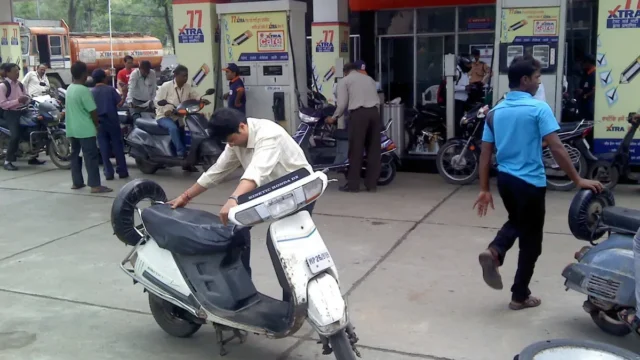
WPI inflation rises to 11.39% in September 2026, led by fuel and food
Wholesale Price Index inflation (base 2022-23) rose to 11.39% in September 2026, provisional, from 9.92% in August. Fuel and Power led at 25.85%, with mineral oils at 40.02%. Primary Articles rose 8.67%, Manufactured Products 9.76% and the WPI Food Index 8.66%. July's final figure stayed at 9.78%.
UPSC angle: Prelims: base year, group weights, monthly figures, release schedule. · Mains GS-III: inflation, its causes and control.
14 Oct 2026
Pre-COP31 in Fiji: India seeks “flexibility, pragmatism and mutual respect” and scaled-up climate finance
At the Pre-COP31 meeting in Nadi, Fiji, India's Environment Minister asked for flexibility, pragmatism and mutual respect so that COP31 gives an ambitious and balanced result. India said higher ambition must come with climate finance, technology and capacity building, and that each country's path must be respected. COP31 is in Antalya, Türkiye, in November.
UPSC angle: Prelims: COP venues, Paris articles. · Mains GS-III: climate change; GS-II: international agreements.
8 Oct 2026
India–Japan Joint Crediting Mechanism gets an operational manual under Article 6.2 of the Paris Agreement
India and Japan launched the Operational Manual for their Joint Crediting Mechanism in New Delhi on 30 September 2026. Under Article 6.2 of the Paris Agreement, the mechanism lets Japanese low-carbon technology be deployed in India and the resulting emission cuts be issued as credits. The manual sets the full project cycle, from idea note to credit issuance.
UPSC angle: Prelims: Article 6 sub-parts. · Mains GS-III: carbon markets.
5 Oct 2026
Sugar stock limits cut to 1,000 quintals and 15 days ahead of festivals
The Centre has capped sugar dealers' stocks at 1,000 quintals and a holding period of 15 days from 15 October to 30 November 2026, to stop hoarding in the festive season. Kolkata's metro area and Assam get a 2,000-quintal limit. Retail sugar prices are down 15 per cent from the August peak and ex-mill prices about 28 per cent.
UPSC angle: Mains: Stock limits vs market efficiency.
1 Oct 2026Learn the concept
Question text as printed in the official UPSC question paper: https://www.upsc.gov.in/sites/default/files/QP-CSM-23-GENERAL-STUDIES-PAPER-I-180923.pdf The model answer is original Battle IAS work; use it to learn structure, not to memorise.