
Self-Reliance in Pulses and Edible Oils: Mission for Aatmanirbharta in Pulses (2025-31), National Mission on Edible Oils (Oilseeds and Oil Palm), Import Dependence and the Way Forward (UPSC Notes + PYQs)
UPSC has already asked about this. Read the story with these questions in mind.
Two gaps on the Indian plate
A plate of dal-chawal with a vegetable cooked in oil looks simple, yet two of its three items depend on foreign farms. India grows more pulses than any other country, about a quarter of world output, yet it still buys several million tonnes a year from Canada, Australia, Myanmar, Mozambique and other countries. With edible oil the picture is starker: India imports more than half of what it consumes, making it one of the world’s largest importers of edible oil. Palm oil comes from Indonesia and Malaysia, soybean oil from Argentina and Brazil, and sunflower oil from Russia and Ukraine. The import bill runs into lakhs of crores of rupees over a few years.
This dependence hurts in three ways. It drains foreign exchange. It exposes kitchens to shocks abroad: the war in Ukraine in 2022 and export curbs by Indonesia sent edible oil prices soaring. And it means that money spent on imports does not reach Indian farmers. Protein deficiency also persists in many households; pulses are the cheapest source of protein for a largely vegetarian population.
- PulsesLargest producer, still imports
- Edible oil55-60% imported
- Pulses Mission2025-31, ₹11,440 crore
- NMEOOil Palm 2021, Oilseeds 2024
How we got here
The Green Revolution of the 1960s focused on wheat and rice, backed by assured procurement at minimum support price (MSP), subsidised fertiliser and canal irrigation. Pulses and oilseeds were left to rain-fed, poorer land with little irrigation and high risk. Their area stagnated while population and incomes grew.
There was one success story. The Technology Mission on Oilseeds (1986), often called the Yellow Revolution, brought better seeds, processing and price support, and India became nearly self-sufficient in edible oil by the early 1990s. But after import duties were cut in the late 1990s, cheap palm oil flooded in, domestic prices fell and farmers moved away. Dependence crept back. In pulses, a mission-mode push after 2016, with buffer stocks and higher MSP, lifted output to record levels, but demand kept rising.
Mission for Aatmanirbharta in Pulses
Announced in the Union Budget 2025-26 and approved by the Cabinet on 1 October 2025, this six-year mission runs from 2025-26 to 2030-31 with an outlay of about ₹11,440 crore.
| Item | Target by 2030-31 |
|---|---|
| Production | 350 lakh tonnes |
| Area | 310 lakh hectares |
| Yield | 1,130 kg per hectare |
Key features:
- Focus crops: tur (arhar), urad and masoor, where imports are highest.
- Assured procurement: central agencies NAFED and NCCF will buy 100% of these three crops from registered farmers at MSP for four years.
- Seeds: high-yielding, climate-resilient varieties; free seed kits to farmers; seed hubs.
- Area expansion: pulses in rice fallows (land left empty after the kharif rice harvest) and as intercrops.
- Processing: support for 1,000 processing and packaging units to cut post-harvest losses and raise farmers’ share.
- Cluster approach: implementation in selected clusters across districts.
- 1Better seeds and free seed kits
- 2Area expansion into rice fallows
- 3Assured MSP procurement of tur, urad, masoor
- 4Processing units near clusters
- 5350 lakh tonnes by 2030-31
National Mission on Edible Oils
The edible oil effort has two arms:
| Arm | Launched | Outlay | Main idea |
|---|---|---|---|
| NMEO-Oil Palm | August 2021 | ₹11,040 crore | Expand oil palm, especially in the North-East and Andaman and Nicobar Islands; a viability price protects farmers when global palm prices fall |
| NMEO-Oilseeds | October 2024 | ₹10,103 crore (2024-25 to 2030-31) | Raise output of mustard, groundnut, soybean, sunflower, sesame; use rice and potato fallows; improve seeds and extraction from secondary sources like rice bran and cottonseed |
NMEO-Oilseeds aims to raise primary oilseed production from 39 million tonnes (2022-23) to 69.7 million tonnes by 2030-31. Together with NMEO-Oil Palm, it targets domestic edible oil output of 25.45 million tonnes, about 72% of projected domestic need. It uses the SATHI portal for tracking quality seed and supports value-chain partners such as farmer producer organisations and cooperatives.
The oil palm debate
Oil palm gives far more oil per hectare than any other oilseed, which is why it is attractive. But it needs a lot of water, takes four to five years to start yielding and locks farmers into one crop for decades. Environmental groups warn that expanding it in the biodiversity-rich North-East and the Andaman Islands could harm forests and indigenous land. Supporters reply that the mission is meant for already degraded or cultivated land and that the viability price reduces risk for farmers. A UPSC answer should present both views.
Why it matters
- Food and nutrition security: pulses are a key protein source and fix nitrogen in the soil.
- Foreign exchange: cutting imports saves tens of thousands of crores.
- Price stability: domestic supply cushions consumers against global shocks.
- Farmer income and diversification: moving some area away from water-guzzling paddy and wheat in Punjab and Haryana helps groundwater too.
- Climate and soil: pulses need little water and fertiliser and improve soil health.
Challenges
- Rain-fed risk: most pulses and oilseeds grow without irrigation, so yields swing with the monsoon.
- MSP bias: open-ended procurement of wheat and rice makes them safer bets than pulses or oilseeds.
- Unstable trade policy: frequent changes in import duties and stock limits confuse farmers and processors.
- Low yields and old seeds: seed replacement rates are low; GM mustard remains stuck in courts and regulation.
- Pests and post-harvest losses: pod borer in tur and poor storage reduce output.
- Procurement capacity: NAFED and NCCF must buy at scale across many States, a big logistical task.
- Rain-fed, risky cultivation
- MSP and procurement bias towards rice and wheat
- Low seed replacement
- Changing import duties
- Rising consumption
Way forward
Keep a stable, predictable import duty regime linked to domestic prices. Make the MSP and procurement promise credible, using price deficiency payments where buying is not practical. Push seed replacement with new varieties and decide on genome-edited and GM oilseeds on scientific evidence. Use rice fallows in eastern India for lentil, chickpea and mustard. Offer crop diversification incentives in Punjab and Haryana. Strengthen FPOs and local processing so that farmers capture value. Promote awareness on healthy oil consumption, as Indians’ per capita edible oil use has risen fast and adds to both imports and lifestyle disease.
PYQ trend
Prelims has asked about edible oil imports, pulse cultivation and agricultural imports. Mains GS-III asks about technology missions, food security, buffer stocks and crop diversification.
Pulses and Edible Oil Missions: UPSC angle
For UPSC CSE
Prelims: mission targets, crops, imports. Mains GS-III: food security, cropping patterns, MSP and procurement, technology missions, import dependence.
Pulses and Edible Oil Missions UPSC PYQs (Prelims)
Questions UPSC has actually asked, from the official papers. Pick an option to check yourself.
Consider the following statements :
– 1. The quantity of imported edible oils is more than the domestic production of edible oils in the last five years.
– 2. The Government does not impose any customs duty on all the imported edible oils as a special case.
Which of the statements given above is/are correct ?
India imports roughly 55-60% of the edible oil it consumes, more than it produces at home. The government changes customs duty on crude and refined edible oils from time to time to balance consumers and farmers; it has never exempted all edible oils from duty as a rule. Answer as per the official UPSC key · Battle IAS PYQ bankAnswer (a) & why
With reference to pulse production in India, consider the following statements :
– 1. Black gram can be cultivated as both kharif and rabi crop.
– 2. Green gram alone accounts for nearly half of pulse production.
– 3. In the last three decades, while the production of kharif pulses has increased, the production of rabi pulses has decreased.
Which of the statements given above is/are correct ?
Black gram (urad) is grown in both kharif and rabi, especially in the south. Gram (chickpea), not green gram, gives nearly half of India’s pulses. Rabi pulse output, led by chickpea, has in fact grown strongly, so statement 3 is reversed. Answer as per the official UPSC key · Battle IAS PYQ bankAnswer (a) & why
Among the agricultural commodities imported by India, which one of the following accounts for the highest imports in terms of value in the last five years?
Edible oils (mainly palm oil from Indonesia and Malaysia, and soybean and sunflower oil) are India’s biggest farm import, often $15-20 billion a year. India imports about 55-60% of the edible oil it uses. Pulses come a distant second. Answer as per the official UPSC key · Battle IAS PYQ bankAnswer (d) & why
Mains PYQs on this topic
Questions from the official UPSC Mains papers (2023-2026 in the Battle IAS Mains bank), newest first. Each links to a model answer.
- UPSC Mains 2026 · GS Paper III · Q3 · 10 marks
Describe the various Technology Missions initiated in Indian agriculture and examine their role in food security.
- UPSC Mains 2026 · GS Paper III · Q13 · 15 marks
How Indian agriculture has been transformed from food scarcity to food surplus level? Explain the various government policies implemented for diversification of Indian agriculture.
- UPSC Mains 2024 · GS Paper III · Q14 · 15 marks
Elucidate the importance of buffer stocks for stabilizing agricultural prices in India. What are the challenges associated with the storage of buffer stock? Discuss.
Quick quiz
Under the Mission for Aatmanirbharta in Pulses, assured procurement covers
Tur, urad and masoor for four years.Answer (b)
The Yellow Revolution is associated with
Technology Mission on Oilseeds, 1986.Answer (b)
NMEO-Oil Palm focuses especially on
These regions have suitable climate and land.Answer (b)
FAQs
What is the Mission for Aatmanirbharta in Pulses?
A six-year mission (2025-26 to 2030-31) with ₹11,440 crore to raise pulse output to 350 lakh tonnes through seeds, area expansion, assured procurement and processing.
How much edible oil does India import?
More than half of its need, mainly palm, soybean and sunflower oil.
What is NMEO?
The National Mission on Edible Oils, with an Oil Palm arm (2021) and an Oilseeds arm (2024), to raise domestic edible oil production.
What is a viability price in oil palm?
A guaranteed price support that pays oil palm farmers the gap when market prices of fresh fruit bunches fall below a set level.
Why do farmers prefer rice and wheat over pulses?
Assured MSP procurement, irrigation and stable yields make rice and wheat less risky than rain-fed pulses and oilseeds.
What are rice fallows?
Fields left unused after the kharif rice harvest; they can grow a short rabi crop of lentil, chickpea or mustard using residual moisture.
Spotted an error? Tell us. We correct within 48 hours.
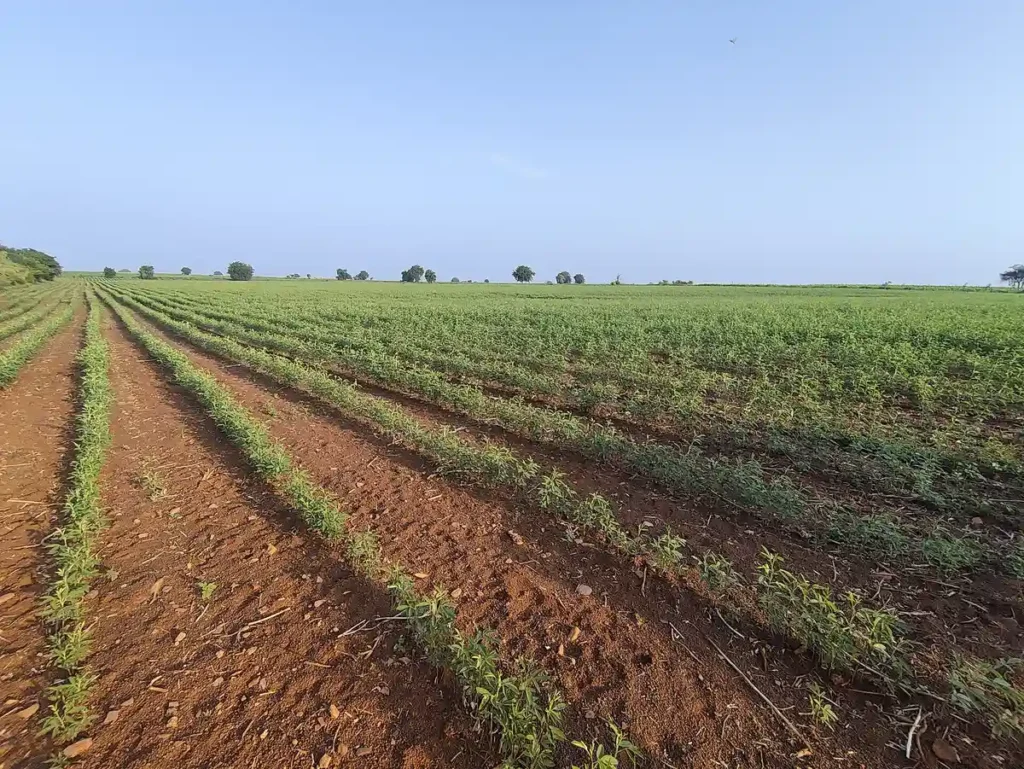
Image: PJeganathan, Wikimedia Commons, CC BY-SA 3.0
How to use this in Mains
If asked: UPSC Mains 2026, GS-III: Describe the various Technology Missions initiated in Indian agriculture and examine their role in food security.
Quote: “Food and nutrition security: pulses are a key protein source and fix nitrogen in the soil.”
Use it: Use it in the body to link pulses to both nutrition and soil health.
In the news
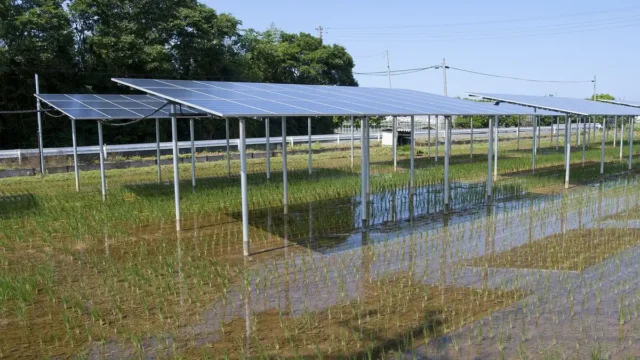
Agrivoltaics: Centre plans a scheme to push solar panels above farms; 5 GW seen in 3–4 years
MNRE Secretary Santosh Kumar Sarangi said on 19 October 2026 that the Centre is planning a central sector scheme to help States adopt agrivoltaics, either standalone or within PM-KUSUM 2.0. He expects capacity to cross 5 GW in three to four years if States notify feed-in tariffs. India hosts the 7th Agrivoltaics World Conference in New Delhi from 21 to 23 October.
20 Oct 2026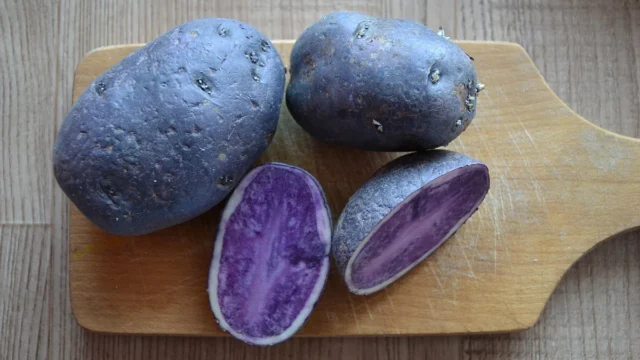
Kufri Jamunia: ICAR-CPRI’s purple potato to fight hidden hunger
A PIB backgrounder of 18 October 2026 puts the spotlight on Kufri Jamunia, a purple-fleshed potato bred by ICAR’s Central Potato Research Institute and released in 2024. It has nearly twice the Vitamin C of a common potato and several times more zinc and iron, along with antioxidants called anthocyanins. The idea is clever: instead of asking people to change what they eat, make the food they already eat more nutritious. That is biofortification.
18 Oct 2026
Oil companies bar sugar-based ethanol for 2026-27; maize incentive cut to ₹2.79 a litre
The oil marketing companies have kept sugar out of India’s ethanol programme for the coming year. The tender issued on 16 October 2026 seeks about 11 billion litres of ethanol for the 2026-27 supply year, but asks for none made from sugarcane juice, sugar syrup or B-heavy molasses, because the Government wants sugar diversion for ethanol cut to zero. Grain must now carry the load, and even the maize incentive has been cut. Read this as a live example of the food-versus-fuel trade-off.
18 Oct 2026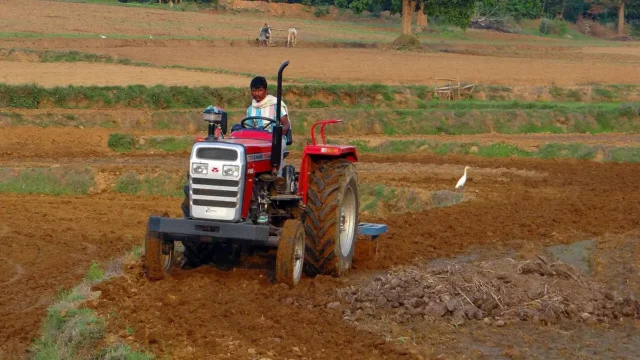
Khet Bachao Abhiyan: Centre reviews 22 October to 30 November farm campaign with States
On 17 October 2026 Union Agriculture Minister Shivraj Singh Chouhan reviewed preparations for the Khet Bachao Abhiyan with agriculture ministers of 11 States and UTs. The campaign runs from 22 October to 30 November 2026. About 4,150 teams of Krishi Vigyan Kendra and ATMA staff, with over 12,000 scientists and officials, plan around 1.5 lakh meetings with farmers on soil health, crop residue, balanced fertiliser use and key schemes.
17 Oct 2026