
UPSC Mains 2023 GS2 Q13: model answer
Account for the legal and political factors responsible for the reduced frequency of using Article 356 by the Union Governments since mid 1990s.
What the question wants
Legal and political reasons why President's Rule became rare after the mid-1990s.
How to structure it
Intro: Article 356 used over 100 times, often against opposition States; Ambedkar's 'dead letter' hope. Body: (1) Legal: S.R. Bommai (1994): judicial review, floor test, secularism basic structure, Proclamation not to dissolve Assembly before Parliament approves; Rameshwar Prasad (2006); Sarkaria (1988) and Punchhi (2010) recommendations; Uttarakhand and Arunachal (2016) reversals; 44th Amendment limits; (2) Political: coalition era, regional parties in Union government, Rajya Sabha approval needed, public and media scrutiny, governors' role scrutinised, political cost. Conclusion: cooperative federalism; still occasional misuse.
- 1(1) Legal: S.R. Bommai (1994): judicial review, floor test, secularism basic structure, Proclamation not to dissolve Assembly before Parliament approves
- 2Rameshwar Prasad (2006)
- 3Sarkaria (1988) and Punchhi (2010) recommendations
- 4Uttarakhand and Arunachal (2016) reversals
- 544th Amendment limits
- 6(2) Political: coalition era, regional parties in Union government, Rajya Sabha approval needed, public and media scrutiny, governors' role scrutinised, political cost
Model answer
Article 356 allows President's Rule when a State's government cannot be carried on as per the Constitution. It was imposed over 100 times, often to dismiss opposition governments. Since the mid-1990s its use has fallen sharply.
- S.R. Bommai (1994): judicial review, floor test
- Coalition governments 1989–2014
- Rajya Sabha approval needed
- Courts reversing proclamations
Legal factors
- S.R. Bommai (1994): a nine-judge bench made the Proclamation open to judicial review; majority must be tested on the floor of the House, not in the Governor's chamber; the Assembly cannot be dissolved until Parliament approves; secularism is part of the basic structure.
- Rameshwar Prasad (2006): dissolution of the Bihar Assembly held unconstitutional.
- 2016 reversals: the Uttarakhand High Court and the Supreme Court in Nabam Rebia (Arunachal) restored dismissed governments.
- 44th Amendment (1978): limited extension beyond one year to emergencies and Election Commission certification.
- Commissions: Sarkaria (1988) and Punchhi (2010) urged its use only as a last resort.
Political factors
- Coalition era: from 1989 to 2014 Union governments depended on regional parties, who opposed its misuse.
- Rajya Sabha approval: needed within two months; the government often lacked a majority there.
- Political cost: courts reversing Proclamations embarrassed governments.
- Federal assertion: stronger regional parties and Chief Ministers.
- Media and civil society scrutiny.
- Cooperative federalism: forums such as the Inter-State Council and NITI Aayog.
Still a concern: instances like Uttarakhand and Arunachal (2016) and the role of Governors show the risk remains.
Bommai turned Article 356 into what Ambedkar hoped it would be: a rarely used last resort.
Keywords, cases and data to drop in
S.R. Bommai floor test Rameshwar Prasad Sarkaria Commission coalition era
Where most answers lose marks
- Only legal or only political factors.
- Not mentioning Bommai.
Fresh examples from current affairs
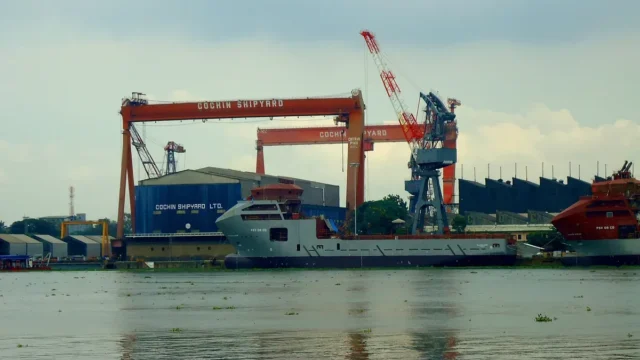
21st Maritime State Development Council: first MSDC under the Indian Ports Act, 2025
The 21st Maritime State Development Council met in Mumbai on 13 October 2026. It was the first MSDC after the Indian Ports Act, 2025 (notified 15 May 2026) made the Council a statutory body. Members adopted Vision 2030 and 2047 targets and set March 2027 deadlines for One Nation One Port Process and Maritime Single Window integration.
UPSC angle: Prelims: Ports Act 2025 date, MSDC, ONOP, Sagar Setu, SbPCP/BCSPS. · Mains GS-III: ports and shipbuilding; GS-II: cooperative federalism.
13 Oct 2026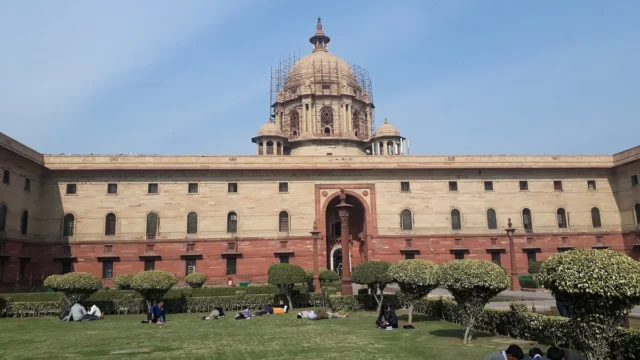
57th GST Council: arrest provisions to go, prosecution threshold raised to ₹5 crore
The 57th GST Council meeting on 8 October 2026 focused on process reform rather than rates. It recommended removing arrest powers under GST, raising the prosecution threshold from ₹1 crore to ₹5 crore, cutting the general penalty from ₹25,000 to ₹10,000, no notices below ₹10,000 tax, wider input tax credit and refunds, and limits on interception of goods in transit.
UPSC angle: Prelims: GST Council structure, Article 279A. · Mains GS-III: indirect tax reform; GS-II: fiscal federalism.
8 Oct 2026
Seven years since abrogation of Article 370
On 5 August 2026 the Prime Minister marked seven years since Articles 370 and 35(A) ceased to operate in 2019, calling 5 August 2019 a defining milestone. He said the full application of the Constitution has empowered women and marginalised communities in Jammu and Kashmir and Ladakh. The change rested on two Presidential Orders, C.O. 272 and C.O. 273.
UPSC angle: Prelims: J&K reorganisation.
5 Aug 2026
₹1,09,019 crore advance tax devolution released to States
The Union Government released an additional tax devolution instalment of ₹1,09,019 crore to the States on 1 August 2026, the Finance Ministry said. It comes on top of the normal monthly devolution due on 10 August. The aim is to help States speed up capital and development spending. Uttar Pradesh got the largest share, ₹19,208 crore.
UPSC angle: Prelims: divisible pool; FC share.
1 Aug 2026Learn the concept
Question text as printed in the official UPSC question paper: https://www.upsc.gov.in/sites/default/files/QP-CSM-23-GENERAL-STUDIES-PAPER-II-180923.pdf The model answer is original Battle IAS work; use it to learn structure, not to memorise.