
Inter-State Council (Article 263), Zonal Councils and Inter-State Water Disputes: Cooperative Federalism Tools (UPSC Notes + PYQs)
UPSC has already asked about this. Read the story with these questions in mind.
Background: why a forum was needed
India’s federal system relies on cooperation as much as on law. The Constitution divides subjects between the Union and the States, but many problems, such as water, police, trade, disasters and internal security, cross these lines. The framers anticipated this. Article 263 allows the President to set up an Inter-State Council if it serves the public interest, to inquire into and advise on disputes between States, discuss subjects of common interest, and recommend better coordination of policy. For nearly four decades the Article remained unused. The Sarkaria Commission on Centre-State relations (1988) recommended a permanent Council, and it was finally constituted by a Presidential order on 28 May 1990. A Standing Committee was added in 1996 to keep work going between meetings.
The constitutional tool kit for inter-State relations
- Art. 261: full faith and credit to public acts and judicial proceedings of every State.
- Art. 262: Parliament may provide for adjudication of inter-State river disputes and bar courts; the Inter-State River Water Disputes Act, 1956 set up tribunals.
- Art. 263: Inter-State Council.
- Art. 301-307: freedom of trade and commerce.
- Zonal Councils (statutory) under the States Reorganisation Act, 1956.
- ChairmanPrime Minister
- StatesChief Ministers of all States
- UTsCMs of UTs with legislature; Administrators of others
- UnionSix Cabinet Ministers incl. Home Minister
- InviteesOther Union Ministers as nominated
Composition and work
Prime Minister (chair); Chief Ministers of all States and UTs with legislatures; administrators of other UTs; six Union Cabinet ministers including the Home Minister. A Standing Committee chaired by the Home Minister prepares the ground. It has met only eleven times, the last full meeting in 2016, which shows how much depends on political will.
Zonal Councils
Five councils (Northern, Central, Eastern, Western, Southern) chaired by the Union Home Minister, with CMs of the zone. The North Eastern Council was created separately by a 1971 Act and now sits under the Ministry of DoNER. They settle smaller border, police and transport issues quietly; most of their work never makes headlines.
- 1950Article 263 in the Constitution
- 1969ARC recommends the Council
- 1988Sarkaria Commission report
- 1990Council set up by Presidential order
- 1996Standing Committee created
- 201611th meeting held
Water disputes
Tribunals have decided disputes over the Krishna, Godavari, Narmada, Cauvery, Ravi-Beas, Vansadhara and Mahadayi. The Cauvery dispute shows the weak spot: the tribunal award of 2007 was modified by the Supreme Court only in 2018. A 2019 Bill proposing a single permanent tribunal is pending.
Bodies for Centre-State and inter-State coordination
| Body | Basis | Chaired by | Role |
|---|---|---|---|
| Inter-State Council | Article 263, Presidential order 1990 | Prime Minister | Advises on common policy and disputes |
| Zonal Councils | States Reorganisation Act, 1956 | Union Home Minister | Regional cooperation among States |
| North Eastern Council | NEC Act, 1971 | Union Home Minister (since 2018) | Regional planning in the North-East |
| NITI Aayog Governing Council | Cabinet resolution, 2015 | Prime Minister | Policy dialogue with Chief Ministers |
| GST Council | Article 279A | Union Finance Minister | Binding-in-practice decisions on GST |
| Inter-State water tribunals | Article 262, ISRWD Act 1956 | Judges | Adjudicate river water disputes |
Why it matters for Mains
GST Council and NITI Aayog’s Governing Council now handle much of what the Inter-State Council was meant to do. The Punchhi Commission (2010) wanted it meeting at least three times a year and made a real forum for disputes. Use it in answers on cooperative federalism, water conflict, and Centre-State trust deficit.
Commissions on the Inter-State Council
| Commission | Recommendation |
|---|---|
| Administrative Reforms Commission (1969) | Set up the Council under Article 263 |
| Rajamannar Committee (1971, Tamil Nadu) | Council should be consulted on all important matters of national interest |
| Sarkaria Commission (1988) | Permanent Council called Inter-Governmental Council; Secretariat of its own |
| Punchhi Commission (2010) | Meet at least three times a year; be a vibrant forum for policy and conflict resolution |
The Council has met only rarely since 1990; its eleventh meeting was held in 2016 after a gap of about ten years. Critics say that, as an advisory body chaired by the Prime Minister, it depends on the political will of the Union government, and that bodies like the GST Council and NITI Aayog have taken over much of its potential role. Defenders reply that it remains the only constitutional forum where the Union and all States sit together on any subject, and that it could be revived for issues such as fiscal transfers, river water and policing.
Cooperative and competitive federalism
The Council is often cited as an instrument of cooperative federalism, where the Union and the States work together on shared goals rather than in rigid separate compartments. Competitive federalism, by contrast, encourages States to compete for investment and better governance outcomes, using rankings and incentives. A good Mains answer shows that India needs both, and that a forum for dialogue, such as a regularly meeting Inter-State Council, reduces friction when competition or disputes arise.
Zonal Councils in brief
The five Zonal Councils were set up under Part III of the States Reorganisation Act, 1956, on Jawaharlal Nehru’s suggestion that neighbouring States should have a forum to settle problems arising from reorganisation. Each is chaired by the Union Home Minister. The Chief Ministers of the member States take turns as Vice-Chairman, and each State sends two more Ministers. Their agenda covers border disputes, linguistic minorities, inter-State transport, sharing of rivers and power, and matters linked to reorganisation. Like the Inter-State Council, they are advisory, but they meet more often and have resolved many practical issues at the officer level through standing committees. The North Eastern Council, created by a separate Act of 1971, works as a regional planning body for the eight north-eastern States, including Sikkim since 2002.
Together, these bodies form a layered system: the Inter-State Council for the whole country, Zonal Councils for regions, and sector bodies such as the GST Council and water tribunals for specific subjects.
Duties under Article 263
Article 263 lists three possible duties, and the 1990 Presidential order chose only two of them. The Council may investigate and discuss subjects in which some or all States, or the Union and States, have a common interest, and make recommendations for better coordination of policy and action on any such subject. The third duty in the Article, to inquire into and advise upon disputes between States, was not entrusted to it, which is why the Council has not worked as a dispute-settling body. The Punchhi Commission suggested giving it a stronger role and a professional Secretariat with expertise in fiscal and legal matters, so that its recommendations carry weight even though they are not binding. The Council’s Secretariat also services the Zonal Councils, and it has examined the Sarkaria and Punchhi recommendations in detail through its Standing Committee.
In answers, a useful line is that the Council is a constitutional tool waiting to be used fully: regular meetings, a fixed agenda and follow-up reports to Parliament would turn it into the standing forum of federal dialogue that the framers had in mind.
Inter-state Council: UPSC angle
For UPSC CSE
Prelims: Art. 262 vs 263, who chairs, Zonal Councils are statutory, NEC. Mains GS-II: mechanisms of cooperative federalism and their effectiveness.
Inter-state Council UPSC PYQs (Prelims)
Questions UPSC has actually asked, from the official papers. Pick an option to check yourself.
With reference to India, consider the following :
– I. The Inter-State Council
– II. The National Security Council
– III. Zonal Councils
How many of the above were established as per the provisions of the Constitution of India?
Only the Inter-State Council rests on the Constitution: Article 263 lets the President set it up, and it was formed in 1990. Zonal Councils come from the States Reorganisation Act, 1956, an ordinary law. The National Security Council (1998) was set up by an executive decision. Answer as per the official UPSC key · Battle IAS PYQ bankAnswer (a) & why
Mains PYQs on this topic
No UPSC Mains question from 2023-2026 is directly on this topic. Older papers (2013-2022) will be added as the Mains bank grows.
Quick quiz
The Inter-State Council is established under
By Presidential order, 1990.Answer (b)
Zonal Councils were created by
They are statutory.Answer (b)
Parliament may bar courts from hearing inter-State river disputes under
Inter-State River Water Disputes Act, 1956.Answer (b)
FAQs
Is the Inter-State Council permanent?
The Constitution only enables it; the 1990 Presidential order made it a standing body.
Who chairs Zonal Councils?
The Union Home Minister.
Which commission recommended setting up the Inter-State Council?
The Sarkaria Commission (1988).
Are its recommendations binding?
No, they are advisory.
How many Zonal Councils are there?
Five: Northern, Central, Eastern, Western and Southern, set up under the States Reorganisation Act, 1956. The North Eastern Council is a separate statutory body.
When was the Inter-State Council constituted?
On 28 May 1990, by a Presidential order under Article 263.
Who chairs the Standing Committee of the Council?
The Union Home Minister. It was created in 1996 to keep consultations going between Council meetings.
Spotted an error? Tell us. We correct within 48 hours.
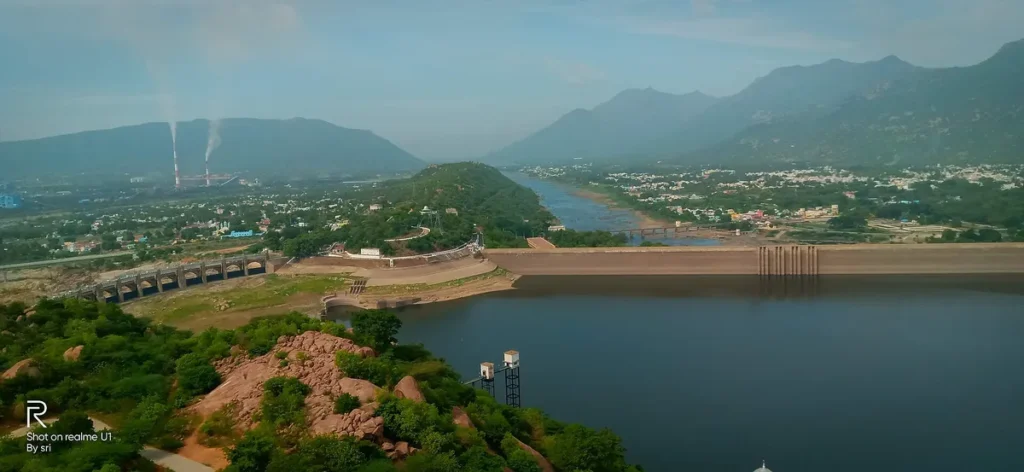
Image: Sri2161k, Wikimedia Commons, CC BY-SA 4.0
How to use this in Mains
If asked: Assess the role of the Inter-State Council in Indian federalism. (GS-II)
Quote: “GST Council and NITI Aayog’s Governing Council now handle much of what the Inter-State Council was meant to do.”
Use it: Use as the analytical point on its decline.
In the news

Supreme Court: no prior approval under Section 17A needed to probe a bribe demand
In a judgment of 16 October 2026, a Supreme Court Bench of Justices S.V.N. Bhatti and N.V. Anjaria held that investigating a bribe demand by a public servant does not need prior approval under Section 17A of the Prevention of Corruption Act. Asking for a bribe, the court said, is not part of discharging official duties.
19 Oct 2026
CCPA acts against online sale of explosives: 3,940 sellers delisted from seven platforms
The Central Consumer Protection Authority (CCPA) said on 19 October 2026 that 3,940 sellers of regulated explosives such as ammonium nitrate, picric acid and PETN have been delisted from seven online platforms after its action. It has fined Dial4Trade and ExportersIndia ₹10 lakh per order, and other cases are under hearing or investigation.
19 Oct 2026
India to host 61st CIML meeting on legal metrology in New Delhi, 26–28 October
India will host the 61st meeting of the International Committee of Legal Metrology (CIML) for the first time, in New Delhi from 26 to 28 October 2026. The Department of Consumer Affairs is organising it with the International Organization of Legal Metrology (OIML), and more than 100 delegates are expected, PIB said on 19 October.
19 Oct 2026
NMC withdraws MSMER-2023: medical colleges lose the fixed penalty rulebook, annual disclosure stays
The National Medical Commission (NMC) has de-notified the Maintenance of Standards of Medical Education Regulations, 2023 (MSMER-2023) by a notification dated 14 October 2026, published in the Gazette on 16 October. Its fixed penalties, including seat cuts and fines of up to ₹5 lakh for false records, go with it. The Annual Disclosure Report stays.
19 Oct 2026