
UPSC Mains 2023 GS2 Q15: model answer
Explain the significance of the 101st Constitutional Amendment Act. To what extent does it reflect the accommodative spirit of federalism ?
What the question wants
Significance of the GST amendment and its federal character, with limits.
How to structure it
Intro: 101st Amendment Act, 2016 introduced GST from 1 July 2017. Body: (1) Significance: one nation one tax, removed cascading, Art. 246A concurrent taxing power, Art. 269A IGST, GST Council (Art. 279A), compensation for five years; (2) Accommodative federalism: shared power, Council with Centre one-third and States two-thirds vote, consensus decisions, compensation; (3) Limits: loss of fiscal autonomy, Centre's veto, compensation ended 2022, delays, Mohit Minerals (2022) Council recommendations not binding. Conclusion: pooled sovereignty; trust key.
- 1(1) Significance: one nation one tax, removed cascading, Art. 246A concurrent taxing power, Art. 269A IGST, GST Council (Art. 279A), compensation for five years
- 2(2) Accommodative federalism: shared power, Council with Centre one-third and States two-thirds vote, consensus decisions, compensation
- 3(3) Limits: loss of fiscal autonomy, Centre's veto, compensation ended 2022, delays, Mohit Minerals (2022) Council recommendations not binding
Model answer
The Constitution (101st Amendment) Act, 2016 introduced the Goods and Services Tax from 1 July 2017, replacing many Central and State indirect taxes.
- Art. 246A: concurrent taxing power
- Art. 269A: IGST on inter-State supply
- Art. 279A: GST Council
- Centre one-third, States two-thirds votes
- Five-year compensation
Significance
- Art. 246A: both Parliament and State legislatures can tax the supply of goods and services, a new concurrent taxing power.
- Art. 269A: Integrated GST on inter-State supply.
- Art. 279A: GST Council to recommend rates and rules.
- Removed cascading taxes and check-posts, creating a common national market.
- Compensation to States for five years for revenue loss.
- Better compliance through an online system and wider tax base.
Accommodative federalism
- States gave up some taxing power, and so did the Centre: pooled sovereignty.
- In the GST Council the Centre has one-third of the votes and States two-thirds; decisions need three-fourths, so neither side can act alone.
- Nearly all decisions have been taken by consensus.
- Compensation and protection for special category States.
Limits
- The Centre's one-third vote acts as a veto.
- States lost the freedom to set rates, weakening fiscal autonomy.
- Compensation ended in June 2022, while States' revenues had not fully recovered.
- Delays in compensation during COVID caused friction.
- Petroleum and alcohol remain outside GST.
- In Mohit Minerals (2022) the Supreme Court held Council recommendations persuasive, not binding, reflecting cooperative and also contested federalism.
The amendment is a bold experiment in shared sovereignty. Its success rests on trust and fair treatment of States.
Keywords, cases and data to drop in
Art. 246A Art. 279A GST Council pooled sovereignty Mohit Minerals
Where most answers lose marks
- Describing GST economics only.
- No limits to federal spirit.
Fresh examples from current affairs

21st Maritime State Development Council: first MSDC under the Indian Ports Act, 2025
The 21st Maritime State Development Council met in Mumbai on 13 October 2026. It was the first MSDC after the Indian Ports Act, 2025 (notified 15 May 2026) made the Council a statutory body. Members adopted Vision 2030 and 2047 targets and set March 2027 deadlines for One Nation One Port Process and Maritime Single Window integration.
UPSC angle: Prelims: Ports Act 2025 date, MSDC, ONOP, Sagar Setu, SbPCP/BCSPS. · Mains GS-III: ports and shipbuilding; GS-II: cooperative federalism.
13 Oct 2026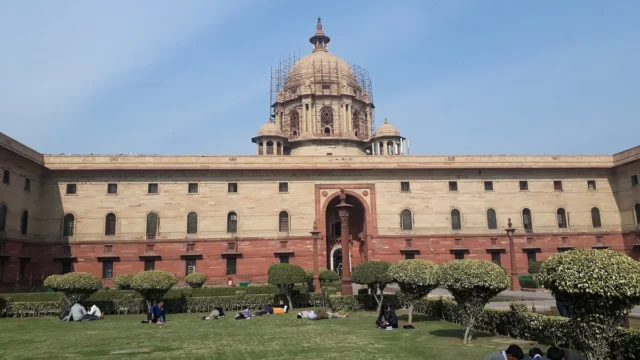
57th GST Council: arrest provisions to go, prosecution threshold raised to ₹5 crore
The 57th GST Council meeting on 8 October 2026 focused on process reform rather than rates. It recommended removing arrest powers under GST, raising the prosecution threshold from ₹1 crore to ₹5 crore, cutting the general penalty from ₹25,000 to ₹10,000, no notices below ₹10,000 tax, wider input tax credit and refunds, and limits on interception of goods in transit.
UPSC angle: Prelims: GST Council structure, Article 279A. · Mains GS-III: indirect tax reform; GS-II: fiscal federalism.
8 Oct 2026
Seven years since abrogation of Article 370
On 5 August 2026 the Prime Minister marked seven years since Articles 370 and 35(A) ceased to operate in 2019, calling 5 August 2019 a defining milestone. He said the full application of the Constitution has empowered women and marginalised communities in Jammu and Kashmir and Ladakh. The change rested on two Presidential Orders, C.O. 272 and C.O. 273.
UPSC angle: Prelims: J&K reorganisation.
5 Aug 2026
₹1,09,019 crore advance tax devolution released to States
The Union Government released an additional tax devolution instalment of ₹1,09,019 crore to the States on 1 August 2026, the Finance Ministry said. It comes on top of the normal monthly devolution due on 10 August. The aim is to help States speed up capital and development spending. Uttar Pradesh got the largest share, ₹19,208 crore.
UPSC angle: Prelims: divisible pool; FC share.
1 Aug 2026Learn the concept
Question text as printed in the official UPSC question paper: https://www.upsc.gov.in/sites/default/files/QP-CSM-23-GENERAL-STUDIES-PAPER-II-180923.pdf The model answer is original Battle IAS work; use it to learn structure, not to memorise.