
UPSC Mains 2024 GS3 Q10: model answer
Describe the context and salient features of the Digital Personal Data Protection Act, 2023.
What the question wants
Background of the DPDP Act and its key provisions.
How to structure it
Intro: Puttaswamy and growing digital economy. Body: (1) context (Srikrishna Committee, earlier Bills); (2) key features: consent, rights, duties; (3) exemptions and Data Protection Board; (4) criticisms. Conclusion.
- 1(1) context (Srikrishna Committee, earlier Bills)
- 2(2) key features: consent, rights, duties
- 3(3) exemptions and Data Protection Board
- 4(4) criticisms
Model answer
Context
- Puttaswamy (2017) made privacy a fundamental right and asked for a data law.
- Justice B.N. Srikrishna Committee (2018); the 2019 Bill was withdrawn in 2022.
- Over 90 crore internet users and frequent data breaches.
Salient features
- Covers digital personal data processed in India, and abroad if offering goods or services to people in India.
- Consent must be free, specific and informed; Consent Managers allowed; 'legitimate uses' without consent.
- Rights of data principals: access, correction, erasure, grievance redress, nomination.
- Duties of data fiduciaries: security safeguards, breach notification; extra duties for Significant Data Fiduciaries.
- Verifiable parental consent for children under 18.
- Data Protection Board of India; penalties up to ₹250 crore.
- Cross-border transfer allowed except to countries the Centre restricts.
Concerns: wide exemptions for the State and amendment of the RTI Act.
The DPDP Rules, 2025 now set the timeline for implementation.
Keywords, cases and data to drop in
Puttaswamy consent Data Protection Board ₹250 crore SDF
Where most answers lose marks
- Mixing provisions of the 2019 Bill.
Fresh examples from current affairs

Supreme Court: children have a right to the internet, and platforms must block child abuse material
In a judgment of 15 October 2026, the Supreme Court said that the right to access and use the internet is a fundamental right of every person, children included, under Article 21 read with Article 19(1)(a). So the answer to online danger is not to lock children out but to go after the abusive content and the platforms that fail to remove it. The Court ordered a National Hash and URL List Database, two-hour reporting of unknown abuse material, and loss of revenue for platforms that profit from it through paywalls.
UPSC angle: Prelims: Arts. 21 and 19(1)(a); POCSO s.15; IT Act ss.67B and 79; CSEAM. · Mains GS-II: rights of children, regulation of platforms.
18 Oct 2026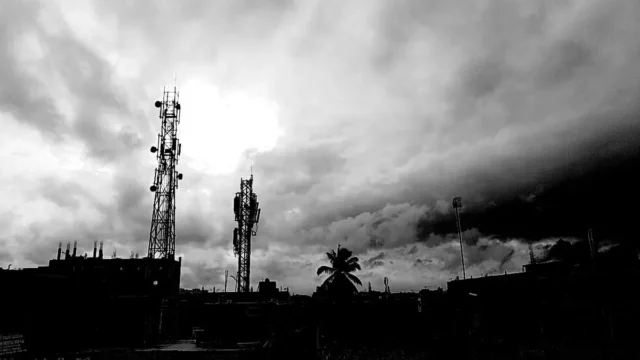
India backs ITU joint trials against cross-border telecom fraud; ASTR has cut 82 lakh fake connections
At an ITU roundtable during India Mobile Congress 2026, India welcomed ITU's proposal for joint trials to verify caller identity across borders. The MoS said C-DOT's ASTR tool has cut over 82 lakh fraudulent connections, Sanchar Saathi has about 25 million downloads, and the Financial Fraud Risk Indicator prevented suspected losses above ₹5,000 crore in 15 months.
UPSC angle: Prelims: ASTR, Sanchar Saathi, ITU. · Mains GS-III: cyber security.
9 Oct 2026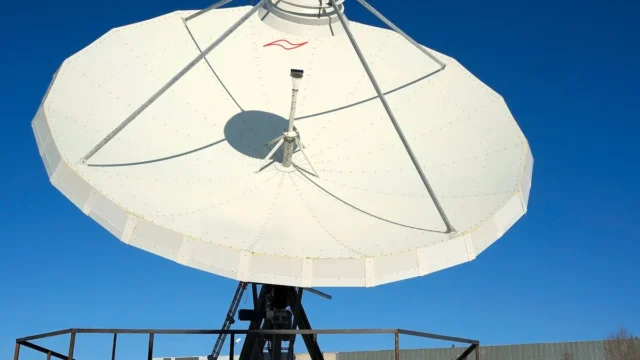
Government says satellite communication licensing is fair; three NGSO-based GMPCS licensees at same stage
On 8 October 2026 the Department of Telecommunications rejected a social media claim that satellite internet licensing is discriminatory. Three licences for Global Mobile Personal Communication by Satellite services using non-geostationary satellites have been issued; all three are going through security assessment, after which each can seek spectrum.
UPSC angle: Prelims: satcom terms. · Mains GS-III: communication infrastructure, security.
8 Oct 2026
Sanchar Saathi crosses 30 crore visits; 14 lakh lost or stolen phones recovered
The Department of Telecommunications' Sanchar Saathi portal, launched in May 2023, has crossed 30 crore visits. It has blocked 60.96 lakh lost or stolen phones, traced 37.85 lakh and helped recover over 14 lakh. Citizen reports through Chakshu feed the Financial Fraud Risk Indicator, which has helped prevent suspected losses of over ₹5,000 crore.
UPSC angle: Prelims: tools and names. · Mains GS-III: cyber security; GS-II: e-governance.
5 Oct 2026Learn the concept
Question text as printed in the official UPSC question paper: https://www.upsc.gov.in/sites/default/files/QP_CSM_2024_GenStud_III_03102024.pdf The model answer is original Battle IAS work; use it to learn structure, not to memorise.