
UPSC Mains 2025 GS1 Q20: model answer
Does tribal development in India centre around two axes, those of displacement and of rehabilitation? Give your opinion.
What the question wants
Assess whether tribal development policy has been narrowed to displacement and rehabilitation, and argue for a wider view.
How to structure it
Intro: tribal population and development-induced displacement. Body: why displacement-rehabilitation dominates; why that is too narrow; other axes (rights, self-rule, health, education, culture). Opinion and way forward.
- 1Why displacement-rehabilitation dominates
- 2Why that is too narrow
- 3Other axes (rights, self-rule, health, education, culture)
- 4Opinion and
Model answer
Scheduled Tribes are 8.6% of India's population (Census 2011), yet they are estimated to make up a much larger share of people displaced by dams, mines and industry since independence.
- 1Rights: PESA, FRA, Fifth/Sixth Schedules
- 2Consent: Gram Sabha decides (Niyamgiri)
- 3Human development: EMRS, health, PM-JANMAN
- 4Livelihoods: MFP-MSP, Van Dhan
- 5Displacement only as last resort; full rehabilitation
Why the two axes have dominated
- Mineral-rich, forested tribal regions (Jharkhand, Odisha, Chhattisgarh) host mining and big dams (Sardar Sarovar, Polavaram).
- Much policy energy goes into land acquisition and compensation: the RFCTLARR Act, 2013 requires social impact assessment and consent in Scheduled Areas.
- Rehabilitation has often failed: cash without land, loss of community and livelihoods.
My view: development has been framed this way, but it should not be. Other axes matter as much:
- Rights and self-rule: the Fifth and Sixth Schedules, PESA 1996, and the Forest Rights Act 2006 (Niyamgiri: Gram Sabhas rejected bauxite mining, 2013).
- Human development: Eklavya Model Residential Schools, sickle-cell mission, PM-JANMAN for PVTGs.
- Livelihoods: minor forest produce with MSP, Van Dhan Kendras.
- Culture and identity: language, customary law, Jan Jatiya Gaurav Divas.
- Planning: the Tribal Sub-Plan (now DAPST) and the Dharti Aaba Janjatiya Gram Utkarsh Abhiyan.
Tribal development should begin with what communities want, not with what projects need. Displacement should be the last resort, and rehabilitation the minimum, not the whole story.
Keywords, cases and data to drop in
ST 8.6% RFCTLARR Act 2013 PESA 1996 Forest Rights Act 2006 Niyamgiri 2013 PM-JANMAN Eklavya schools
Where most answers lose marks
- Not giving an opinion though the question asks for one.
- Writing only about displacement.
- No laws or examples.
Fresh examples from current affairs
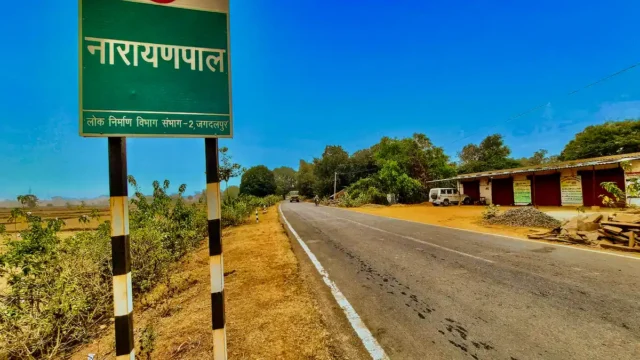
Forest Rights Act: second regional review conference for eight eastern and central States
On 9 October 2026 the Tribal Affairs Ministry held the second regional review of the Forest Rights Act, 2006 in Kolkata with eight States. Nationally, over 54 lakh claims have been filed, about 25 lakh titles given, about 11 lakh are pending and over 18 lakh rejected. The focus is quick disposal, record updating, CFR rights and PVTG habitat rights.
UPSC angle: Prelims: FRA provisions, PVTG habitat rights. · Mains GS-II: welfare of STs; GS-III: forest governance.
10 Oct 2026
₹1,423 crore over three years for implementing PCR and SC/ST Atrocities Acts; 217 exclusive special courts
The Centre released ₹1,423.30 crore to States and UTs over 2022-23 to 2024-25 to implement the Protection of Civil Rights Act, 1955 and the SC/ST (Prevention of Atrocities) Act, 1989. States report 217 Exclusive Special Courts in 15 States and UTs. Yet 65,646 cases were registered in 2024 and 3,92,006 were pending trial at year end.
UPSC angle: Prelims: PCR Act year; Art. 17. · Mains: Why do atrocity cases see low conviction?
1 Oct 2026
PM-AJAY backgrounder: one merged scheme for Scheduled Caste development
Pradhan Mantri Anusuchit Jaati Abhyuday Yojana (PM-AJAY) is a 100 per cent centrally sponsored scheme of the Social Justice Ministry, launched in 2021-22. It merges three older schemes and works through Adarsh Gram, grants-in-aid and hostels. By 8 September 2026, 18,093 villages had been declared Adarsh Grams.
UPSC angle: Prelims: funding pattern; merged schemes.
28 Sep 2026
PM-AJAY: 16,022 villages declared Adarsh Gram; ₹11,186 crore released in 12 years
The Social Justice Ministry said on 19 September 2026 that over ₹11,186 crore has been released under the three components of PM-AJAY since 2014-15. Under the Adarsh Gram component, 16,022 of 48,811 selected Scheduled Caste-majority villages have been declared Adarsh Gram. Grants have helped 34.61 lakh people, and 244 hostels have been funded.
UPSC angle: Prelims: components of PM-AJAY.
19 Sep 2026Learn the concept
Question text as printed in the official UPSC question paper: https://www.upsc.gov.in/sites/default/files/GENERAL-STUDIES-PAPER%20I-QP-CSM-25-010925.pdf The model answer is original Battle IAS work; use it to learn structure, not to memorise.