
UPSC Mains 2026 GS1 Q5: model answer
“Tundra regions are ecologically fragile but economically important.” Examine this statement critically.
What the question wants
Prove fragility and economic value with specifics, then weigh whether exploitation and protection can coexist.
How to structure it
Intro: where tundra lies and its defining traits. Body: fragility; economic importance; the tension. Conclusion: balanced view with governance (Arctic Council).
- 1Fragility
- 2Economic importance
- 3The tension
Model answer
Tundra covers the treeless lands north of the taiga in Siberia, northern Canada, Alaska and Greenland, with alpine tundra on high mountains. It has a short growing season and permafrost below.
Why fragile
- Slow growth: tyre tracks on lichen can persist for decades.
- Thawing permafrost destabilises buildings and releases methane, a feedback to warming.
- Simple food chains: lemming and caribou cycles affect everything above them.
- The Arctic is warming far faster than the global average.
Why economically important
- Oil and gas in Yamal and Alaska's North Slope; nickel at Norilsk.
- The Northern Sea Route shortens Europe–Asia shipping.
- Fisheries, reindeer herding, tourism, and critical minerals in Greenland.
Critical view: the same melting that opens routes and mines destroys the ecosystem and indigenous livelihoods of the Sámi and Inuit. Spills such as Norilsk (2020) show the cost.
India, an Arctic Council observer with its Arctic Policy (2022) and Himadri station, favours science-led, sustainable use.
Keywords, cases and data to drop in
permafrost methane feedback Northern Sea Route Arctic Council Himadri
Where most answers lose marks
- Only describing tundra climate
- Not examining the trade-off critically
Same theme in Prelims
Consider the following statements with reference to India’s response to climate change :
- I. India’s Long-Term Low Emission Development Strategy (LT-LEDS) is a crucial tool for achieving net-zero emissions by 2070.
- II. India’s 4th Biennial Update Report (BUR-4) submitted in December, 2024 recorded around 8% decrease in Greenhouse gas emissions in 2020 over 2019.
- III. Climate-resilient development necessarily depends on quick and short-term achievement of emission reduction targets.
Which of the following relationships among the above statements is/are correct ?
- 1. Statement I is empirically supported by statement II.
- 2. Statement III contradicts the approach implicit in statement I.
- 3. Statement I and statement III together establish the premise of long-term sustainability.
Select the answer using the code given below :
Answer (b) & explanation
Relationships 1 and 2 are correct (b). Relationship 1 is right: the LT-LEDS (2022) lays out India's path to net zero by 2070, and BUR-4 reported a fall of about 7.9% in 2020 emissions over 2019, real data in line with that path. Relationship 2 is right: Statement III wants quick, short-term cuts, while the LT-LEDS is a long, gradual plan, so III contradicts I. Relationship 3 is wrong: two contradicting statements cannot together set a premise. So options (a), (c) and (d) fail.
Notice the cause of the 2020 fall: the COVID-19 lockdowns, not a lasting trend. India's updated NDC (2022) targets cutting emissions intensity of GDP by 45% from 2005 levels by 2030. Biennial Transparency Reports now replace BURs.
"together establish" sounds positive, but two statements that clash cannot form one premise.
Answer as per the official UPSC answer key.
At the United Nations Ocean Conference (UNOC) held in June, 2025 in France, the Food and Agricultural Organization (FAO) of the United Nations demonstrated its leading voice on marine and ocean issues, especially on sustainable fisheries and aquaculture for resilient livelihood and “Blue Transformation”. Which of the following combinations about the “Four Betters” proposed by FAO for “Blue Transformation” is correct ?
Answer (b) & explanation
The Four Betters are production, nutrition, environment and life (b). The "Four Betters" run through FAO's whole strategy (2022–31): better production, better nutrition, a better environment and a better life, leaving no one behind. Blue Transformation applies them to fisheries and aquaculture. Option (a) is wrong: "better ocean" is not one of them. Options (c) and (d) are wrong: coral reefs, estuaries and mangroves are not among the Four Betters.
Notice the link to SDG 14, "Life Below Water". The UN Ocean Conference in Nice, France (2025) pushed for 30% ocean protection, and the High Seas Treaty (BBNJ) came into force in 2026. India's own schemes include the PM Matsya Sampada Yojana.
"better ocean" fits an ocean conference, but the four Betters are FAO's general formula.
Answer as per the official UPSC answer key.
Which one of the following is the first Plan Vivo certified Reducing Emissions from Deforestation and Forest Degradation (REDD+) project in India ?
Answer (c) & explanation
The Khasi Hills Community REDD+ project was India's first (c). REDD+ pays communities for keeping forests standing, through carbon credits. Plan Vivo is a standard for community-led projects. India's first such project is the Khasi Hills Community REDD+ project around Mawphlang, Meghalaya, run by a federation of Khasi village councils (hima). Options (a), (b) and (d), the Uttarakhand, ICFRE-ICIMOD and Sikkim Mamley Kamrang projects, came later or use other routes.
Notice why Mawphlang is famous: its sacred grove, a forest protected by local beliefs. REDD+ stands for Reducing Emissions from Deforestation and forest Degradation, plus conservation and sustainable management. It is recognised under Article 5 of the Paris Agreement.
Answer as per the official UPSC answer key.
Fresh examples from current affairs
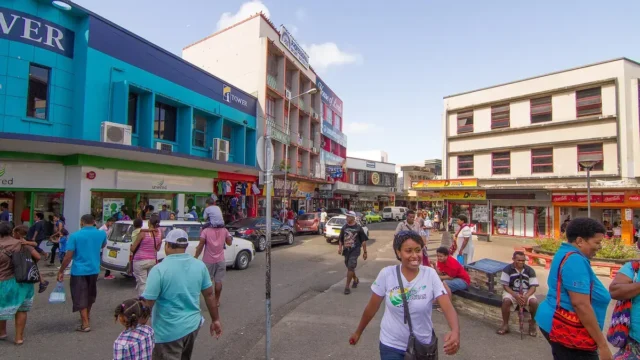
Pre-COP31 in Fiji: India seeks “flexibility, pragmatism and mutual respect” and scaled-up climate finance
At the Pre-COP31 meeting in Nadi, Fiji, India's Environment Minister asked for flexibility, pragmatism and mutual respect so that COP31 gives an ambitious and balanced result. India said higher ambition must come with climate finance, technology and capacity building, and that each country's path must be respected. COP31 is in Antalya, Türkiye, in November.
UPSC angle: Prelims: COP venues, Paris articles. · Mains GS-III: climate change; GS-II: international agreements.
8 Oct 2026
India–Japan Joint Crediting Mechanism gets an operational manual under Article 6.2 of the Paris Agreement
India and Japan launched the Operational Manual for their Joint Crediting Mechanism in New Delhi on 30 September 2026. Under Article 6.2 of the Paris Agreement, the mechanism lets Japanese low-carbon technology be deployed in India and the resulting emission cuts be issued as credits. The manual sets the full project cycle, from idea note to credit issuance.
UPSC angle: Prelims: Article 6 sub-parts. · Mains GS-III: carbon markets.
5 Oct 2026
New CAFE norms for cars: ~16.7% fuel-efficiency improvement from 2027 to 2032
On 30 September 2026 the Ministry of Power notified new Corporate Average Fuel Economy (CAFE) norms for passenger vehicles, in force from 1 April 2027 to 31 March 2032. The fuel-use benchmark tightens from 3.996 to 3.3273 litres per 100 km, an improvement of about 16.7 per cent, and the reference weight rises to 1,229 kg.
UPSC angle: Prelims: CAFE notifying ministry (Power, under the Energy Conservation Act). · Mains: Fleet-average standards as a nudge to EVs and hybrids.
30 Sep 2026
At FAO COFO-28, India cites 25.17% forest and tree cover and 3rd rank in net forest gain
At the 28th session of the FAO Committee on Forestry in Rome (28 September to 2 October 2026), India said its forest and tree cover is 82.74 million hectares, or 25.17 per cent of its area. FAO's Global Forest Resources Assessment 2025 ranks India 9th in forest area and 3rd in net annual forest gain.
UPSC angle: Prelims: forest cover %, FRA ranks. · Mains: Quality vs quantity of forest cover.
28 Sep 2026Learn the concept
Question text as printed in the official UPSC question paper: https://www.upsc.gov.in/sites/default/files/QP-CSM-26-010926-GENERAL%20STUDIES%20PAPER%20-%20I.pdf The model answer is original Battle IAS work; use it to learn structure, not to memorise.