
UPSC Mains 2026 GS2 Q19: model answer
“India's global diaspora acts as a living bridge, as a critical economic factor and knowledge network in transforming cultural heritage into geopolitical influence and strategic leverage worldwide.” Critically examine this statement.
What the question wants
Test each claim in the statement (economic, knowledge, cultural→geopolitical) with evidence, then show limits and risks.
How to structure it
Intro: size of diaspora. Body: economic, knowledge, soft-power and political roles; limits; policy steps. Conclusion.
- 1Economic, knowledge, soft-power and political roles
- 2Limits
- 3Policy steps
Model answer
India has one of the world's largest diasporas: over 3 crore people of Indian origin and NRIs (MEA estimates). The government calls it a 'living bridge'.
- 1Remittances: India the largest recipient
- 2Skills and investment flows
- 3Soft power and advocacy
- 4Crisis evacuation (Operation Ganga, Kaveri)
- 5Policy: OCI, Pravasi Bharatiya Divas
Where the statement holds
- Economic factor: India is the world's largest recipient of remittances, around USD 129 billion in 2024 (World Bank), which steadies the current account and supports households in Kerala, Uttar Pradesh and Bihar.
- Knowledge network: Indian-origin leaders in global technology firms, academia and medicine help with investment, technology transfer and start-up links (for example, India–US tech partnerships).
- Soft power: yoga, cinema, cuisine and festivals spread Indian culture; International Day of Yoga is a UN-recognised event.
- Political influence: Indian-origin legislators and leaders in the US, UK, Canada and elsewhere shape bilateral ties; diaspora advocacy helped the India–US civil nuclear deal.
- Crisis support: evacuations (Operation Ganga, Kaveri) show the reverse bridge: India protecting its people.
Limits and risks
- A diaspora is not a monolith: divisions of region, religion and politics; separatist fringes abroad have strained ties (Canada).
- Most Gulf migrants are low-wage workers facing labour-rights issues; their 'influence' is limited.
- Brain drain, and host-country backlash against visible lobbying.
- Soft power converts into strategic leverage only when India's own economic and diplomatic weight backs it.
Policy steps: the Pravasi Bharatiya Divas, OCI cards, the e-Migrate system, an updated Emigration Bill to protect workers, and knowledge-exchange programmes (VAJRA faculty scheme).
Conclusion: the diaspora is a real asset, strongest as an economic and knowledge bridge. Its geopolitical value is real but conditional, and must be nurtured without treating the diaspora as an instrument.
Keywords, cases and data to drop in
living bridge remittances ~USD 129 bn 2024 knowledge network soft power OCI Pravasi Bharatiya Divas Operation Ganga e-Migrate
Where most answers lose marks
- Only praising the diaspora; the directive asks for a critical view.
- No data on remittances.
- Treating the diaspora as uniform.
Same theme in Prelims
Consider the following statements with respect to the AI Impact Summit, 2026 held in New Delhi :
- 1. The Summit’s intellectual framework was based on three foundational Sutras : People, Planning, and Progress.
- 2. The Preamble of the Summit stresses Democratising AI Resources, which acknowledges the Charter for Democratic Diffusion of AI as a binding framework to support locally relevant innovation and strengthen resilient AI ecosystems while respecting national laws.
- 3. The New Delhi Declaration on AI Impact was structured around seven Chakras (Pillars), which included Access for Social Empowerment, AI for Science, and Secure and Trusted AI.
Which of the statements given above is/are correct ?
Answer (d) & explanation
Only statement 3 is correct (d). Statement 3 is right: the New Delhi Declaration on AI Impact was built around seven chakras (pillars), including access for social empowerment, AI for science and secure and trusted AI. Statement 1 is wrong: the three sutras were People, Planet and Progress, not "Planning". Statement 2 is wrong: the Charter for Democratic Diffusion of AI is voluntary, not binding. So options (a), (b) and (c) fail.
Notice the event: the AI Impact Summit was held at Bharat Mandapam, New Delhi, in February 2026, the first global AI summit in the Global South. It followed the summits at Bletchley Park (2023), Seoul (2024) and Paris (2025). At home, the IndiaAI Mission (2024) funds shared GPU computing.
Statement 1 changes one word, Planet to Planning. Statement 2 changes voluntary to binding.
Answer as per the official UPSC answer key.
Which of the following connectivity projects is/are a part of cooperation between India and the ASEAN member countries ?
- 1. Kaladan Multi-Modal Transit Transport Project
- 2. IMT Trilateral Highway
- 3. Agartala-Akhaura Rail Line
Select the answer using the code given below :
Answer (a) & explanation
Projects 1 and 2 involve ASEAN members (a). Item 1 is right: the Kaladan Multi-Modal project links Kolkata to Sittwe port and on to Mizoram through Myanmar. Item 2 is right: the India–Myanmar–Thailand Trilateral Highway runs from Moreh in Manipur to Mae Sot in Thailand. Myanmar and Thailand are both ASEAN members. Item 3 is wrong: the Agartala–Akhaura rail line links Tripura with Bangladesh, which is not in ASEAN. So options (b), (c) and (d) fail.
Notice the policy: these projects are the backbone of India's Act East Policy (2014), which upgraded the Look East Policy (1991). ASEAN has 11 members since Timor-Leste joined in 2025. Bangladesh links fall under BBIN and BIMSTEC instead.
Answer as per the official UPSC answer key.
Match List I with List II and select the answer using the code given below the Lists :
| List I (Project Supported by India) | List II (Country)
| A. Mangdechhu Hydroelectric Project | 1. Maldives
| B. Restoration of Stor Palace | 2. Afghanistan
| C. District Hospital at Dickoya | 3. Bhutan
| D. Institute of Security and Law Enforcement Studies | 4. Sri Lanka
Code :
Answer (b) & explanation
The correct match is A-3, B-2, C-4, D-1 (b). Mangdechhu (720 MW) is an India-built hydro project in Bhutan (A-3). India restored the Stor Palace in Kabul, Afghanistan (B-2), opened in 2016. The Dickoya hospital is in the hill country of Sri Lanka (C-4), serving the Indian-origin Tamil community. The Institute of Security and Law Enforcement Studies was built for the Maldives police (D-1). Options (a), (c) and (d) mix these up.
Notice the pattern: India's Neighbourhood First policy relies on such development partnership projects. In Afghanistan, India also built the Parliament building and the Salma Dam (Afghan–India Friendship Dam). Bhutan's hydropower, including Chukha and Tala, sells surplus power to India.
Answer as per the official UPSC answer key.
Fresh examples from current affairs
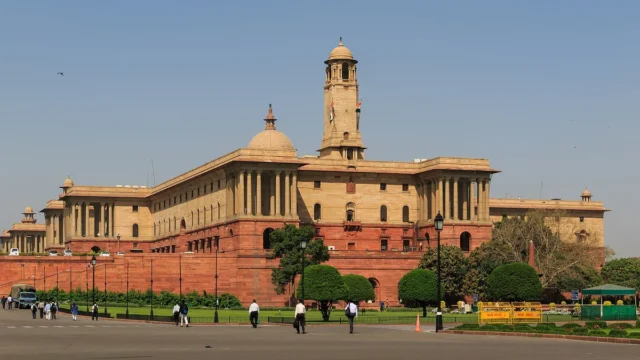
PM addresses Bloomberg New Economy Forum in New Delhi
On 13 October 2026 the Prime Minister addressed the Bloomberg New Economy Forum in New Delhi, welcomed Bloomberg's plans to expand in India, spoke with Canadian Prime Minister Mark Carney on the Strategic Partnership, and met former UK Prime Minister Rishi Sunak at the Forum.
UPSC angle: Prelims/Mains: India's economic diplomacy and bilateral meetings at multilateral business forums.
14 Oct 2026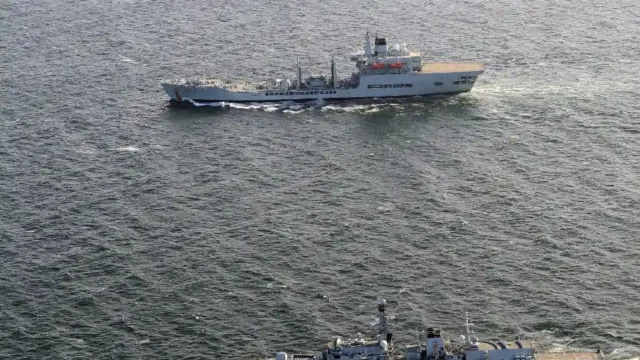
Navy exercises: INDRA 2026 with Russia, KONKAN-26 with the UK
The Indian Navy is exercising with two partners this week. INS Sahyadri reached Vladivostok on 10 October 2026 for INDRA 2026 with the Russian Navy (13 to 18 October). INS Trishul is at Plymouth for KONKAN-26 with the Royal Navy, the annual India-UK exercise held in two phases.
UPSC angle: Prelims: exercise-partner pairs (INDRA, KONKAN), MAHASAGAR. · Mains GS-II/GS-III: defence diplomacy, India-Russia and India-UK ties.
12 Oct 2026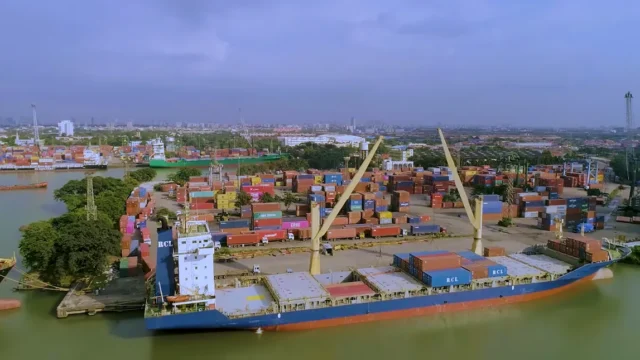
India-UK JETCO: first review of the trade deal (CETA) since it came into force
The 16th India-UK Joint Economic and Trade Committee (JETCO) met in New Delhi on 12 October 2026. It was the first JETCO since CETA talks began in January 2022. Both sides reviewed early trade under CETA, agreed to share data every year on its use, and fixed the 17th JETCO for the UK in 2027.
UPSC angle: Prelims: JETCO, CETA, eCoO 2.0, tariff-rate quota. · Mains GS-II/GS-III: India-UK relations; FTAs and exports.
12 Oct 2026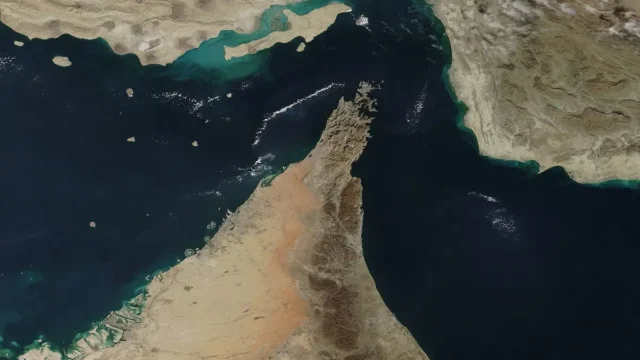
Attacks on ships with Indian crews: July to October 2026
Between July and October 2026 MEA issued a series of statements on attacks on merchant ships carrying Indian crew in the Strait of Hormuz, off Oman, in the Red Sea and in the Black Sea. Several Indian seafarers were killed or injured. On 7 October India again asked for an immediate end to attacks on commercial shipping and seafarers.
UPSC angle: Prelims: straits and ports in news. · Mains GS-II: diaspora; GS-III: maritime security.
7 Oct 2026Learn the concept
Question text as printed in the official UPSC question paper: https://www.upsc.gov.in/sites/default/files/QP-CSM-26-010926-GENERAL-STUDIES-PAPER%20-%20II.pdf The model answer is original Battle IAS work; use it to learn structure, not to memorise.