
UPSC Mains 2026 GS2 Q6: model answer
Does India's tribal development policy reflect the aspirations for a socially grounded and equity-based governance? Justify your answer.
What the question wants
Take a stand (largely yes in design, partly in delivery) and justify it with constitutional and policy evidence.
How to structure it
Intro: the Nehru–Elwin Panchsheel and the constitutional framework. Body: evidence for (Fifth/Sixth Schedules, PESA, FRA, EMRS, PM-JANMAN) and against (displacement, weak PESA rules, low FRA approvals). Conclusion.
- 1Evidence for (Fifth/Sixth Schedules, PESA, FRA, EMRS, PM-JANMAN) and against (displacement, weak PESA rules, low FRA approvals)
Model answer
Nehru's Tribal Panchsheel promised development on tribal people's own terms, with land, forest rights and self-rule. The framework carries that intent; delivery is uneven.
- 1Fifth and Sixth Schedules
- 2Tribal sub-plan (1974-75)
- 3PESA, 1996: gram sabha powers
- 4Forest Rights Act, 2006
- 5PM JANMAN (2023) for PVTGs
- 6Gap: gram sabha consent often bypassed
Socially grounded and equity-based
- Fifth and Sixth Schedules: Tribes Advisory Councils, autonomous district councils.
- PESA, 1996: gram sabhas control minor forest produce and consent to land acquisition.
- FRA, 2006: individual and community forest rights.
- Samatha (1997), Niyamgiri (2013): courts upheld community consent.
- EMRS schools, PM-JANMAN for PVTGs.
Shortfalls
- Several States lack full PESA rules; consent is bypassed.
- High FRA rejection rates; community rights lag.
- Displacement by mines and dams.
- Anaemia and sickle cell disease persist.
Verdict: equity-oriented design, top-down practice. Real gram sabha power and pending FRA claims settled will close the gap.
Keywords, cases and data to drop in
Tribal Panchsheel Fifth/Sixth Schedules PESA 1996 FRA 2006 Samatha 1997 Niyamgiri 2013 PM-JANMAN PVTGs
Where most answers lose marks
- Not taking a clear position, which the directive 'justify' requires.
- Listing schemes without judging equity.
- Ignoring PESA and FRA, the core of 'socially grounded' governance.
Same theme in Prelims
Mr. X, a senior officer, was overseeing a critical vaccination programme during a pandemic. He found that a private service provider responsible for vaccine distribution was compromising on quality to make profits. Despite immense pressure to manage the issue due to vested interests, he raised his voice based on the principles of public administration which he learnt during various training programmes attended across his career. He reported the issue to the appropriate vigilance authority and halted the contract to ensure citizen welfare.
Which one among the following principles of public administration was most strongly demonstrated by Mr. X's actions ?
Answer (c) & explanation
Accountability is shown (c). Mr. X treated himself as answerable to the public for the money spent and for citizens' health. He did not hide the problem: he reported the provider to the vigilance authority and halted the faulty contract, owning the result of his office. Option (a) is wrong: esprit de corps is team spirit and loyalty within a group. Option (b) is wrong: equity means fairness between groups of people. Option (d) is wrong: delegation is passing work down to juniors. None of these fits his action.
Notice the wider idea: accountability has two parts, answerability (explaining your decisions) and enforceability (facing consequences). Tools like the CVC, the RTI Act and social audits make it real in Indian administration.
a case study with four textbook terms. Name what the officer actually did, then match the word.
UPSC repeats traps like this year after year. The PYQ Book gathers every trap in one place, so you see them coming. Try the free sample
Answer as per the official UPSC answer key.
In a multi-ethnic district where both economic competition and historical grievances frequently led to community tensions, a flashpoint has arisen with a Government decision to allocate land for a waste management facility near a tribal hamlet, sparking protests by the tribal community, which claimed that the land was sacred and critical to their cultural identity. At the same time, urban residents and local industries supported the project, citing severe solid waste challenges and health concerns due to lack of a proper disposal site. The conflict has escalated with road blockades, social media campaigns, and allegations of police excesses.
As a responsible Government official, you are tasked with resolving the situation through mediation, ensuring a sustainable outcome that balances environmental needs, tribal rights, and urban public health.
Consider the following statements with reference to the above :
- 1. A successful conflict resolution process must begin with acknowledging the cultural concerns of the protesting tribal community before discussing technical alternatives.
- 2. The Government should move ahead with the project without delay to address urban health concerns, which outweigh the sentiments of a small group.
- 3. Creating a multi-stakeholder dialogue platform — including tribal leaders, environmental experts, and municipal representatives — to build mutual understanding and help de-escalate tensions.
- 4. Conducting an independent Environmental and Social Impact Assessment (ESIA) and sharing findings transparently with both sides to facilitate evidence-based decision-making.
Which of the statements given above would contribute to the resolution process ?
Answer (a) & explanation
Statements 1, 3 and 4 help resolve the conflict (a). The task is mediation. Statement 1 is right: acknowledging the tribal community's cultural concerns first builds trust before any technical talk. Statement 3 is right: a multi-stakeholder platform of tribal leaders, experts and municipal officials brings all sides to one table and lowers tension. Statement 4 is right: an independent ESIA, shared openly, allows evidence-based decisions. Statement 2 is wrong: pushing the project through and calling a community's concern "sentiments of a small group" ends dialogue. So options (b), (c) and (d) fail.
Notice the legal backdrop: the Forest Rights Act, 2006 and PESA, 1996 give Gram Sabhas a say over land and sacred sites, as the Niyamgiri case (2013) showed.
one option that sounds firm and practical. In a mediation question, anything that shuts out one party is out.
Answer as per the official UPSC answer key.
Ms. X is a mid-level civil service official working in the urban development department of a major city. Recently, she was involved in approving a contract for a public infrastructure project — a new community park. During the approval process, she received a piece of confidential information indicating that one of the shortlisted contractors had a history of poor workmanship and allegations of corruption in other cities, though nothing had been legally proven. The Head of the Department, Mr. Y, advised her not to disclose this information to the project committee or the public because it could delay the project and damage the city's reputation. However, Ms. X believed that withholding such information compromised transparency and public trust.
What amongst the following should Ms. X do now ?
- 1. Immediately disclose the information to the project committee and the public
- 2. Recommend removing the contractor from the shortlist to protect the project's integrity
- 3. Propose a 'limited disclosure' to an oversight committee, while keeping the information confidential from the public for the time being
Select the answer using the code given below :
Answer (b) & explanation
Only action 3 is right (b). The information is confidential and the charges are not proven. Action 3 is right: a limited disclosure to an oversight committee lets the proper authority check the facts while protecting both the process and a firm that may be innocent. Action 1 is wrong: making unproven charges public at once can damage reputations unfairly and break confidentiality. Action 2 is wrong: striking the contractor off on her own punishes without a finding. So options (a), (c) and (d) fail.
Notice the balance being tested: transparency versus due process. Ms. X also rightly refuses her senior's advice to hide the matter, because silence would hurt public trust. Ethics answers usually favour the proper channel over both cover-up and public exposure.
"unproven allegation" is the key phrase. Public disclosure and instant punishment both jump ahead of the facts.
Answer as per the official UPSC answer key.
Fresh examples from current affairs
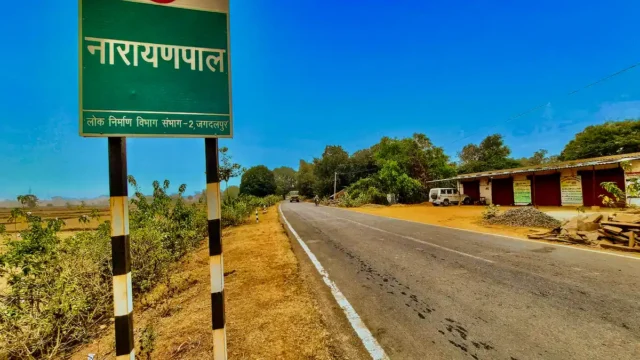
Forest Rights Act: second regional review conference for eight eastern and central States
On 9 October 2026 the Tribal Affairs Ministry held the second regional review of the Forest Rights Act, 2006 in Kolkata with eight States. Nationally, over 54 lakh claims have been filed, about 25 lakh titles given, about 11 lakh are pending and over 18 lakh rejected. The focus is quick disposal, record updating, CFR rights and PVTG habitat rights.
UPSC angle: Prelims: FRA provisions, PVTG habitat rights. · Mains GS-II: welfare of STs; GS-III: forest governance.
10 Oct 2026
₹1,423 crore over three years for implementing PCR and SC/ST Atrocities Acts; 217 exclusive special courts
The Centre released ₹1,423.30 crore to States and UTs over 2022-23 to 2024-25 to implement the Protection of Civil Rights Act, 1955 and the SC/ST (Prevention of Atrocities) Act, 1989. States report 217 Exclusive Special Courts in 15 States and UTs. Yet 65,646 cases were registered in 2024 and 3,92,006 were pending trial at year end.
UPSC angle: Prelims: PCR Act year; Art. 17. · Mains: Why do atrocity cases see low conviction?
1 Oct 2026
PM-AJAY backgrounder: one merged scheme for Scheduled Caste development
Pradhan Mantri Anusuchit Jaati Abhyuday Yojana (PM-AJAY) is a 100 per cent centrally sponsored scheme of the Social Justice Ministry, launched in 2021-22. It merges three older schemes and works through Adarsh Gram, grants-in-aid and hostels. By 8 September 2026, 18,093 villages had been declared Adarsh Grams.
UPSC angle: Prelims: funding pattern; merged schemes.
28 Sep 2026
PM-AJAY: 16,022 villages declared Adarsh Gram; ₹11,186 crore released in 12 years
The Social Justice Ministry said on 19 September 2026 that over ₹11,186 crore has been released under the three components of PM-AJAY since 2014-15. Under the Adarsh Gram component, 16,022 of 48,811 selected Scheduled Caste-majority villages have been declared Adarsh Gram. Grants have helped 34.61 lakh people, and 244 hostels have been funded.
UPSC angle: Prelims: components of PM-AJAY.
19 Sep 2026Learn the concept
Question text as printed in the official UPSC question paper: https://www.upsc.gov.in/sites/default/files/QP-CSM-26-010926-GENERAL-STUDIES-PAPER%20-%20II.pdf The model answer is original Battle IAS work; use it to learn structure, not to memorise.