
UPSC Mains 2026 GS4 Q10: model answer
Vikas is a government officer with over a decade of service in public administration. He has recently moved as the District Collector (DC) of Nainipura, a remote hilly district bordering a forest. Due to Nainipura's low levels of economic development, one of his major duties is to ensure proper functioning of the public distribution system (PDS) amongst the economically weaker sections (EWS). During his on-site visits, Vikas was apprised of a typical administrative challenge in operating the PDS. To prevent leakages, all distributors were required to carry out real-time biometric identification of the beneficiaries, whose fingerprints were tallied with identity card records. This was creating problems as the operating system sometimes rejected fingerprint matching in the cases of growing children, manual labourers and senior citizens. The problem was further compounded in periods of low WiFi connectivity. The distributors, in such cases, resorted to personal discretion when they could identify the recipient. Vikas had to address this problem on priority. Strictly adhering to government regulations would ensure fiscal probity but would greatly trouble the proposed beneficiary, i.e., EWS. It may even impinge on their fundamental right to life as per Article 21 of the Constitution. Conversely, leaving the resolution solely to the discretion of the distributors could lead to misuse and leakages.
(a) What are the options open to Vikas? How should he balance fiscal probity with empathy towards the designated beneficiaries?
(b) Discuss the ethics of using technology as a gatekeeper for welfare schemes.
What the question wants
(a) Options for Vikas and how to balance probity with empathy. (b) Ethics of tech as gatekeeper: benefits, exclusion, accountability.
How to structure it
(a) Options list; recommended mix. (b) Pros, cons, principles (no denial for tech failure).
- 1Part (a): Options list; recommended mix
- 2Part (b): Pros, cons, principles (no denial for tech failure)
Model answer
(a) Options before Vikas
- 1Fingerprint
- 2Iris or OTP
- 3Nominee / ONORC
- 4Witnessed exception register
- 5Monthly audit of exceptions
- Strict biometric only: stops leakage but denies food to genuine beneficiaries. Denial of rations to the poor touches Article 21; the Supreme Court has said no one should be denied entitlement for lack of Aadhaar authentication.
- Leave it to distributors' discretion: humane but invites misuse.
- Structured fallback with checks: the balanced choice.
Balancing probity and empathy
- Alternative authentication: iris scan, OTP to registered mobile, or the One Nation One Ration Card nominee route.
- Exception register: where all fail, distribution on verification by a second person (panchayat member or teacher), recorded with photo and signature.
- Offline mode with later sync during poor connectivity, as several States permit.
- Monthly audit of exception cases; social audit by the gram sabha; vigilance committees.
- Update biometrics of children and the elderly through camps.
- Report the problem to the State for a policy change.
This protects every rupee and every plate: leakage is checked by audit, not by turning people away.
(b) Ethics of technology as gatekeeper
- Benefits: cuts ghost beneficiaries and leakages; DBT has saved large sums.
- Exclusion error: those most in need (old, manual labourers, remote residents) fail most often. A false rejection can mean hunger.
- Shifting burden: the system's failure becomes the citizen's problem.
- Accountability gap: no human to appeal to.
Principle: technology should enable, not deny. Inclusion error is a cost; exclusion error is a harm to rights. Systems must have human fallback, grievance redress and regular review.
Keywords, cases and data to drop in
exclusion error inclusion error fallback mechanism social audit ONORC Article 21
Where most answers lose marks
- Choosing strict enforcement
- No fallback design
Fresh examples from current affairs
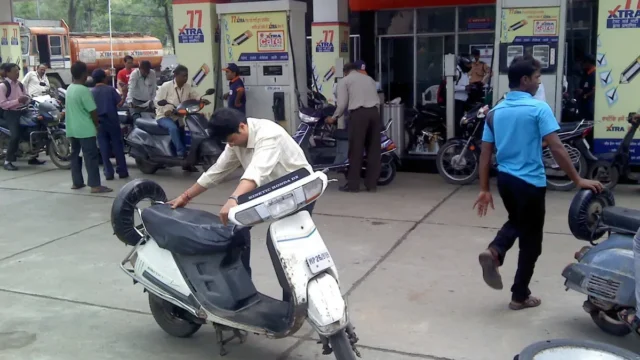
WPI inflation rises to 11.39% in September 2026, led by fuel and food
Wholesale Price Index inflation (base 2022-23) rose to 11.39% in September 2026, provisional, from 9.92% in August. Fuel and Power led at 25.85%, with mineral oils at 40.02%. Primary Articles rose 8.67%, Manufactured Products 9.76% and the WPI Food Index 8.66%. July's final figure stayed at 9.78%.
UPSC angle: Prelims: base year, group weights, monthly figures, release schedule. · Mains GS-III: inflation, its causes and control.
14 Oct 2026
Sugar stock limits cut to 1,000 quintals and 15 days ahead of festivals
The Centre has capped sugar dealers' stocks at 1,000 quintals and a holding period of 15 days from 15 October to 30 November 2026, to stop hoarding in the festive season. Kolkata's metro area and Assam get a 2,000-quintal limit. Retail sugar prices are down 15 per cent from the August peak and ex-mill prices about 28 per cent.
UPSC angle: Mains: Stock limits vs market efficiency.
1 Oct 2026
9th ASEAN–India agriculture ministers’ meeting held in New Delhi
The 9th ASEAN-India Ministerial Meeting on Agriculture and Forestry (AIMMAF) was held in New Delhi on 9 September 2026, co-chaired by the Philippines and India. It reviewed the 2021 to 2025 plan of action and looked forward to a new ASEAN-India Medium-Term Plan of Action for 2026 to 2030 with four areas. The 10th meeting will be in 2028.
UPSC angle: Prelims: ASEAN members; Act East.
10 Sep 2026
Decentralised grain storage plan through PACS: backgrounder
A PIB backgrounder of 3 September 2026 explains the Decentralised Grain Storage Plan in Cooperative Sector, rolled out as a pilot on 31 May 2023. It builds godowns and other facilities at Primary Agricultural Credit Societies by joining existing schemes. By July 2026, 1012 PACS had been identified and godowns completed in 313, creating more than 1.80 LMT of storage.
UPSC angle: Prelims: PACS role.
3 Sep 2026Learn the concept
Question text as printed in the official UPSC question paper: https://www.upsc.gov.in/sites/default/files/QP-CSM-26-010926-GENERAL-STUDIES-PAPER-IV.pdf The model answer is original Battle IAS work; use it to learn structure, not to memorise.