
Chapter 5 · Topic 5.2 · Prelims + Mains2 of 3
British Economic Policies: Drain, industry and railways
Key points
- Drain theory: Naoroji's 'Poverty and Un-British Rule in India' (1901) and R.C. Dutt's 'Economic History of India'.
- Home Charges: India Office costs, British salaries and pensions, interest on debt.
- Deindustrialisation: one-way free trade and loss of royal buyers ruined artisans.
- First train Bombay–Thane, 16 April 1853; 5% guaranteed interest paid from Indian revenue.
Prelims box: facts and traps
- First modern industries: cotton mill Bombay 1854 (Davar), jute mill Rishra 1855, TISCO Jamshedpur 1907.
- Parts of the drain: Home Charges, profits and savings sent home, guaranteed railway interest.
- Trap (Prelims 2011): war spending outside India was not part of Home Charges.
- Trap (Prelims 2012): Naoroji's main gift was exposing economic exploitation, not reviving ancient texts.
On this page (3 sections)
The drain of wealth
Think of a family that earns well, but every month a big share goes to a faraway owner, and nothing comes back. That was the ‘drain’, the nationalists’ main economic charge against British rule.
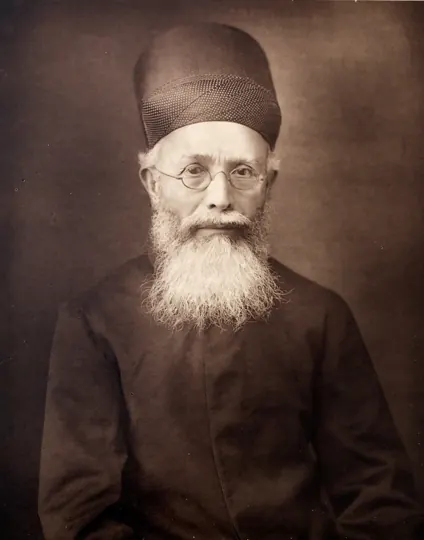
| Critic | Work |
|---|---|
| Dadabhai Naoroji | ‘Poverty and Un-British Rule in India’ (1901); first estimated per capita income |
| R.C. Dutt | ‘The Economic History of India’ |
| M.G. Ranade, G. Subramania Iyer, G.K. Gokhale | Critiques of tariffs, taxes and spending |
| Part of the drain Detail | |
| Home Charges Spending in Britain on India’s account: the India Office, salaries and pensions of British officials, and interest on debt | |
| Profits and savings Sent home by British firms and officials | |
| Guaranteed interest Paid on railway capital |
Prelims 2015 asked ‘Who of the following was/were economic critic/critics of colonialism in India?’ Answer: Dadabhai Naoroji, G. Subramania Iyer and R.C. Dutt, all three.
Who of the following was/were economic critic/critics of colonialism in India? 1. Dadabhai Naoroji 2. G. Subramania Iyer 3. R. C. Dutt Select the correct answer using the code given below.
- 1 only
- 1 and 2 only
- 2 and 3 only
- 1, 2 and 3
Show answer
Answer: (d) · UPSC official key
Prelims 2011 asked: ‘Which of the following funds constituted “Home Charges”?’ Official answer: funds for the India Office in London and the salaries and pensions of British staff in India, not money for wars outside India.
With reference to the period of colonial rule in India, “Home Charges” formed an important part of drain of wealth from India. Which of the following funds constituted “Home Charges” ? 1. Funds used to support the India Office in London. 2. Funds used to pay salaries and pensions of British personnel engaged in India. 3. Funds used for waging wars outside India by the British. Select the correct answer using the codes given below :
- 1 only
- 1 and 2 only
- 2 and 3 only
- 1, 2 and 3
Show answer
Answer: (b) · UPSC official key
Prelims 2012: Naoroji’s most effective contribution was that he ‘exposed the economic exploitation of India by the British’.
Consider the following statements : The most effective contribution made by Dadabhai Naoroji to the cause of Indian National Movement was that he 1. exposed the economic exploitation of India by the British 2. interpreted the ancient Indian texts and restored the self-confidence of Indians 3. stressed the need for eradication of all the social evils before anything else Which of the statements given above is/are correct?
- 1 only
- 2 and 3 only
- 1 and 3 only
- 1, 2 and 3
Show answer
Answer: (a) · UPSC official key
What UPSC asks: Prelims: critics (2015); Home Charges (2011). Mains: drain theory. Next likely angle: economic nationalism.
Deindustrialisation and the rise of modern industry
Deindustrialisation means a country losing its industries. India’s weavers lost out to British machines.
| Cause | Detail |
|---|---|
| One-way free trade | British machine goods entered India almost duty-free; Indian textiles faced high duties in Britain |
| Loss of patrons | Indian courts and nobles who bought fine goods disappeared |
| Raw-material role | India exported cotton, jute and indigo and imported finished goods |
| Result | Weavers and artisans moved to farming, raising pressure on land |
| Modern industry | First |
|---|---|
| Cotton mill | Bombay, 1854 (Cowasji Nanabhai Davar) |
| Jute mill | Rishra, Bengal, 1855 |
| Steel | TISCO, Jamshedpur, 1907 |
What UPSC asks: Prelims: the first mills. Mains: causes of deindustrialisation. Next likely angle: roots of industrial policy.
Railways
| Fact | Detail |
|---|---|
| First train | Bombay to Thane, 16 April 1853 |
| Dalhousie’s minute | 1853: plan for trunk lines |
| Guarantee system | British investors guaranteed 5% interest, paid from Indian revenue whether the line made profit or not |
| Routes | Built to link ports with the interior, for exports, imports and moving troops |
Railways helped the national movement and moved grain in famines. But they mainly served the colonial export economy, and Indian industry got little from building them.
What UPSC asks: Prelims: 1853, the guarantee system. Mains: who gained. Next likely angle: infrastructure.
Mains box: analysis and answer points
- Drain theory: wealth left India without return; it became the base of economic nationalism.
- Railways: helped national unity and famine relief but served exports and troops first.
- Next likely angle: economic nationalism and the Swadeshi idea.
Practice
Write an answer
In 150 words, explain the significance of British Economic Policies with one recent example.
Flashcards (8)
Naoroji's book?
Poverty and Un-British Rule in India.
R.C. Dutt's book?
The Economic History of India.
What were Home Charges?
India's spending in Britain: India Office, salaries, pensions, interest.
First cotton mill?
Bombay, 1854, Cowasji Nanabhai Davar.
First jute mill?
Rishra, 1855.
TISCO founded?
1907, Jamshedpur.
First train in India?
Bombay to Thane, 16 April 1853.
Railway guarantee rate?
5% interest.
Read more: related explainers
In the news
 Next topic · 5.3 →British Economic Policies: Famines and the overall impact
Syllabus: GS-I · Modern Indian history from about the middle of the eighteenth century until the…