
Chapter 11 · Topic 11.1 · Prelims + Mains1 of 3
Indian National Congress: Founding, Moderates and Extremists
Key points
- First session: 28 December 1885, Bombay; 72 delegates; W.C. Bonnerjee president; A.O. Hume organiser.
- Firsts: Badruddin Tyabji first Muslim president (1887); Annie Besant first woman president (1917).
- Moderates: prayer, petition, protest; demands for councils, ICS in India, lower spending.
- Extremists: Lal-Bal-Pal and Aurobindo; swaraj through boycott, swadeshi, national education.
8 PYQs 2010–2019
Prelims box: facts and traps
- Early sessions: 1885 Bombay (Bonnerjee), 1886 Calcutta (Naoroji), 1887 Madras (Tyabji), 1888 Allahabad (George Yule).
- Safety valve: from Wedderburn's life of Hume; the 'lightning conductor' view is Bipan Chandra's.
- Self-government demand: Naoroji 1904, Gokhale 1905, Tilak 1906.
- Trap (Prelims 2015): Sarojini Naidu (1925) was not the first woman president.
- Tilak's festivals: Ganapati (1893), Shivaji (1896).
On this page (3 sections)
Founding of the Congress
The Congress first met on 28 December 1885 at Gokuldas Tejpal Sanskrit College, Bombay. It was to meet at Poona, but cholera broke out there. 72 delegates attended. W.C. Bonnerjee presided. A.O. Hume, a retired British civil servant, was the main organiser.
| Session | Place | President |
|---|---|---|
| 1885 | Bombay | W.C. Bonnerjee |
| 1886 | Calcutta | Dadabhai Naoroji |
| 1887 | Madras | Badruddin Tyabji (first Muslim president) |
| 1888 | Allahabad | George Yule (first English president) |
Prelims 2015 tested firsts: the first Muslim President of the Congress was Badruddin Tyabji (true). The first woman president was Annie Besant (1917), not Sarojini Naidu (1925).
Consider the following statements : 1. The first woman President of the Indian National Congress was Sarojini Naidu. 2. The first Muslim President of the Indian National Congress was Badruddin Tyabji. Which of the statements given above is/are correct?
- 1 only
- 2 only
- Both 1 and 2
- Neither 1 nor 2
Show answer
Answer: (b) · UPSC official key
| Theory | What it says |
|---|---|
| Safety valve | Hume founded the Congress, with Viceroy Dufferin’s blessing, to give Indian discontent a harmless outlet and avoid another 1857 (drawn from Wedderburn’s life of Hume; Lala Lajpat Rai used it to attack the Moderates) |
| Lightning conductor | Bipan Chandra’s view: Indian leaders used Hume as a ‘lightning conductor’ so that the government would not crush the new body as seditious |
| Indian demand | Regional associations had already been moving towards an all-India body; the Indian National Conference (1883, 1885) shows this |
A safety valve on a pressure cooker lets steam out so it does not burst. The theory says the Congress was such a valve. Today it is seen as a myth: the Congress came from Indian political awakening, not just a British plan.
What UPSC asks: Prelims: the firsts (2015). Mains: safety valve vs lightning conductor. Next likely angle: 1885 Bombay, Bonnerjee.
The Moderates (1885–1905)
The early leaders trusted British justice. They wanted reform within the empire by constitutional (lawful) methods. They are called the Moderates.
| Moderates | Detail |
|---|---|
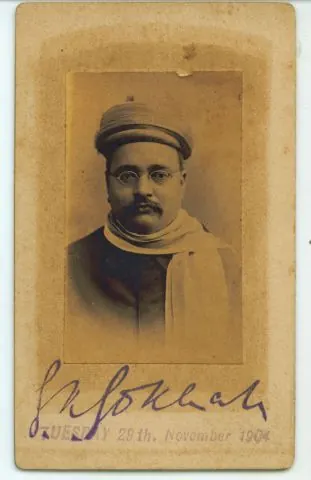
| Leaders | Dadabhai Naoroji, Pherozeshah Mehta, Surendranath Banerjea, G.K. Gokhale, M.G. Ranade, W.C. Bonnerjee, Dinshaw Wacha |
| Methods | Prayer, petition and protest; speeches, resolutions, memorials; propaganda in Britain |
| Political demands | Larger councils with elected members; ICS exams held in India too; separation of judiciary from executive |
| Economic demands | Less military and home spending; lower land revenue; protection for Indian industry |
| Civil rights | Freedom of speech, press and association |
Achievements: they exposed the drain, built national unity and trained Indians in politics. The Indian Councils Act, 1892 expanded councils a little. Weakness: they did not reach the masses and expected too much from British fair play.
Mains 2021 asked: ‘To what extent did the role of the Moderates prepare a base for the wider freedom movement?’ Mention the economic critique, political education and the habit of all-India organisation.
To what extent did the role of the Moderates prepare a base for the wider freedom movement? Comment.
Mains 2017 asked the other side: ‘Why did the Moderates fail to carry conviction with the nation’ by the end of the 19th century? Little was achieved, the base was narrow, and new leaders wanted self-rule, not reforms.
Why did the Moderates fail to carry conviction with the nation about their proclaimed ideology and political goals by the end of the nineteenth century?
What UPSC asks: Mains: the base for later struggle (2021) and why they failed (2017). Prelims: methods and demands.
The rise of the Extremists
By the 1890s, new leaders felt petitions had failed. They wanted swaraj, not small reforms, and were ready for mass agitation. They are called the Extremists or Assertive Nationalists.
| Extremists | Detail |
|---|---|
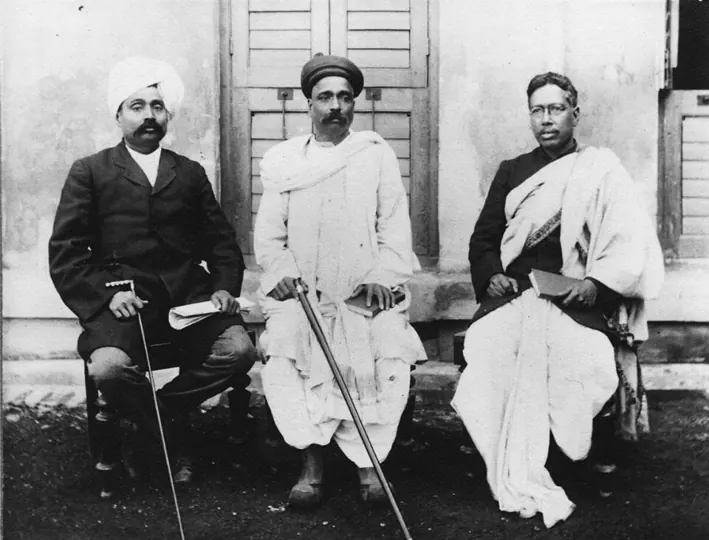
| Leaders | Bal Gangadhar Tilak, Lala Lajpat Rai, Bipin Chandra Pal (Lal-Bal-Pal), Aurobindo Ghose |
| Goal | Swaraj: ‘Swaraj is my birthright and I shall have it’ (Tilak) |
| Methods | Boycott, swadeshi, national education, passive resistance |
| Mass appeal | Tilak’s Ganapati (1893) and Shivaji (1896) festivals |
| Why they rose | Detail |
|---|---|
| Moderates’ failure | Little was gained by petitions |
| Famine and plague (1896–97) | Harsh plague measures; the Chapekar brothers killed the plague officer Rand (1897) |
| Curzon’s policies | Seen as insults to Indians (next page) |
| Events abroad | Ethiopia defeated Italy (1896); Japan defeated Russia (1905) |
What UPSC asks: Prelims: Lal-Bal-Pal, Aurobindo. Mains: why they rose. Next likely angle: festivals and boycott.
Mains box: analysis and answer points
- Mains 2021 (GS I, 15 marks): Moderates built the base: economic critique, political training, all-India organisation.
- Mains 2017 (GS I, 10 marks): they failed to convince: few gains, narrow base, faith in British fair play.
- Why Extremists rose: failure of petitions, famine and plague (1896–97), Curzon, Ethiopia (1896) and Japan (1905).
Practice
Practice MCQs (8)
At the second session of the Indian National Congress (Calcutta, 1886), who laid down the rule that 'a National Congress must confine itself to questions in which the entire nation has a direct participation', thereby keeping questions of social reform off the Congress platform?
Answer (a) & explanation
Bipan Chandra records that Dadabhai Naoroji, presiding over the second session at Calcutta in 1886, laid down that a National Congress must confine itself to questions in which the whole nation had a direct part. 'We are met together as a political body to represent to our rulers our political aspirations,' he said. Since social reform divided communities and regions, it was left out so that the Congress could unite Indians on common political grievances. Old NCERT notes that the 1886 session had 436 elected delegates and became 'the whole country's Congress'. Social questions found a separate forum in the Social Conference movement founded by M.G. Ranade.
The three leaders popularly known as 'Lal, Bal and Pal' came respectively from which regions?
Answer (d) & explanation
'Lal, Bal and Pal' are Lala Lajpat Rai of Punjab, Bal Gangadhar Tilak of Maharashtra and Bipin Chandra Pal of Bengal. NCERT Class VIII describes them as the radicals who criticised the Moderates' 'politics of prayers' and called for self-reliance and swaraj. The trio represents the all-India spread of militant nationalism: Lajpat Rai led the Punjab agitation of 1907, Tilak the Maharashtra campaigns, and Pal the Bengal Extremists.
Consider the following statements about the early Indian National Congress:
1. Its annual session was rotated among different parts of the country.
2. Its President was to belong to a region other than the one in which the session was being held.
3. From its founding it was organised as a disciplined party that required a common ideological commitment from its members.
Which of the statements given above is/are correct?
Answer (b) & explanation
Bipan Chandra explains that the founders saw India as a nation-in-the-making whose unity had to be carefully nurtured. To reach all regions, the session was rotated among different parts of the country, and the President was to come from a region other than the host region. Old NCERT confirms that after 1886 the Congress met every December in a different part of the country. At the same time the Congress was conceived 'not as a party but as a movement': apart from broad agreement on democratic and secular nationalism, it demanded no particular political or ideological commitment and did not limit itself to any class. It even lacked an organisation of its own for political work between sessions; its resolutions reached people through the press.
With reference to the attitude of the British authorities towards the early Congress, consider the following statements:
1. Officials branded the nationalist leaders as 'disloyal babus' and 'seditious brahmins'.
2. In December 1886 the Viceroy invited the delegates of the Congress to a garden party.
3. Lord Curzon wrote that one of his great ambitions while in India was to assist the Congress to 'a peaceful demise'.
Which of the statements given above are correct?
Answer (d) & explanation
Bipan Chandra's old NCERT text shows how official policy moved from wary tolerance to open hostility. At first hostility was not openly expressed; it was hoped that Hume's leadership would keep the movement harmless, and in December 1886 the Viceroy even invited the Congress delegates to a garden party. Once it became clear that the Congress would not be a tool of the authorities, officials from Dufferin downwards attacked it, calling its leaders 'disloyal babus' and 'seditious brahmins'. Spectrum adds that the attitude stiffened after 1887. Lord Curzon later wrote that the Congress was 'tottering to its fall' and that he hoped to assist it to a peaceful demise. Officials also encouraged rival bodies under a policy of divide and rule.
With reference to the ideas of the Extremist leaders, consider the following statements:
1. They drew on India's past and on religious symbols, such as the Gita, Shivaji and the image of the motherland as a goddess, to mobilise people.
2. Aurobindo Ghosh defined swaraj as complete freedom from foreign control rather than reformed administration under British rule.
3. They held that freedom would come only through the gradual education of British public opinion.
Which of the statements given above is/are correct?
Answer (a) & explanation
Statements 1 and 2 are correct. The Extremists used a religious and historical idiom: Tilak's reading of the Gita as a call to action and his Shivaji festival, Bankim's 'Bande Mataram' and the image of the nation as mother goddess. Bandyopadhyay notes that this helped mass mobilisation but also distanced many Muslims. Aurobindo defined swaraj as complete autonomy, free from British control. Statement 3 is wrong: faith in educating British public opinion was the Moderate position; the Extremists relied on self-reliance, sacrifice and direct action.
Consider the following campaigns:
1. A campaign around the cotton import duties, which Indians wanted retained in the interest of the Indian textile industry
2. A campaign for the right of Indians to join the volunteer corps that were restricted to Europeans
3. An agitation in support of the Ilbert Bill
4. An agitation against the Indian Councils Act of 1892
How many of the above were organised by Indian political workers in the decade before the founding of the Congress in 1885?
Answer (c) & explanation
Bipan Chandra argues that the Congress was the natural culmination of a decade of agitation. From 1875 there was a continuous campaign around the cotton import duties, which Indians wanted kept to protect the Indian textile industry. Other campaigns were for Indianisation of the services, against Lytton's Afghan adventure, the Arms Act and the Vernacular Press Act, against the plantation labour and Inland Emigration Act (1881-82), in support of the Ilbert Bill (1883), for a National Fund (July 1883) and, in 1885, for the right to join the volunteer corps and an appeal to British voters. The Indian Councils Act of 1892 came seven years after the Congress was founded, and the nationalists later called it a mockery of their demands.
Which one of the following was NOT among the objectives of the Congress stated by its first President, W.C. Bonnerjee, at the session of 1885?
Answer (d) & explanation
Bipan Chandra quotes W.C. Bonnerjee, the first President, on the aims of the Congress: the promotion of personal intimacy and friendship among earnest workers in all parts of the Empire; the eradication, by direct friendly personal intercourse, of race, creed and provincial prejudices; and the fuller development and consolidation of the sentiments of national unity. Asked by the Russian traveller Minayeff what results he expected, Bonnerjee replied: growth of national feeling and unity of Indians. The demand for self-government on the colonial model came much later, from Naoroji in 1904, Gokhale in 1905 and Tilak in 1906; till 1892 the demands were limited to council reform.
According to Bipan Chandra, the early Congress leaders aimed to go beyond the redress of immediate grievances and organise sustained political activity on the lines of which British body, formed by Cobden and Bright in 1838?
Answer (c) & explanation
In India's Struggle for Independence, Bipan Chandra writes that the primary objective of the early nationalists was to go beyond the redress of immediate grievances and to organise sustained political activity along the lines of the Anti-Corn Law League, formed in Britain by Cobden and Bright in 1838 to secure reform of the Corn Laws. The model mattered: the League had shown how steady public campaigning, meetings and literature could change policy in a parliamentary system. The early nationalists likewise wanted first to politicise and unify educated opinion and then other sections, and to give Indians confidence in their own capacity to organise opposition to the most powerful state of the day.
0 / 0 correct
Prelims PYQs on this topic (8)
Which one of the following movements has contributed to a split in the Indian National Congress resulting in the emergence of ‘moderates’ and ‘extremists’?
Answer (a) & explanation
The Swadeshi Movement (1905–08) split the Congress into Moderates and Extremists (a). The Extremists, led by Tilak, Lala Lajpat Rai and Bipin Chandra Pal, wanted to take boycott and passive resistance across India, while the Moderates wanted to limit it to Bengal and continue petitioning. The quarrel ended in the Surat split of 1907. Non-Cooperation (c), Civil Disobedience (d) and Quit India (b) came much later.
The two wings reunited at the Lucknow session of 1916. Notice how the Swadeshi era also gave India national education and swadeshi industries.
Answer as per the official UPSC answer key.
The Lahore Session of the Indian National Congress (1929) is very important in history, because
- 1. the Congress passed a resolution demanding complete independence
- 2. the rift between the extremists and moderates was resolved in that Session
- 3. a resolution was passed rejecting the two-nation theory in that Session
Which of the statements given above is/are correct?
Answer (a) & explanation
Statement 1 only is correct (a). At the Lahore session (December 1929), presided over by Jawaharlal Nehru, the Congress passed the Purna Swaraj (complete independence) resolution (1), hoisted the tricolour on the banks of the Ravi, and fixed 26 January 1930 as Independence Day. Statement 2 is wrong: the moderate–extremist rift was healed at Lucknow in 1916. Statement 3 is wrong: the two-nation theory was not on the agenda in 1929. So (b), (c) and (d) fail.
Notice the follow-up: the session authorised civil disobedience, which began with the Dandi March (12 March 1930). The Constitution came into force on 26 January 1950 to honour that date. Trap: 1916 Lucknow is famous for two unities: Congress factions and the Congress–League pact.
Answer as per the official UPSC answer key.
What was the main reason for the split in the Indian National Congress at Surat in 1907?
Answer (b) & explanation
The split came from the Extremists' lack of faith in the Moderates' methods (b). After the partition of Bengal (1905), Extremists led by Tilak, Lajpat Rai, Bipin Chandra Pal and Aurobindo wanted to spread swadeshi, boycott and national education across India. They had no faith in the Moderates' petition-and-prayer approach. At Surat (1907) they clashed over the president, Rash Behari Ghosh, and the session broke up. Minto's separate electorates (a) came only in 1909. The Muslim League (c) was founded in 1906 but did not cause the split. Aurobindo was never a presidential candidate (d); the Extremists wanted Lajpat Rai.
Notice the result: the British arrested Tilak (Mandalay, 1908). The two groups came back together at Lucknow in 1916.
Aurobindo was a leading Extremist, but the presidency dispute was a symptom, not the cause, of the split.
One trap spotted is one mark saved. The PYQ Book lines up every trap UPSC has set, so you walk in prepared. Try the free sample
Answer as per the official UPSC answer key.
With reference to the British colonial rule in India, consider the following statements :
- 1. Mahatma Gandhi was instrumental in the abolition of the system of ‘indentured labour’.
- 2. In Lord Chelmsford’s ‘War Conference’, Mahatma Gandhi did not support the resolution on recruiting Indians for World War.
- 3. Consequent upon the breaking of Salt Law by Indian people, the Indian National Congress was declared illegal by the colonial rulers.
Which of the statements given above are correct?
Answer (b) & explanation
Statements 1 and 3 are correct (b). Statement 1 is right because Gandhi's campaign against indentured labour, begun in South Africa and carried on in India, helped end indentured emigration in 1917. Statement 2 is wrong because, at Lord Chelmsford's War Conference in Delhi (April 1918), Gandhi supported the resolution to recruit Indians. He then toured Kheda trying to raise soldiers, and was called a "recruiting sergeant". Statement 3 is right because, during the Salt Satyagraha of 1930, the government declared the Congress Working Committee illegal and arrested its leaders.
Notice the follow-up: the Gandhi–Irwin Pact (March 1931) ended the first phase, and Gandhi went to the Second Round Table Conference. Indenture was formally abolished in 1920.
Gandhi was called the "recruiting sergeant" in 1918. Statement 2 says the opposite.
Answer as per the official UPSC answer key.
Consider the following statements :
- 1. The first woman President of the Indian National Congress was Sarojini Naidu.
- 2. The first Muslim President of the Indian National Congress was Badruddin Tyabji.
Which of the statements given above is/are correct?
Answer (b) & explanation
Only statement 2 is correct (b). Badruddin Tyabji presided at Madras (1887) as the first Muslim president of the Congress. Statement 1 is wrong: Annie Besant presided at Calcutta (1917) and was the first woman president. Sarojini Naidu, at Kanpur (1925), was the first Indian woman president.
Other firsts worth knowing: W. C. Bonnerjee presided over the first session (Bombay, 1885), and Dadabhai Naoroji was president three times. Nellie Sengupta presided in 1933. Notice how UPSC loves "first" questions, where one word like "Indian" changes the answer.
Sarojini Naidu was the first Indian woman to preside, not the first woman.
Answer as per the official UPSC answer key.
The 1929 Session of Indian National Congress is of significance in the history of the Freedom Movement because the
Answer (b) & explanation
At the Lahore session of December 1929, under Jawaharlal Nehru's presidency, the Congress adopted Purna Swaraj (complete independence) as its goal (b). It hoisted the tricolour on the banks of the Ravi on 31 December and fixed 26 January 1930 as Independence Day. Option (a) is wrong: self-government had been the goal much earlier. Non-Cooperation (c) began in 1920, and the Congress boycotted, not joined, the first Round Table Conference (d).
The session also authorised civil disobedience, launched with the Dandi March in 1930. Notice how 26 January later became Republic Day in honour of this pledge.
Answer as per the official UPSC answer key.
Write an answer
In 150 words, explain the significance of Indian National Congress with one recent example.
Flashcards (10)
Date and place of the first Congress
session? 28 December 1885, Bombay.
First Congress president?
W.C. Bonnerjee.
First Muslim Congress president?
Badruddin Tyabji, 1887.
Whose view is the 'lightning conductor'
theory? Bipan Chandra's.
Methods of the Moderates?
Prayer, petition, protest.
Act won in the Moderate phase?
Indian Councils Act, 1892.
Who were Lal-Bal-Pal?
Lajpat Rai, Tilak, Bipin Chandra Pal.
Festivals Tilak used?
Ganapati (1893), Shivaji (1896).
Who killed the plague officer Rand?
The Chapekar brothers, 1897.
First woman Congress president?
Annie Besant, 1917.
Read more: related explainers
In the news
 Next topic · 11.2 →Indian National Congress: Partition, Swadeshi and Surat
Syllabus: GS-I · The Freedom Struggle — its various stages and important contributors/contributio…