
Chapter 11 · Topic 11.2 · Prelims + Mains2 of 3
Indian National Congress: Partition, Swadeshi and Surat
Key points
- Curzon (1899–1905): Calcutta Corporation Act 1899, Universities Act 1904, partition announced July 1905, in force 16 October 1905.
- Swadeshi launched at Calcutta Town Hall, 7 August 1905; now National Handloom Day (Prelims 2023).
- Partition annulled at the Delhi Durbar, 1911 (Prelims 2014).
- Surat split 1907; Muslim League 1906; Morley-Minto Reforms 1909 with separate electorates.
8 PYQs 2010–2019
Prelims box: facts and traps
- New province: Eastern Bengal and Assam, capital Dacca.
- 16 October 1905: day of mourning; rakhis tied; 'Amar Sonar Bangla' sung.
- V.O. Chidambaram Pillai: Swadeshi Steam Navigation Company, Tuticorin (1906); led the Coral Mills strike (1908) with Subramania Siva.
- Trap: the annulment came under Lord Hardinge (1910–16), not Minto.
- Trap: Lajpat Rai was deported in 1907 with Ajit Singh, not with Tilak. Tilak went to Mandalay in 1908.
On this page (3 sections)
Curzon and the partition of Bengal
Lord Curzon (Viceroy, 1899–1905) was efficient but arrogant. His policies convinced many Indians that petitions were useless.
| Curzon’s measure | Detail |
|---|---|
| Calcutta Corporation Act (1899) | Cut the number of elected members |
| Indian Universities Act (1904) | More official control over universities |
| Official Secrets (Amendment) Act (1904) | Wider definition of sedition |
| Partition of Bengal (1905) | Announced July 1905, came into force on 16 October 1905 |
Mains 2020 asked candidates to ‘Evaluate the policies of Lord Curzon and their long-term implications on the national movement’. His partition gave birth to the Swadeshi movement and the first mass politics.
Evaluate the policies of Lord Curzon and their long-term implications on the national movement.
| Partition | Detail |
|---|---|
| Official reason | Bengal was too big to govern |
| Real aim | Weaken Bengali nationalism by dividing Bengalis and setting Muslims against Hindus |
| New province | Eastern Bengal and Assam, capital Dacca |
| 16 October 1905 | Observed as a day of mourning; people tied rakhis as a sign of unity and sang ‘Amar Sonar Bangla’ |
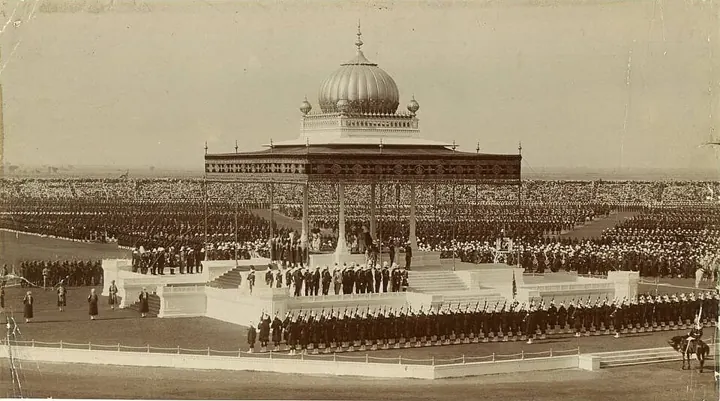
Prelims 2014 asked how long ‘The Partition of Bengal made by Lord Curzon in 1905’ lasted. Answer: until King George V annulled (cancelled) it at the Delhi Durbar in 1911, when the capital was moved to Delhi.
The Partition of Bengal made by Lord Curzon in 1905 lasted until
- the First World War when Indian troops were needed by the British and the partition was ended
- King George V abrogated Curzon’s Act at the Royal Durbar in Delhi in 1911
- Gandhiji launched his Civil Disobedience Movement
- the Partition of India in 1947 when East Bengal became East Pakistan
Show answer
Answer: (b) · UPSC official key
What UPSC asks: Mains: Curzon’s policies (2020). Prelims: when the partition ended (2014).
The Swadeshi movement (1905–08)
Swadeshi means “of one’s own country”. Like buying from a neighbour, not a cheating shop. The movement was formally launched at the Calcutta Town Hall on 7 August 1905 with a resolution to boycott British goods. Prelims 2023: 7th August is declared as the National Handloom Day because of this; both statements were correct and linked.
Consider the following statements :
Statement-I : 7th August is declared as the National Handloom Day.
Statement-II : It was in 1905 that the Swadeshi Movement was launched on the same day.
Which one of the following is correct in respect of the above statements?
- Both Statement-I and Statement-II are correct and Statement-II is the correct explanation for Statement-I
- Both Statement-I and Statement-II are correct and Statement-II is not the correct explanation for Statement-I
- Statement-I is correct but Statement-II is incorrect
- Statement-I is incorrect but Statement-II is correct
Show answer
Answer: (a) · UPSC official key
| Form | Detail |
|---|---|
| Boycott | Foreign cloth burnt; shops picketed; foreign salt and sugar refused |
| Swadeshi enterprise | Bengal Chemicals (P.C. Ray), Banga Lakshmi Cotton Mills; V.O. Chidambaram Pillai’s Swadeshi Steam Navigation Company, Tuticorin (1906) |
| National education | Bengal National College (Aurobindo, principal); National Council of Education (1906) |
| Samitis | Volunteer bodies, e.g. Swadesh Bandhab Samiti of Ashwini Kumar Dutta, Barisal |
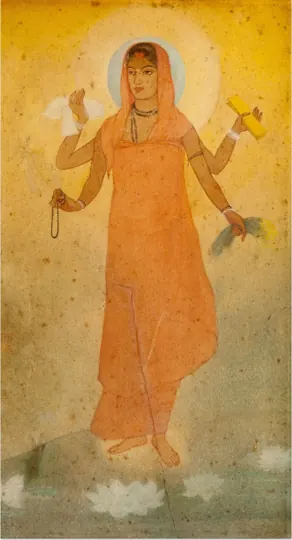
| Culture | Rabindranath’s ‘Amar Sonar Bangla’; Abanindranath’s Bharat Mata |
| Region | Leader |
|---|---|
| Bengal | Surendranath, Aurobindo, Bipin Chandra Pal |
| Maharashtra | Tilak |
| Punjab | Lala Lajpat Rai, Ajit Singh |
| Madras | V.O. Chidambaram Pillai |
At the Calcutta session (1906), Dadabhai Naoroji as president declared swaraj (self-rule) as the Congress goal. The movement declined after 1908 because of repression, the Surat split, lack of a peasant base and the weak response of Muslims.
What UPSC asks: Prelims: 7 August (2023). Mains: the forms of Swadeshi. Next likely angle: why it declined.
The Surat split and the 1909 reforms
Moderates wanted to keep the boycott limited to Bengal. Extremists wanted to spread it across India and push for swaraj. The clash came at the Surat session in 1907, presided over by Rash Behari Ghosh. The session broke up in chaos and the Extremists were kept out of the Congress until 1916.
| After Surat | Detail |
|---|---|
| Repression | Tilak sentenced to six years in Mandalay (1908); Aurobindo retired to Pondicherry |
| Muslim League (1906) | Founded at Dacca after the Simla Deputation (Aga Khan) to Minto |
| Morley-Minto Reforms (1909) | Larger councils; separate electorates for Muslims |
| Press laws | 1908 and 1910 Acts against nationalist papers |
The British plan was to win over the Moderates with reforms while crushing the Extremists. Separate electorates meant Muslims voted only for Muslim candidates. This sowed the seeds of communal politics.
What UPSC asks: Prelims: Surat 1907. Mains: the 1909 reforms and separate electorates. Next likely angle: the Muslim League, 1906.
Mains box: analysis and answer points
- Mains 2020 (GS I, 10 marks): Curzon's policies pushed Indians from petitions to mass action.
- Decline after 1908: repression, Surat split, no peasant base, weak Muslim response.
- Split over methods: Moderates wanted the boycott only in Bengal; Extremists wanted it across India.
Practice
Practice MCQs (8)
With reference to the settlement of 1911 that ended the partition of Bengal, consider the following statements:
1. The annulment was announced by King George V at the Delhi Durbar in December 1911.
2. Bihar and Orissa were separated from Bengal and formed into a new province.
3. The annulment was announced during the viceroyalty of Lord Minto.
Which of the statements given above is/are correct?
Answer (b) & explanation
Statements 1 and 2 are correct. At the Delhi Durbar of 12 December 1911, King George V announced the reunion of the Bengali-speaking districts and the transfer of the capital from Calcutta to Delhi. Bihar and Orissa became a separate province (from 1912) and Assam again became a chief commissioner's province. Statement 3 is wrong: the viceroy in 1911 was Lord Hardinge (1910-16); Minto had left in 1910. The reunion partly answered the agitation, while the capital shift was also meant to move the government away from Bengali politics.
On 16 October 1905, the day the partition of Bengal came into force, Rabindranath Tagore called upon the people of Bengal to observe which ceremony as a symbol of their unity?
Answer (b) & explanation
The partition took effect on 16 October 1905, which was observed in Bengal as a day of mourning: people fasted, bathed in the Ganga, walked barefoot in processions and sang 'Amar Sonar Bangla'. At Tagore's suggestion they tied rakhis on one another's wrists as a sign that the two halves of Bengal remained one. The day also saw a hartal in Calcutta and a meeting at which the foundation of a 'Federation Hall' was laid. The Shivaji and Ganapati festivals were Tilak's innovations in Maharashtra.
Consider the following statements about national education during the Swadeshi movement:
1. The National Council of Education was set up in August 1906.
2. Aurobindo Ghosh was the first principal of the Bengal National College.
3. The Bengal Technical Institute set up in this period later grew into Jadavpur University.
4. The national schools and colleges were affiliated to the University of Calcutta to give their degrees recognition.
How many of the statements given above are correct?
Answer (c) & explanation
Three are correct (1, 2 and 3). The National Council of Education was set up on 15 August 1906 to organise education 'on national lines and under national control'. The Bengal National College opened in 1906 with Aurobindo Ghosh as its principal, and the Bengal Technical Institute, founded the same year, was later merged into the Council's technical college that became Jadavpur University (1955). Statement 4 is wrong: the whole point of national education was to stay outside the official university system; the Carlyle Circular and the Universities Act of 1904 were what students were protesting against.
Consider the following statements about V. O. Chidambaram Pillai:
1. He founded the Swadeshi Steam Navigation Company at Tuticorin to compete with a British shipping company.
2. He was a leader of the strike at the Coral Mills in Tuticorin in 1908.
3. He presided over the Surat session of the Congress in 1907.
4. He was deported to Mandalay in 1907 along with Lala Lajpat Rai.
How many of the statements given above are correct?
Answer (b) & explanation
Two are correct (1 and 2). V. O. Chidambaram Pillai set up the Swadeshi Steam Navigation Company at Tuticorin in 1906 to break the hold of the British India Steam Navigation Company on the coastal trade. With Subramania Siva he led the strike of the Coral Mills workers in 1908; their arrest in March 1908 set off riots in Tirunelveli, and Chidambaram Pillai was given a harsh sentence of transportation. Statement 3 is wrong: the Surat session of 1907 was presided over by Rash Behari Ghosh. Statement 4 is wrong: Lajpat Rai was deported in 1907 with Ajit Singh of Punjab.
With reference to the partition of Bengal, consider the following statements:
1. The proposal to divide Bengal was made public in December 1903 in a letter of the Home Secretary, Herbert Risley.
2. The new province of Eastern Bengal and Assam had its capital at Dacca.
3. In the residual province of Bengal, Bengali speakers formed a clear majority of the population.
Which of the statements given above is/are correct?
Answer (c) & explanation
Statements 1 and 2 are correct. The scheme first became public through Risley's letter of December 1903; it was revised and the final partition was announced in July 1905. The new province of Eastern Bengal and Assam had Dacca as its capital and a Muslim majority. Statement 3 is wrong: the nationalists' complaint was precisely that in the residual Bengal, which kept Bihar and Orissa, the Bengalis became a linguistic minority among Hindi and Oriya speakers. Bipan Chandra calls this an attempt to divide Bengalis both by territory and by religion.
'Bengal united is a power; Bengal divided will pull several different ways.' This frank official comment of 1904 on the purpose of the partition is attributed to
Answer (c) & explanation
The remark comes from an official note of 1904 by Herbert Risley, Home Secretary to the Government of India, and is quoted by Bipan Chandra and Sumit Sarkar as proof that the real aim of the partition was to weaken the Bengali nationalists. Risley added that one of the main objects was to split up and weaken a solid body of opponents. Curzon himself wrote that Calcutta was the centre from which the Congress was 'manipulated', but the 'Bengal united' line is Risley's. Fuller became Lieutenant-Governor only after the partition, and Morley took office in December 1905.
Consider the following statements: Statement-I: The government officially justified the partition of Bengal on the ground that the province, with a population of nearly 80 million, was too large to be administered efficiently. Statement-II: The nationalists saw the partition as an attempt to divide the Bengalis on territorial, linguistic and religious lines and weaken the centre of Indian nationalism.
Which one of the following is correct in respect of the above statements?
Answer (b) & explanation
Both statements are true, but Statement-II does not explain Statement-I. The official argument was administrative: the Bengal Presidency, which then included Bihar and Orissa, had nearly 78-80 million people and was said to be too unwieldy for one Lieutenant- Governor. The nationalists rejected this and read the scheme as a political weapon against Bengali nationalism, citing Risley's notes and Curzon's courting of Muslim opinion at Dacca. Statement-II gives the nationalist interpretation; it does not explain why the government offered the administrative-efficiency reason.
Arrange the following events in chronological order:
1. The Bengal Provincial Conference at Barisal is broken up by the police
2. The boycott resolution is passed at the Calcutta Town Hall
3. The annulment of the partition is announced at Delhi
4. The partition of Bengal comes into force
Select the correct answer using the code given below:
Answer (d) & explanation
The correct order is 2-4-1-3. The boycott resolution was passed at the Calcutta Town Hall on 7 August 1905; the partition came into force on 16 October 1905; the Barisal conference, presided over by Abdul Rasul, was broken up by the police in April 1906, when Surendranath Banerjea was arrested and fined; and the annulment was announced at the Delhi Durbar in December 1911.
0 / 0 correct
Prelims PYQs on this topic (8)
What was the main reason for the split in the Indian National Congress at Surat in 1907?
Answer (b) & explanation
The split came from the Extremists' lack of faith in the Moderates' methods (b). After the partition of Bengal (1905), Extremists led by Tilak, Lajpat Rai, Bipin Chandra Pal and Aurobindo wanted to spread swadeshi, boycott and national education across India. They had no faith in the Moderates' petition-and-prayer approach. At Surat (1907) they clashed over the president, Rash Behari Ghosh, and the session broke up. Minto's separate electorates (a) came only in 1909. The Muslim League (c) was founded in 1906 but did not cause the split. Aurobindo was never a presidential candidate (d); the Extremists wanted Lajpat Rai.
Notice the result: the British arrested Tilak (Mandalay, 1908). The two groups came back together at Lucknow in 1916.
Aurobindo was a leading Extremist, but the presidency dispute was a symptom, not the cause, of the split.
One trap spotted is one mark saved. The PYQ Book lines up every trap UPSC has set, so you walk in prepared. Try the free sample
Answer as per the official UPSC answer key.
Which one of the following movements has contributed to a split in the Indian National Congress resulting in the emergence of ‘moderates’ and ‘extremists’?
Answer (a) & explanation
The Swadeshi Movement (1905–08) split the Congress into Moderates and Extremists (a). The Extremists, led by Tilak, Lala Lajpat Rai and Bipin Chandra Pal, wanted to take boycott and passive resistance across India, while the Moderates wanted to limit it to Bengal and continue petitioning. The quarrel ended in the Surat split of 1907. Non-Cooperation (c), Civil Disobedience (d) and Quit India (b) came much later.
The two wings reunited at the Lucknow session of 1916. Notice how the Swadeshi era also gave India national education and swadeshi industries.
Answer as per the official UPSC answer key.
With reference to the British colonial rule in India, consider the following statements :
- 1. Mahatma Gandhi was instrumental in the abolition of the system of ‘indentured labour’.
- 2. In Lord Chelmsford’s ‘War Conference’, Mahatma Gandhi did not support the resolution on recruiting Indians for World War.
- 3. Consequent upon the breaking of Salt Law by Indian people, the Indian National Congress was declared illegal by the colonial rulers.
Which of the statements given above are correct?
Answer (b) & explanation
Statements 1 and 3 are correct (b). Statement 1 is right because Gandhi's campaign against indentured labour, begun in South Africa and carried on in India, helped end indentured emigration in 1917. Statement 2 is wrong because, at Lord Chelmsford's War Conference in Delhi (April 1918), Gandhi supported the resolution to recruit Indians. He then toured Kheda trying to raise soldiers, and was called a "recruiting sergeant". Statement 3 is right because, during the Salt Satyagraha of 1930, the government declared the Congress Working Committee illegal and arrested its leaders.
Notice the follow-up: the Gandhi–Irwin Pact (March 1931) ended the first phase, and Gandhi went to the Second Round Table Conference. Indenture was formally abolished in 1920.
Gandhi was called the "recruiting sergeant" in 1918. Statement 2 says the opposite.
Answer as per the official UPSC answer key.
Consider the following statements :
- 1. The first woman President of the Indian National Congress was Sarojini Naidu.
- 2. The first Muslim President of the Indian National Congress was Badruddin Tyabji.
Which of the statements given above is/are correct?
Answer (b) & explanation
Only statement 2 is correct (b). Badruddin Tyabji presided at Madras (1887) as the first Muslim president of the Congress. Statement 1 is wrong: Annie Besant presided at Calcutta (1917) and was the first woman president. Sarojini Naidu, at Kanpur (1925), was the first Indian woman president.
Other firsts worth knowing: W. C. Bonnerjee presided over the first session (Bombay, 1885), and Dadabhai Naoroji was president three times. Nellie Sengupta presided in 1933. Notice how UPSC loves "first" questions, where one word like "Indian" changes the answer.
Sarojini Naidu was the first Indian woman to preside, not the first woman.
Answer as per the official UPSC answer key.
The 1929 Session of Indian National Congress is of significance in the history of the Freedom Movement because the
Answer (b) & explanation
At the Lahore session of December 1929, under Jawaharlal Nehru's presidency, the Congress adopted Purna Swaraj (complete independence) as its goal (b). It hoisted the tricolour on the banks of the Ravi on 31 December and fixed 26 January 1930 as Independence Day. Option (a) is wrong: self-government had been the goal much earlier. Non-Cooperation (c) began in 1920, and the Congress boycotted, not joined, the first Round Table Conference (d).
The session also authorised civil disobedience, launched with the Dandi March in 1930. Notice how 26 January later became Republic Day in honour of this pledge.
Answer as per the official UPSC answer key.
With reference to Indian History, the Members of the Constituent Assembly from the Provinces were
Answer (c) & explanation
Elected by the Provincial Legislative Assemblies is correct (c). Under the Cabinet Mission Plan (1946), the provincial members of the Constituent Assembly were indirectly elected by the members of the Provincial Legislative Assemblies through proportional representation by single transferable vote. Seats were roughly one per million population, divided among Muslims, Sikhs and General. (a) is wrong: there was no direct election. (b) is wrong: parties did not nominate members. (d) is wrong: the government did not select experts. Members from the princely states were nominated by the rulers.
Notice the numbers: the Assembly had 389 members (292 provinces, 93 princely states, 4 chief commissioners' provinces), reduced to 299 after Partition. It first met on 9 December 1946. Trap: 'directly elected' sounds democratic but was not the method.
Answer as per the official UPSC answer key.
Write an answer
In 150 words, explain the significance of Indian National Congress with one recent example.
Flashcards (9)
When did the partition take effect?
16 October 1905.
Capital of Eastern Bengal and Assam?
Dacca.
When was the partition annulled?
1911, Delhi Durbar.
Why is 7 August Handloom Day?
Swadeshi launched on 7 August 1905.
Who founded the Swadeshi Steam
Navigation Company? V.O. Chidambaram Pillai.
Session where swaraj was declared the
goal? Calcutta 1906, Naoroji.
President at Surat 1907?
Rash Behari Ghosh.
Where was Tilak jailed in 1908?
Mandalay.
Where was the Muslim League founded?
Dacca, 1906.
Read more: related explainers
- Indian National Congress (1885-1947): Formation, Safety-Valve Debate, Moderates and Extremists, Important Sessions and Role in the Freedom Struggle
- Partition of Bengal (1905): Curzon's Motives, the Swadeshi Response and the 1911 Annulment
- Swadeshi Movement (1905–1911): Partition of Bengal, Methods, Leaders, Impact and UPSC PYQs
In the news
 Next topic · 11.3 →Indian National Congress: Home Rule, Lucknow and sessions
Syllabus: GS-I · The Freedom Struggle — its various stages and important contributors/contributio…