
Chapter 10 · Topic 10.2 · Prelims + Mains2 of 3
Rise of Nationalism: Associations and the press
Key points
- Associations: Landholders' Society (1838), British Indian Association (1851), East India Association (1866, London), Poona Sarvajanik Sabha (1870), Indian Association (1876).
- The Indian National Conference (1883, 1885) merged with the Congress.
- Papers: Hindoo Patriot, Amrita Bazar Patrika (1868), The Hindu (1878), Kesari and Mahratta (1881).
- Press laws: Metcalfe 1835, Vernacular Press Act 1878, Press Acts 1908 and 1910.
Prelims box: facts and traps
- Bengal British India Society (1843): for general public interests, unlike the landlords' society.
- Indian League (1875): Sisir Kumar Ghosh, superseded by the Indian Association (July 1876).
- Madras Mahajan Sabha (1884); Bombay Presidency Association (1885): Pherozeshah Mehta, Telang, Tyabji.
- Bengal Gazette (1780): Hicky, India's first newspaper.
- Trap: the Amrita Bazar Patrika turned English in 1878 to escape the Vernacular Press Act.
Political associations before the Congress
Before 1885, Indians formed regional associations to petition (formally request) the government. Landlords ran the early ones. The educated middle class ran the later ones and spoke for wider interests.
| Year | Association | Founders and place |
|---|---|---|
| 1838 | Landholders’ Society | Dwarkanath Tagore and others, Calcutta; zamindars’ interests |
| 1843 | Bengal British India Society | Calcutta; with the help of George Thompson |
| 1851 | British Indian Association | Calcutta; merger of the two above |
| 1866 | East India Association | Dadabhai Naoroji, London; to influence British opinion |
| 1870 | Poona Sarvajanik Sabha | M.G. Ranade and others, Poona |
| 1875 | Indian League | Sisir Kumar Ghosh, Calcutta |
| 1876 | Indian Association | Surendranath Banerjea and Ananda Mohan Bose, Calcutta |
| 1884 | Madras Mahajan Sabha | M. Viraraghavachari, G. Subramania Iyer, P. Ananda Charlu |
| 1885 | Bombay Presidency Association | Pherozeshah Mehta, K.T. Telang, Badruddin Tyabji |
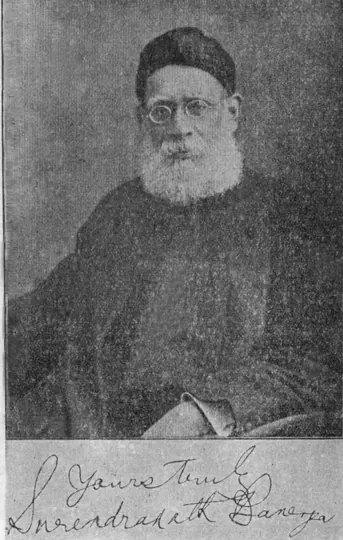
The Indian Association mattered most. It fought the ICS age cut, sent Surendranath on an all-India tour (1877–78), and held the Indian National Conference in Calcutta in 1883 and 1885, which merged with the Congress.
What UPSC asks: Prelims: year, founder, place. Mains: the Indian Association. Next likely angle: landlords vs the middle class.
The press and nationalism
Newspapers were the early nationalists’ main weapon. They printed council debates, criticised policy and reached villages, where one literate person read aloud to others.
| Paper | Detail |
|---|---|
| Bengal Gazette (1780) | James Augustus Hicky; India’s first newspaper |
| Hindoo Patriot | Calcutta; Harish Chandra Mukherjee; exposed the indigo planters |
| Amrita Bazar Patrika (1868) | Sisir Kumar and Motilal Ghosh; switched from Bengali to English overnight in 1878 to escape the Vernacular Press Act |
| The Hindu (1878) | Madras; G. Subramania Iyer and M. Viraraghavachari |
| Kesari and Mahratta (1881) | Tilak; Marathi and English |
| The Bengalee | Surendranath Banerjea |
| Voice of India | Dadabhai Naoroji |
| Press law | Detail |
|---|---|
| 1835 | Metcalfe (‘liberator of the Indian press’) freed the press from licensing |
| 1878 | Vernacular Press Act; repealed by Ripon in 1882 |
| 1897 | Tilak jailed for sedition for articles in the Kesari |
| 1908, 1910 | Newspapers (Incitement to Offences) Act; Indian Press Act |
What UPSC asks: Prelims: paper and editor. Mains: press laws in order. Next likely angle: the 1878 language switch.
Mains box: analysis and answer points
- From landlords to the middle class: associations moved from class interests to public interests.
- Press: carried debates, criticism and the idea of one nation into villages.
- Next likely angle: the Indian Association's all-India role.
Practice
Practice MCQs (8)
The Indian League, started in Calcutta in 1875 with the object of 'stimulating the sense of nationalism amongst the people' and encouraging political education, was founded by
Answer (a) & explanation
Spectrum records that the Indian League was started in 1875 by Sisir Kumar Ghosh to stimulate national feeling and encourage political education; Shambhu Charan Mukherjee was associated with its founding. The League soon foundered and was superseded in 1876 by the Indian Association of Surendranath Banerjea and Ananda Mohan Bose, which had much the same aims. Sisir Kumar Ghosh and his brother Motilal Ghosh are better remembered for the Amrita Bazar Patrika, which Bipan Chandra notes became an English- language paper only in 1878 and remained one of the leading nationalist newspapers.
The earliest public association in modern India, formed by the landlords of Bengal, Bihar and Orissa to promote their class interests, was the
Answer (b) & explanation
Bipan Chandra's old NCERT Modern India calls the Landholders' Society the earliest public association of modern India. Also known as the Zamindari Association, it was formed in the late 1830s by zamindars such as Dwarkanath Tagore, Prasanna Kumar Tagore and Radhakanta Deb. Its aims were narrow, the protection of landlord interests, but Spectrum notes that it marked the beginning of organised political activity and of constitutional agitation for the redress of grievances. In 1851 it merged with the Bengal British India Society to form the British Indian Association.
With reference to the British Indian Association of Calcutta, consider the following statements:
1. It was formed in 1851 by the merger of the Landholders' Society and the Bengal British India Society.
2. It was founded by younger middle-class nationalists who were discontented with the pro- landlord policies of the older bodies.
3. Its petition to the British Parliament before the renewal of the Company's Charter in 1853 asked for a separate legislature of a popular character and the separation of executive from judicial functions.
Which of the statements given above are correct?
Answer (c) & explanation
The British Indian Association came into being in 1851 when the Landholders' Society and the Bengal British India Society merged. Spectrum records its petition to Parliament on the eve of the Charter Act of 1853: a separate legislature of a popular character, separation of executive from judicial functions, lower salaries for higher officers and abolition of the salt duty, abkari and stamp duties. The Act of 1853 partly met this by adding six members to the Governor-General's council for legislative purposes. Bipan Chandra adds that the Association came to identify itself with zamindari interests, which is why younger men later broke away to form the Indian Association in 1876.
Consider the following pairs: Association — Year of founding
1. Bengal British India Society — 1843
2. Indian League — 1885
3. Indian Association of Calcutta — 1876
4. Bombay Presidency Association — 1875
How many of the pairs given above are correctly matched?
Answer (b) & explanation
Spectrum and Bipan Chandra's old NCERT text agree that the Bengal British India Society was founded in 1843 and that Surendranath Banerjea and Ananda Mohan Bose founded the Indian Association in July 1876. The Indian League, the body it superseded, was started by Sisir Kumar Ghosh in 1875, not 1885. The Bombay Presidency Association was formed in 1885 by Pherozeshah Mehta, K.T. Telang and Badruddin Tyabji, the year the Congress itself was founded; Bipan Chandra describes it as the work of militant Bombay intellectuals who broke away from older leaders. So pairs 1 and 3 are correct and pairs 2 and 4 have their dates swapped.
Which association was founded in Bengal in 1843 with the object of 'the collection and dissemination of information relating to the actual condition of the people of British India' and of promoting the interests of all classes by peaceful and lawful means?
Answer (d) & explanation
Spectrum quotes the aims of the Bengal British India Society, founded in 1843: to collect and spread information on the actual condition of the people of British India, and to use peaceful and lawful means to secure the welfare and extend the just rights of all classes. Bipan Chandra's old NCERT text puts it the same way: unlike the Landholders' Society, which promoted the class interests of landlords, the 1843 society was meant to protect and promote general public interests. The two bodies merged in 1851 to form the British Indian Association, so the 1843 society was short-lived but marked a wider outlook than the zamindars' body.
Consider the following statements: Statement-I: The East India Association, organised by Dadabhai Naoroji, was set up in London and not in an Indian city. Statement-II: Its purpose was to discuss the Indian question and to influence British public men to promote Indian welfare.
Which one of the following is correct in respect of the above statements?
Answer (a) & explanation
Both Bipan Chandra's old NCERT text and Spectrum state that Dadabhai Naoroji organised the East India Association in London in the 1860s 'to discuss the Indian question and to influence British public men to promote Indian welfare'. The place followed from the purpose: the Moderates believed that the British Parliament and public wanted to be just to India but did not know the facts, so the case had to be argued in Britain itself. Only later did Naoroji open branches of the Association in prominent Indian cities. Its members included Indians and retired British officials, and Pherozeshah Mehta was active in it while studying law in London.
Consider the following about the Indian Association of Calcutta (1876):
1. It fixed a low membership fee in order to attract the poorer classes.
2. Its first major agitation was over the Indian Civil Service regulations and the age limit for the examination, for which Surendranath Banerjea toured different parts of India in 1877-78.
3. During 1883-85 it organised demonstrations of peasants to get the Bengal Rent Bill changed in favour of the tenants.
4. It welcomed the Vernacular Press Act of 1878 as a necessary curb on seditious writing.
How many of the above statements are correct?
Answer (c) & explanation
Bipan Chandra's old NCERT text calls the Indian Association the most important of the pre-Congress bodies. To draw in large numbers it kept a low membership fee for the poorer classes. Its first big campaign concerned the Civil Service regulations and the examination age limit, cut to 19 in 1877; Surendranath Banerjea toured India in 1877-78 to build all-India opinion on it. The Association also agitated against the Arms Act and the Vernacular Press Act, demanded protection of tenants and, during 1883-85, organised large peasant demonstrations to make the Rent Bill more pro-tenant. It also took up the condition of labourers on English-owned tea plantations.
In 1890 the Indian National Congress decided to hold one of its sessions in 1892 at a venue where it could press the Indian case directly on public opinion, but the proposal was postponed and never revived. Where was this session to be held?
Answer (b) & explanation
Spectrum records that in 1890 the Congress decided to hold a session in London in 1892, but owing to the British general elections the proposal was postponed and never revived. The plan fits the Moderates' belief that British voters and Parliament would act justly once they knew the facts. The same belief explains the British Committee of the Congress set up in London in 1889, deputations of Indians to Britain, the appeal to British voters in 1885 and the career of Dadabhai Naoroji, who spent much of his life and income campaigning in England and was elected to the House of Commons from Finsbury Central in 1892. A London session would have carried this work in Britain to its peak, but it was never held.
0 / 0 correct
Write an answer
In 150 words, explain the significance of Rise of Nationalism with one recent example.
Flashcards (10)
Who founded the Landholders' Society
(1838)? Dwarkanath Tagore and others.
Who founded the East India Association,
and where? Dadabhai Naoroji, London, 1866.
Founders of the Indian Association (1876)?
Surendranath Banerjea and Ananda Mohan Bose.
Who founded the Poona Sarvajanik Sabha?
M.G. Ranade and others, 1870.
Founders of the Bombay Presidency
Association? Pherozeshah Mehta, Telang, Tyabji.
Years of the Indian National Conference?
1883 and 1885.
India's first newspaper?
Hicky's Bengal Gazette, 1780.
Which paper switched to English overnight
in 1878? Amrita Bazar Patrika.
Tilak's papers?
Kesari (Marathi) and Mahratta (English).
'Liberator of the Indian press'?
Charles Metcalfe.
Read more: related explainers
In the news
 Next topic · 10.3 →Rise of Nationalism: The whole chapter
Syllabus: GS-I · The Freedom Struggle — its various stages and important contributors/contributio…