
Chapter 1 · Topic 1.3 · Prelims + Mains3 of 3
Basics of Science: Nobel Prizes and discoveries
Key points
- 2026 Physics: Francis Halzen (IceCube, astrophysical neutrinos).
- 2025 Physics: Clarke, Devoret, Martinis (quantum tunnelling in a circuit).
- 2014 Physics: blue LEDs (Akasaki, Amano, Nakamura).
- Raman: Nobel 1930. National Science Day on 28 February.
- Higgs boson announced 4 July 2012 at CERN.
- Gravitational waves first detected 14 September 2015. Nobel 2017.
Prelims box: facts and traps
| Year | Prize | Laureate(s) |
|---|---|---|
| 2026 | Physics | Francis Halzen |
| 2026 | Chemistry | Henri B. Kagan, Kenso Soai |
| 2026 | Medicine | Deisseroth, Hegemann, Nagel |
| 2025 | Physics | Clarke, Devoret, Martinis |
- Trap (Prelims 2013): the Higgs boson does not enable matter transfer or better fission fuels.
Nobel Prizes in science
Alfred Nobel’s prizes in Physics, Chemistry and Physiology or Medicine reward discoveries or inventions of the greatest benefit to humankind. The Physics and Chemistry prizes are awarded by the Royal Swedish Academy of Sciences (nobelprize.org).
| Year | Prize | Laureate(s) | For |
|---|---|---|---|
| 2026 | Physics | Francis Halzen | the IceCube Neutrino Observatory and the discovery of high-energy neutrinos of astrophysical origin |
| 2026 | Chemistry | Henri B. Kagan, Kenso Soai | non-linear effects and autocatalysis in asymmetric organic synthesis |
| 2026 | Physiology or Medicine | Karl Deisseroth, Peter Hegemann, Georg Nagel | light-gated ion channels and optogenetics |
| 2025 | Physics | John Clarke, Michel H. Devoret, John M. Martinis | macroscopic quantum mechanical tunnelling and energy quantisation in an electric circuit |
Source: nobelprize.org prize summaries and press releases, checked 24 October 2026.
Terms in plain words:
- Neutrinos are tiny particles that pass through almost everything.
- Optogenetics uses light to switch chosen brain cells on or off.
- Quantum tunnelling is when a particle passes through a barrier it should not be able to cross.
Prelims 2026 asked which UK-born laureate won the Nobel Prize in 2025 while a professor at an American university. The answer is John Clarke, of the University of California, Berkeley (nobelprize.org, Prelims 2026: answer (c), answer key provisional).
‘X’, born in the UK, was conferred the Nobel Prize in 2025. He was a professor in an American university when this prize was announced. Identify X :
- Michel H. Devoret
- Richard Robson
- John Clarke
- Joel Mokyr
Show answer
Answer: (c) · UPSC provisional key (final key awaited)
The 2014 Physics prize went to Isamu Akasaki, Hiroshi Amano and Shuji Nakamura for inventing efficient blue light-emitting diodes (LEDs). Blue was the missing piece for bright, energy-saving white light (nobelprize.org). Mains 2021 asked how it changed daily life. White LED lamps last long and save energy, and LEDs light phone and TV screens.
The Nobel Prize in Physics of 2014 was jointly awarded to Akasaki, Amano and Nakamura for the invention of Blue LEDs in 1990s. How has this invention impacted the everyday life of human beings ?
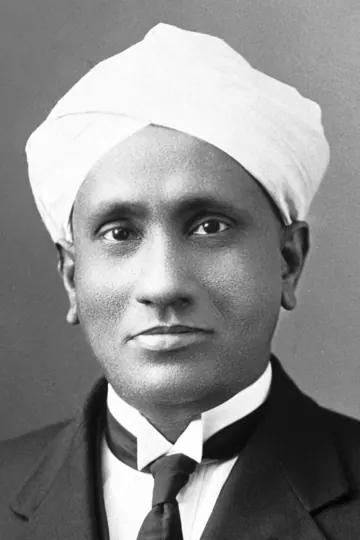
Sir C. V. Raman won the 1930 Physics prize for his work on the scattering of light (light bouncing off molecules) and the discovery of the effect named after him (nobelprize.org).
Landmark discoveries
National Science Day is celebrated every year on 28 February to mark the discovery of the Raman Effect by C. V. Raman at the Indian Association for the Cultivation of Science, Kolkata (PIB). The 2026 theme was “Women in Science Catalysing Viksit Bharat” (PIB, 2026).
Satyendra Nath Bose found a new way of counting particles of light. Einstein extended it, and the result is Bose-Einstein statistics. Particles that obey it, such as photons, are called bosons after him. Mains 2018 asked about Bose’s work on Bose-Einstein statistics and how it changed physics.
Discuss the work of ‘Bose-Einstein Statistics’ done by Prof. Satyendra Nath Bose and show how it revolutionized the field of Physics.
On 4 July 2012 the ATLAS and CMS experiments at CERN announced the discovery of the Higgs boson. Particles get their mass by interacting with the Higgs field, called the Brout-Englert-Higgs mechanism (CERN). Like a celebrity slowed by a crowd, particles that interact more act heavier. So the Higgs helps us understand why elementary particles have mass. It offers no matter transfer or better fission fuels (Prelims 2013: 1 only).
The efforts to detect the existence of Higgs boson particle have become frequent news in the recent past. What is/are the importance/importances of discovering this particle? 1. It will enable us to understand as to why elementary particles have mass. 2. It will enable us in the near future to develop the technology of transferring matter from one point to another without traversing the physical space between them. 3. It will enable us to create better fuels for nuclear fission. Select the correct answer using the codes given below.
- 1 only
- 2 and 3 only
- 1 and 3 only
- 1, 2 and 3
Show answer
Answer: (a) · UPSC official key
On 14 September 2015 LIGO detected gravitational waves for the first time. They came from two black holes of about 29 and 36 solar masses (times the Sun’s mass) that merged 1.3 billion years ago (LIGO Caltech). When scientists observed the merger of giant black holes, the significance was that gravitational waves were detected (Prelims 2019). The 2017 Physics Nobel was given for decisive contributions to the LIGO detector and the observation of gravitational waves (nobelprize.org).
Recently, scientists observed the merger of giant ‘blackholes’ billions of light-years away from the Earth. What is the significance of this observation?
- ‘Higgs boson particles’ were detected.
- ‘Gravitational waves’ were detected.
- Possibility of inter-galactic space travel through ‘wormhole’ was confirmed.
- It enabled the scientists to understand ‘singularity’.
Show answer
Answer: (b) · UPSC official key
Terms like Event Horizon and Singularity (black holes), String Theory and the Standard Model (particle physics) come up in the context of observing and understanding the Universe (Prelims 2017: answer (a)). The event horizon is a black hole’s edge from which not even light escapes.
The terms ‘Event Horizon’, ‘Singularity’, ‘String Theory’ and ‘Standard Model’ are sometimes seen in the news in the context of
- Observation and understanding of the Universe
- Study of the solar and the lunar eclipses
- Placing satellites in the orbit of the Earth
- Origin and evolution of living organisms on the Earth
Show answer
Answer: (a) · UPSC official key
What UPSC asks: Prelims: 2026 IceCube, 28 February. Mains: blue LED, Higgs.
Mains box: analysis and answer points
- Blue LED: impact on daily life and energy saving.
- Bose: Bose-Einstein statistics and bosons.
- Big science: Higgs and gravitational waves.
Practice
Write an answer
In 150 words, explain the significance of Basics of Science with one recent example.
Flashcards (6)
Physics Nobel 2026?
Francis Halzen (IceCube).
Physics Nobel 2025?
Clarke, Devoret, Martinis.
Physics Nobel 2014 for?
Efficient blue LEDs.
National Science Day?
28 February (Raman Effect).
Higgs boson announced?
4 July 2012, CERN.
First gravitational waves detected?
14 September 2015, LIGO.
Read more: related explainers
In the news
- 25 Oct 2026DRDO’s indigenous AIP for Kalvari-class submarines reaches the Setting to Work Phase-2 stage
- 24 Oct 2026NVS-03 launch on 30 October: can ISRO’s new satellite bring NavIC back to life?
- 22 Oct 2026Army’s new Land Warfare Doctrine: what it is and why the Army is rewriting it now
- 21 Oct 2026Japan’s MMX mission lifts off for Mars to bring back a sample of Phobos by 2031
 Next chapter · 2. Physics →Physics: Mechanics, gravitation and heat
Syllabus: GS-III · Achievements of Indians in science & technology; indigenization of technology an…