
NVS-03 launch on 30 October: can ISRO’s new satellite bring NavIC back to life?
Next story · 24 OctNet FDI positive for third straight month: $3.3 billion in August 2026, says RBI Bulletin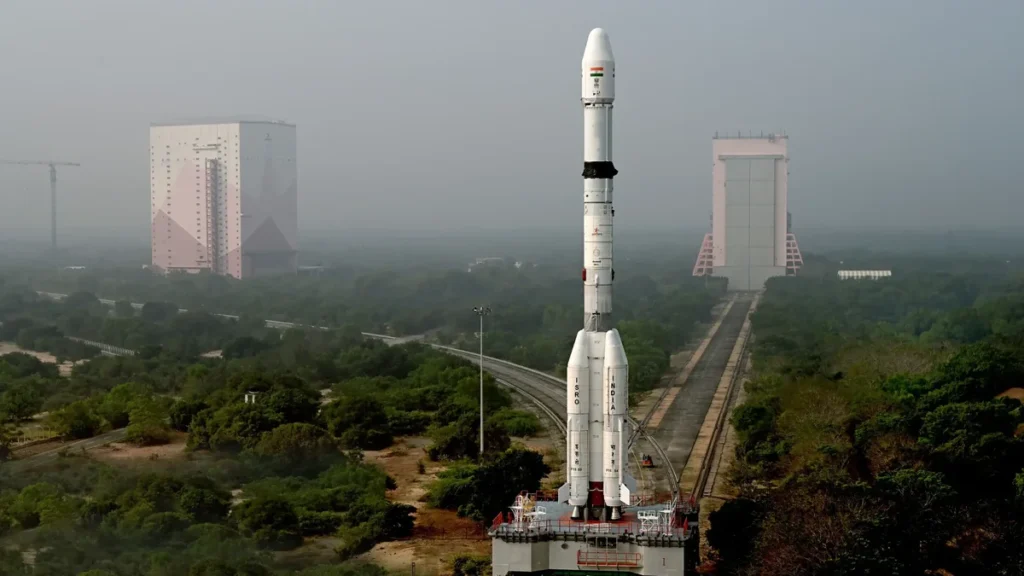
ISRO will launch NVS-03, its third new-generation navigation satellite, on 30 October 2026, The Indian Express reported on 24 October. NavIC, India’s own GPS-like system, has not been able to give location data because only three satellites work, while positioning needs at least four. If NVS-03 works, NavIC can offer positioning again. It is a lesson in why strategic technology needs both satellites and users.
- Launch
- NVS-03, 30 Oct
- Working now
- 3 (need 4)
- Coverage
- India + 1,500 km
- Cost
- Nearly ₹2,250 crore
NavIC and NVS-03: what happened?
Your phone needs signals from at least four satellites to know where you are. NavIC is stuck at three, and that one missing satellite is the whole story.
- 30 Oct 2026: ISRO is to launch NVS-03; its launch had been in the pipeline since late 2025.
- The government told Parliament this year that IRNSS-1B, IRNSS-1I and NVS-01 work, so only the timing service runs.
- Of 11 navigation satellites launched since July 2013, six failed, mainly due to faulty imported atomic clocks and some orbit problems.
- NVS-02 (January 2025) reached transfer orbit, but a signal did not reach the oxidiser pyro valve, so its engine could not fire.
What is NavIC?
- NavIC (Navigation with Indian Constellation) is the operational name of the Indian Regional Navigation Satellite System (IRNSS).
- Seven satellites covering India and up to 1,500 km around it; designed for accuracy up to 10 m for public users.
- Work began in 1999, after the Kargil war, when Indian forces could not use the US-owned GPS.
- Second-generation NVS satellites carry indigenous atomic clocks, a 12-year life and an extra L1 signal used by GPS chips.
How does NavIC compare with other systems?
| System | Owner | Satellites | Coverage |
|---|---|---|---|
| GPS | US | About 32 | Global |
| GLONASS | Russia | 24 | Global |
| Galileo | EU | 27 | Global |
| BeiDou | China | 30 | Global |
| NavIC | India | 7 (designed) | Regional |
What is the policy angle?
- Indian Space Policy, 2023: ISRO focuses on research and new technology; IN-SPACe and NSIL support private and commercial activity.
- Strategic autonomy: a national system cannot be switched off by another country in a crisis.
- The restricted (encrypted) NavIC service is for authorised users such as the armed forces.
- Railways plan real-time tracking of about 12,000 trains; around 8,700 already have NavIC devices.
What are the challenges?
- Atomic clock failures and ageing satellites past their 10-year life.
- Two failed replacement launches: IRNSS-1H (2017) and NVS-02 (2025).
- The CAG (2018) found user receivers were developed only from 2017, wasting satellite life.
- Few phones and devices use NavIC compared with GPS.
What should be done?
- Launch NVS-03 and the next satellites on time to rebuild the constellation.
- Keep spare satellites ready so the system never falls below four.
- Push NavIC chips in phones, vehicles and wearables using the L1 band.
- Study the plan to widen NavIC coverage.
What can Prelims ask on NavIC?
- IRNSS = NavIC; seven satellites; regional coverage up to 1,500 km beyond India.
- Minimum four satellites needed for positioning.
- Signals: L5 and S band; NVS series adds L1.
- Japan’s QZSS also augments GPS in Asia-Oceania.
- Global systems: GPS, GLONASS, Galileo, BeiDou.
How to write about NavIC in Mains
Practice question (10 marks, 150 words): ‘NavIC shows that building a satellite system is easier than sustaining it.’ Examine. (GS-III)
- Intro: NVS-03 on 30 October 2026; NavIC below four working satellites.
- Body 1: why India needed NavIC: Kargil, strategic autonomy.
- Body 2: what went wrong: clocks, launches, slow receiver development.
- Body 3: NVS series fixes: indigenous clocks, L1 band.
- Conclusion: spares, user ecosystem, timely launches.
Image: GSLV-F15 carrying the navigation satellite NVS-02 at Sriharikota before launch, January 2025. ISRO, via Wikimedia Commons, GODL-India
How to use this in Mains
If asked: Discuss the significance of an indigenous satellite navigation system for India. (GS-III)
Quote: “To provide basic positioning service, minimum four operational satellites are required in orbit.”
Use it: Use the government’s own line to explain the current gap.
If asked: Examine the challenges faced by India’s space programme in recent years. (GS-III)
Quote: “The NavIC system has had a choppy track record.”
Use it: Quote it before listing the clock and launch failures.
Exam angle
Prelims: NavIC/IRNSS, coverage, signals, global GNSS. · Mains GS-III: indigenisation of technology, space programme.
Practice MCQs
Original practice questions (not PYQs).
Consider the following statements about NavIC:
1. It is a global navigation satellite system.
2. It needs at least four operational satellites to provide positioning.
3. NVS series satellites carry indigenously developed atomic clocks.
Which of the statements given above are correct?
Answer (b) & explanation
NavIC is a regional system covering India and 1,500 km around it.
Which of the following is a regional satellite system that augments GPS in the Asia-Oceania region?
Answer (c) & explanation
Japan’s Quasi-Zenith Satellite System augments GPS signals in the Asia-Oceania region.
The main reason for the failure of several early IRNSS satellites was:
Answer (b) & explanation
Several first-generation satellites failed because their imported atomic clocks stopped working.
Questions students ask about this
Why is NavIC not giving location data?
Only three satellites work, while positioning needs at least four.
When will NVS-03 launch?
ISRO has scheduled it for 30 October 2026.
What area does NavIC cover?
India and a region up to 1,500 km around it.
What is new in NVS satellites?
Indigenous atomic clocks, a 12-year life and an extra L1 frequency signal.
Keep studying
Go deeper
facts from cited sources only; faculty review pending