
Chapter 3 · Topic 3.1 · Prelims + Mains1 of 3
French Revolution: Causes, estates and 1789
Key points
- France was bankrupt, taxes fell only on the Third Estate, and bread was scarce in 1789.
- Three estates: clergy and nobles (about 2%) had privileges; the Third Estate (about 97%) paid the taxes.
- 1789 chain: National Assembly (17 June), Tennis Court Oath (20 June), Bastille (14 July), feudalism abolished (4 August), Rights of Man (26 August).
1 PYQ 2016–2025
Prelims box: facts and traps
- Estates-General: called in May 1789, first time since 1614.
- Sieyès: 'What is the Third Estate?' (January 1789).
- Thinkers: Montesquieu, The Spirit of the Laws (1748), separation of powers; Rousseau, The Social Contract (1762), general will.
- Trap: the 1791 Constitution kept the king (constitutional monarchy); only tax-paying 'active citizens' voted.
On this page (3 sections)
Causes
| Cause | In simple words |
|---|---|
| Bankruptcy | Wars, including help to the American Revolution, left huge debts; half the budget went on interest |
| Unfair taxes | Taille, tithe and salt tax (gabelle) fell on the Third Estate; clergy and nobles largely exempt |
| Food crisis | Bad harvest of 1788; bread prices peaked in 1789 |
| Enlightenment | Locke, Montesquieu (separation of powers, The Spirit of the Laws, 1748), Voltaire, Rousseau (The Social Contract, 1762: general will) |
| Rising middle class | A rich bourgeoisie shut out of privilege and office |
| Weak monarchy | Louis XVI’s indecision; Queen Marie Antoinette’s unpopularity |
Taille was a land tax. The tithe was a tenth of farm produce paid to the Church. Enlightenment thinkers said reason, not birth, should rule. The trigger came when Louis XVI called the Estates-General, France’s old assembly, in May 1789. It had not met since 1614.
The old regime and its estates
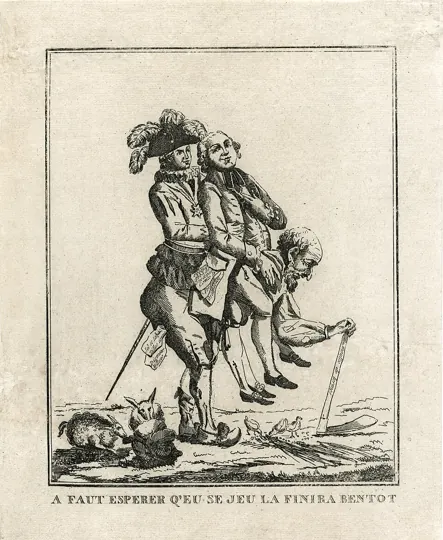
Three “estates”, or ranks fixed by birth:
| Estate | Who | Position |
|---|---|---|
| First | Clergy (about 0.5% of people) | Collected the tithe; exempt from most taxes |
| Second | Nobility (about 1.5%) | Feudal dues, top posts; exempt from most taxes |
| Third | Everyone else: bourgeoisie, peasants, artisans, workers (about 97%) | Paid the taxes; no privileges |
Each estate had one vote, so the first two could always outvote the Third 2–1, like 3 students outvoting 97 classmates. Abbé Sieyès’s pamphlet ‘What is the Third Estate?’ (January 1789) answered: everything.
From Estates-General to National Assembly
| Date | Event |
|---|---|
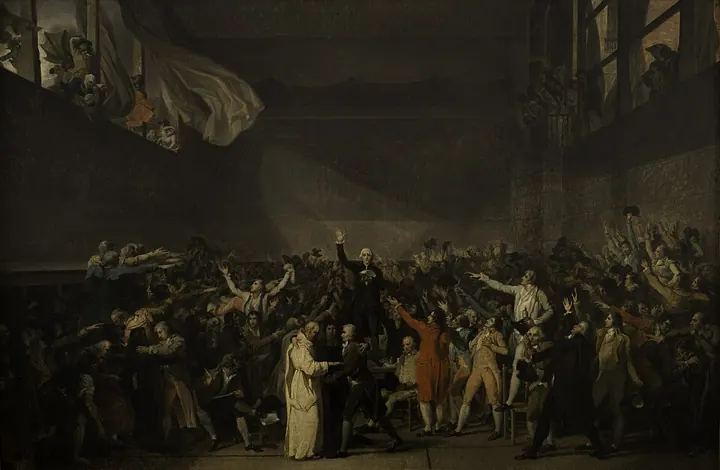
| 17 June 1789 | Third Estate declares itself the National Assembly |
| 20 June 1789 | Tennis Court Oath: not to disperse until France had a constitution |
| 14 July 1789 | Storming of the Bastille (now France’s national day) |
| July–August 1789 | Great Fear; feudal privileges abolished (4 August) |
| 26 August 1789 | Declaration of the Rights of Man and of the Citizen |
| 1790 | Civil Constitution of the Clergy; church lands sold |
| 1791 | Constitution: constitutional monarchy; only ‘active citizens’ (taxpayers) could vote |
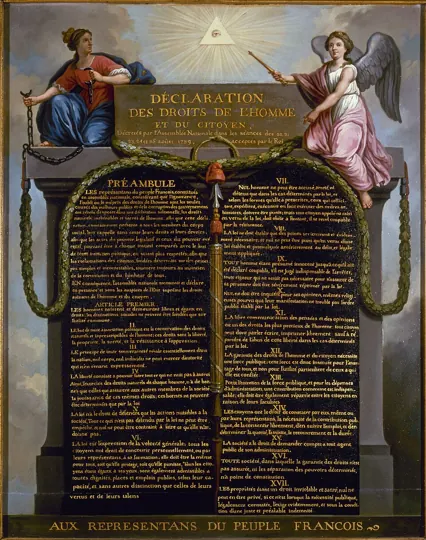
Slogan: Liberté, égalité, fraternité (liberty, equality, brotherhood). The Declaration said people are born free and equal. Power belongs to the nation, not the king.
Mains box: analysis and answer points
- Causes in four boxes: money (debt, unfair taxes), food (1788 harvest), ideas (Enlightenment), society (blocked bourgeoisie, weak king).
- Trigger vs cause: the Estates-General was the trigger; the estate system was the root cause.
Practice
Mains PYQs on this topic (1)
Write an answer
In 150 words, explain the significance of French Revolution with one recent example.
Flashcards (9)
When was the Estates-General last called
before 1789? 1614.
Author of The Social Contract?
Rousseau (1762).
Author of The Spirit of the Laws?
Montesquieu (1748).
Which estate paid most taxes?
The Third Estate.
Author of 'What is the Third Estate?'
Abbé Sieyès.
Tennis Court Oath date?
20 June 1789.
Storming of the Bastille?
14 July 1789.
Declaration of the Rights of Man?
26 August 1789.
Feudal privileges abolished?
4 August 1789.
Read more: related explainers
 Next topic · 3.2 →French Revolution: Terror and Napoleon
Syllabus: GS-I · History of the world will include events from 18th century such as industrial re…