
Chapter 3 · Topic 3.2 · Prelims + Mains2 of 3
French Revolution: Terror and Napoleon
Key points
- France became a republic in September 1792 and executed Louis XVI in January 1793.
- Robespierre's Reign of Terror (1793–94) ended with his own fall at Thermidor (July 1794).
- Napoleon took power in 1799, became emperor in 1804, gave the Napoleonic Code and fell at Waterloo (1815).
1 PYQ 2016–2025
Prelims box: facts and traps
- Terror: Committee of Public Safety, Law of Suspects; about 17,000 official executions.
- Trap: the Jacobins abolished colonial slavery in 1794; Napoleon restored it.
- Directory: 1795–99, five directors. 18 Brumaire: 1799 coup.
- Congress of Vienna (1815): Metternich restored monarchies.
Republic and the Reign of Terror
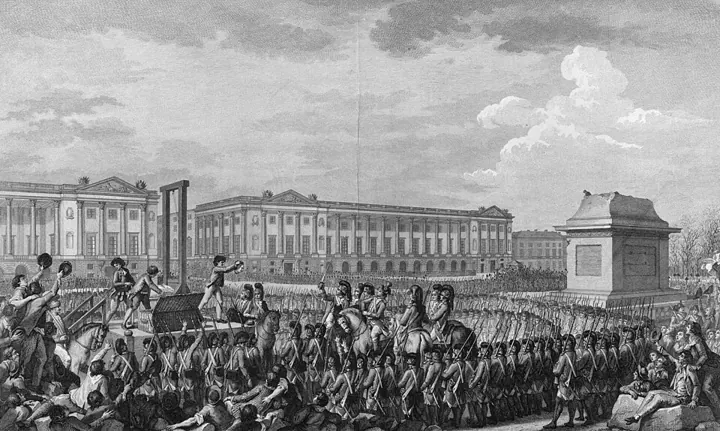
| Event | What happened |
|---|---|
| War (April 1792) | Against Austria and Prussia |
| Republic (September 1792) | National Convention, elected by all adult men; monarchy abolished |
| Louis XVI executed | 21 January 1793 |
| Committee of Public Safety | Maximilien Robespierre and the Jacobins; Girondins purged |
| Reign of Terror (1793–94) | Law of Suspects; about 17,000 official executions by guillotine |
| Thermidor (July 1794) | Robespierre overthrown and executed |
| Directory (1795–99) | Five directors; corruption and instability |
The Jacobins were the radical club. They also fixed maximum bread prices, abolished slavery in the colonies (1794, later restored by Napoleon) and brought in the metric system. Like a fever, the Terror burnt hot and broke when its own leader fell.
Napoleon Bonaparte
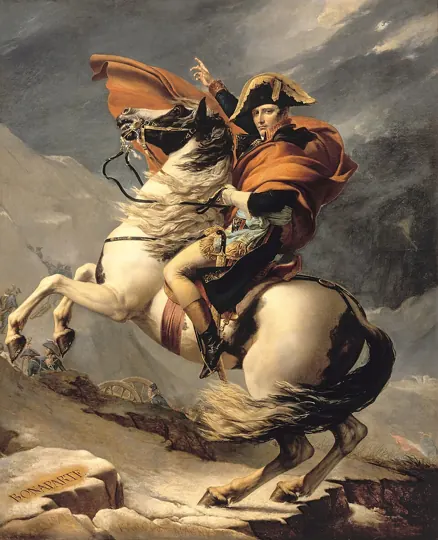
| Phase | What happened |
|---|---|
| Coup of 18 Brumaire (1799) | Became First Consul |
| Emperor (1804) | Crowned himself at Notre-Dame |
| Napoleonic Code (1804) | Equality before law, property rights, civil marriage; spread across Europe |
| Continental System (1806) | Blockade of British trade |
| Russia (1812) | Disastrous retreat from Moscow |
| Defeat | Leipzig (1813); exile to Elba; Hundred Days; Waterloo (1815); died on St Helena (1821) |
| Congress of Vienna (1815) | Restored monarchies; Metternich’s conservative order |
The Ethics question below quotes Napoleon on ambition. Use him for both sides. Good: the Code and modern administration. Bad: endless war.
“Great ambition is the passion of a great character. Those endowed with it may perform very good or very bad acts. All depends on the principles which direct them.” — Napoleon Bonaparte. Stating examples mention the rulers (i) who have harmed society and country, (ii) who worked for the development of society and country.
What UPSC asks
Prelims: Thermidor, the Code of 1804, Waterloo 1815. Mains and Ethics: Napoleon as a ruler of mixed legacy.
Mains box: analysis and answer points
- Ethics 2017: Napoleon's quote on ambition; contrast rulers who harmed and who developed their country.
- Napoleon's mixed legacy: Code, modern administration and merit on one side; dictatorship and endless war on the other.
Practice
Mains PYQs on this topic (1)
Write an answer
In 150 words, explain the significance of French Revolution with one recent example.
Flashcards (9)
France became a republic?
September 1792.
Louis XVI executed?
21 January 1793.
Leader of the Committee of Public Safety?
Robespierre.
Fall of Robespierre?
Thermidor, July 1794.
Napoleon's coup?
18 Brumaire, 1799.
Napoleon crowned emperor?
1804.
Napoleonic Code year?
1804.
Napoleon's final defeat?
Waterloo, 1815.
Who led the Congress of Vienna?
Metternich (Austria).
Read more: related explainers
 Next topic · 3.3 →French Revolution: Impact and legacy
Syllabus: GS-I · History of the world will include events from 18th century such as industrial re…