
Chapter 1 · Topic 1.2 · Prelims + Mains2 of 3
Industrial Revolution: Second wave and society
Key points
- Second wave and latecomers.
- Social changes.
3 PYQs 2015–2024
Prelims box: facts and traps
| Steel | Bessemer converter (1856), Siemens–Martin open hearth |
|---|---|
| Electricity | Edison's power station (1882), electric motors and lighting |
| Chemicals | Dyes, fertilisers; Germany led |
| Oil and engines | Internal combustion engine; Benz's motor car (1885). |
- Second Industrial Revolution (c. 1870– Marker 1914)
- Trap: Stress the state as initiator, borrowed technology, zaibatsu conglomerates, a drive for military strength ('rich country, strong army') and speed: a few decades instead of a century.
The second wave and latecomers
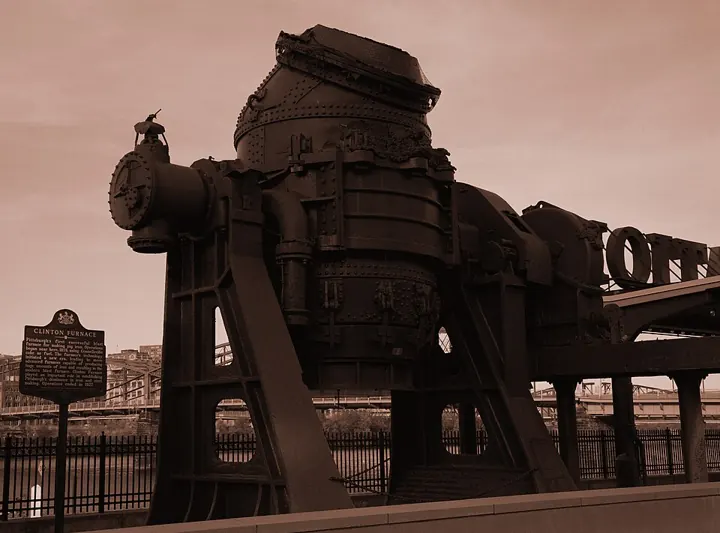
Second Industrial Revolution (c. 1870– Marker 1914)
| Steel | Bessemer converter (1856), Siemens–Martin open hearth |
|---|---|
| Electricity | Edison’s power station (1882), electric motors and lighting |
| Chemicals | Dyes, fertilisers; Germany led |
| Oil and engines | Internal combustion engine; Benz’s motor car (1885) |
| Second Industrial Revolution (c. 1870– 1914) | Marker |
|---|---|
| Mass production | Ford’s moving assembly line (1913) |
| Latecomer | Path |
|---|---|
| Germany | After unification (1871): state-backed banks, cartels, technical education |
| USA | Vast resources, immigrants, railways, big corporations |
| Japan | Meiji Restoration (1868): state-built model factories such as Tomioka Silk Mill (1872), later sold to zaibatsu; foreign experts; universal schooling |
Mains 2013: “‘Latecomer’ Industrial Revolution in Japan involved certain factors that were markedly different from what West had experienced.” Stress the state as initiator, borrowed technology, zaibatsu conglomerates, a drive for military strength (‘rich country, strong army’) and speed: a few decades instead of a century.
“‘Latecomer’ Industrial Revolution in Japan involved certain factors that were markedly different from what West had experienced.” Analyze.
Social changes
| Change | Marker |
|---|---|
| Urbanisation | Manchester grew from about 25,000 (1770s) to over 300,000 (1850s) |
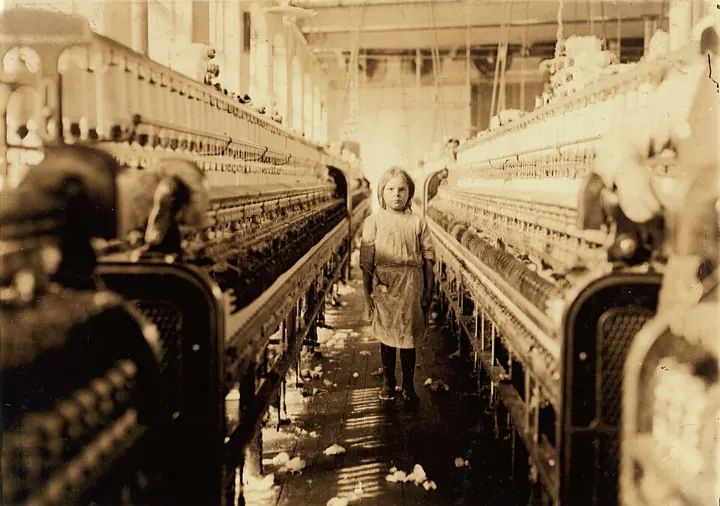
| Factory system | Clock discipline, 12–14 hour days, women and child workers |
| Reform laws | Factory Act, 1833 (child labour limits, inspectors); Ten Hours Act, 1847 |
| Protest | Luddites broke machines (1811–16); Chartists demanded votes for working men (1838–48) |
| Organisation | Combination Acts repealed (1824); trade unions grew |
| New ideas | Robert Owen’s New Lanark; Engels, The Condition of the Working Class in England (1845); Marx |
A new middle class of industrialists and a new working class replaced the old rural order, and the ‘social question’ fed socialism, reform and mass politics.
Mains box: analysis and answer points
- Likely next angle: Ford 1913
- Asked: Mains 2013 (GS Paper I, 10 marks): 'Latecomer' Industrial Revolution in Japan involved certain factors that were markedly different from what West had experienced." Analyze.
Practice
Prelims PYQs on this topic (2)
Read the passage
We take it for granted now that science has a social responsibility. The idea would not have occurred to Newton or Galileo. They thought of science as an account of the world as it is, and the only responsibility that they acknowledged was to tell the truth. The idea that science is a social enterprise is modern, and it begins at the industrial revolution. We are surprised that we cannot trace a social sense further back, because we nurse the illusion that the industrial revolution ended a golden age.
Which one of the following statements best reflects the thinking of the author about the science?
Answer (d) & explanation
The author thinks science must pursue truth and also serve society (d). Step 1: the passage says Newton and Galileo saw science's only duty as "to tell the truth". Step 2: it adds that today "we take it for granted" that science has a social responsibility, an idea that began with the industrial revolution. Joining both gives (d). Step 3: option (c) reverses the link: the passage says the social sense began at the industrial revolution, not that science caused it. Options (a), scientists' commitment, and (b), scientific awareness, are not discussed.
Tip: when a passage moves from an old view to a new one, the best answer often joins both. India's Constitution (Article 51A) lists developing scientific temper as a fundamental duty.
Answer as per the official UPSC answer key.
Which of the following statements correctly explains the impact of Industrial Revolution on India during the first half of the nineteenth century ?
Answer (a) & explanation
Indian handicrafts were ruined (a). After the Charter Act of 1813 ended the Company's trade monopoly, cheap machine-made British cloth flooded India under one-way free trade. British goods entered India with very low duties, while Indian goods faced high duties in Britain. This ruined Indian handicrafts, especially weaving, and towns such as Dhaka, Murshidabad and Surat declined. This process is called deindustrialisation. Option (b) is wrong because the first cotton mill came only in 1854. Option (c) is wrong because railways began only in 1853. Option (d) is wrong because duties on British imports were very low.
Notice the result: millions of artisans moved to farming, adding to pressure on land. Dadabhai Naoroji's Drain Theory and R.C. Dutt described this.
Answer as per the official UPSC answer key.
Mains PYQs on this topic (1)
Write an answer
In 150 words, explain the significance of Industrial Revolution with one recent example.
Flashcards (7)
Bessemer process year?
1856.
Ford's moving assembly line?
1913.
Japan's model silk mill?
Tomioka (1872).
Meiji Restoration year?
1868.
First major British Factory Act with
inspectors? 1833.
Who were the Luddites?
Machine-breakers, 1811–16.
Engels' 1845 book?
The Condition of the Working Class in England.
Read more: related explainers
 Next topic · 1.3 →Industrial Revolution: Economic changes and impact on India
Syllabus: GS-I · History of the world will include events from 18th century such as industrial re…