
Chapter 9 · Topic 9.2 · Prelims + Mains2 of 3
Inter-War Period: Nazism and Hitler
Key points
- Weimar Germany was blamed for Versailles and hit by hyperinflation (1923) and the Depression.
- The Nazi vote rose from 2.6% (1928) to 37% (July 1932); Hitler became Chancellor on 30 January 1933.
- In power he ended democracy (Enabling Act), persecuted Jews (Nuremberg Laws) and expanded (Austria, Czechoslovakia).
Prelims box: facts and traps
- Beer Hall Putsch: 1923. Locarno: 1925.
- Enabling Act: 1933. Night of the Long Knives: 1934. Nuremberg Laws: 1935. Kristallnacht: 1938.
- Anschluss: March 1938. Munich: September 1938.
Weimar Germany and the rise of Nazism
| Stage | Detail |
|---|---|
| Weimar Republic (1919) | Democratic but blamed for Versailles (‘stab in the back’ myth) |
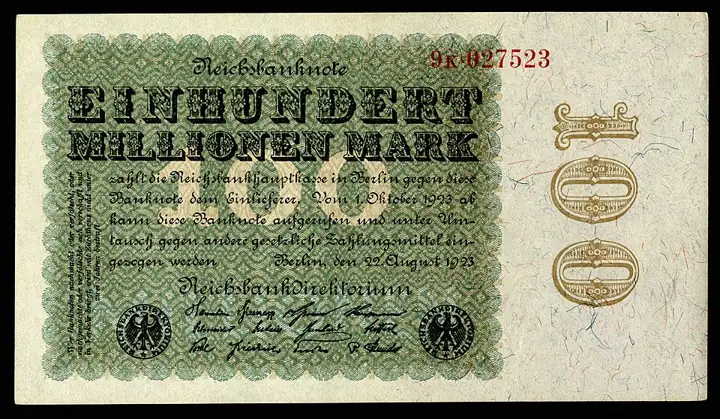
| 1923 crisis | French occupation of the Ruhr; hyperinflation; Hitler’s failed Munich (Beer Hall) Putsch |
| Recovery (1924–29) | Stresemann, Dawes Plan, Locarno (1925), League membership (1926) |
| Depression | Nazi vote rose from 2.6% (1928) to 37% (July 1932) |
| Ideology | Mein Kampf: racial nationalism, antisemitism, Lebensraum, anti-communism |
Each stage in plain words
- ‘Stab in the back’ myth: the false story that Germany’s army was not beaten but betrayed at home by politicians, socialists and Jews. It made the new democracy look like traitors from day one.
- Hyperinflation: prices rose so fast that money became almost worthless. In 1923 people carried cash in wheelbarrows to buy bread, and families lost their life savings. Imagine your ₹1 lakh savings buying only a cup of tea a few months later.
- Putsch: an attempt to seize power by force. Hitler’s 1923 putsch in Munich failed, and in jail he wrote Mein Kampf (“My Struggle”).
- Recovery: under Stresemann, US loans and the Locarno treaties brought a few good years.
- Depression: when US loans stopped, millions lost jobs, and the Nazi vote jumped.
- Lebensraum: “living space”, Hitler’s plan to take land in eastern Europe for Germans.
- Antisemitism: hatred of Jews, whom Hitler blamed for all of Germany’s problems.
Why did Germans vote for Hitler?
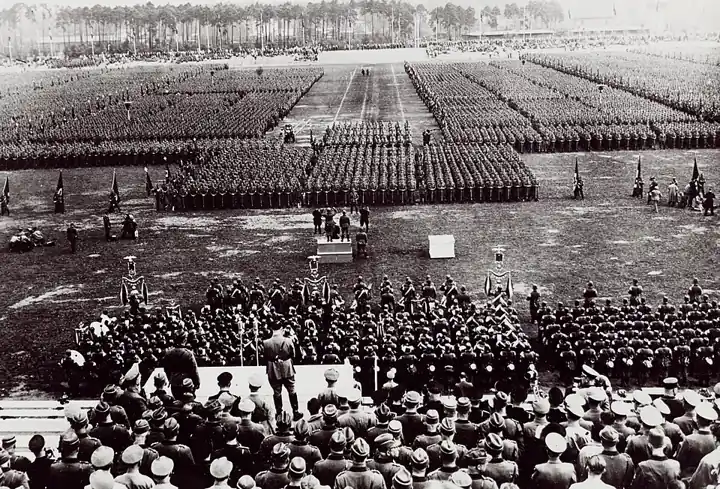
Fear and hope. Fear of unemployment and of a communist revolution, and hope that a strong leader would restore jobs and national pride. Brilliant propaganda, mass rallies and street violence by his SA stormtroopers helped. Big business and conservatives backed him, thinking they could control him.
Hitler in power
| Step | Detail |
|---|---|
| Chancellor | 30 January 1933 |
| Reichstag fire and Enabling Act (1933) | Emergency powers, then rule by decree; parties and unions banned |
| Night of the Long Knives (1934) | SA leaders purged; Führer after Hindenburg’s death |
| Nuremberg Laws (1935) | Stripped Jews of citizenship; Kristallnacht pogrom (1938) |
| Rearmament | Conscription (1935); Rhineland remilitarised (1936) |
| Expansion | Anschluss with Austria (March 1938); Sudetenland after Munich (September 1938); rest of Czechoslovakia (March 1939) |
- Enabling Act: a law that let Hitler make laws without parliament. Democracy ended legally, by vote.
- Führer: “leader”, the title Hitler took as head of state and government.
- Pogrom: an organised attack on a community. On Kristallnacht (“night of broken glass”), Jewish shops, homes and synagogues were smashed.
- Anschluss: “joining”, the takeover of Austria.
This persecution later became the Holocaust, the Nazi murder of about six million Jews during the Second World War.
The India link
Indian leaders reacted differently. Nehru openly condemned fascism and Nazism. Subhas Chandra Bose, seeking any help against Britain, met Hitler in 1942, though he was disappointed by him. Meanwhile, over two million Indians served in the British Indian Army against the Axis powers in the Second World War.
Common doubts
Did Hitler seize power in a coup? No. He was legally appointed Chancellor, then used the law and emergency powers to destroy democracy from inside. That is why historians warn that democracies can die through elections too.
What UPSC asks
Prelims: Enabling Act 1933, Nuremberg Laws 1935, Anschluss 1938. Mains: why Weimar failed and how the Depression helped Hitler.
Mains box: analysis and answer points
- Why Weimar failed: Versailles burden, 'stab in the back', hyperinflation, Depression, weak coalitions.
- Hitler came to power legally and then destroyed democracy from inside.
Practice
Write an answer
In 150 words, explain the significance of Inter-War Period with one recent example.
Flashcards (6)
Beer Hall Putsch?
1923, Munich.
Hitler's book?
Mein Kampf.
Nazi vote July 1932?
About 37%.
Hitler became Chancellor?
30 January 1933.
Nuremberg Laws?
1935.
Anschluss?
March 1938.
Read more: related explainers
 Next topic · 9.3 →Inter-War Period: Militarism in Japan
Syllabus: GS-I · History of the world will include events from 18th century such as industrial re…