
The Cold War (1947-1991): Origins, Phases, Major Crises, End, and India’s Non-Alignment (UPSC Notes)
UPSC has already asked about this. Read the story with these questions in mind.
How it began
Allies in war became rivals in peace over Eastern Europe and Germany. Churchill’s “iron curtain” speech (1946), the Truman Doctrine (1947) of containing communism, and the Marshall Plan for European recovery set the lines. The Soviet blockade of Berlin (1948-49) led to NATO (1949); the Warsaw Pact followed in 1955.
Phases and crises
| Period | Events |
|---|---|
| 1947-53 | Berlin airlift, Chinese Revolution (1949), Korean War (1950-53), Soviet atom bomb (1949) |
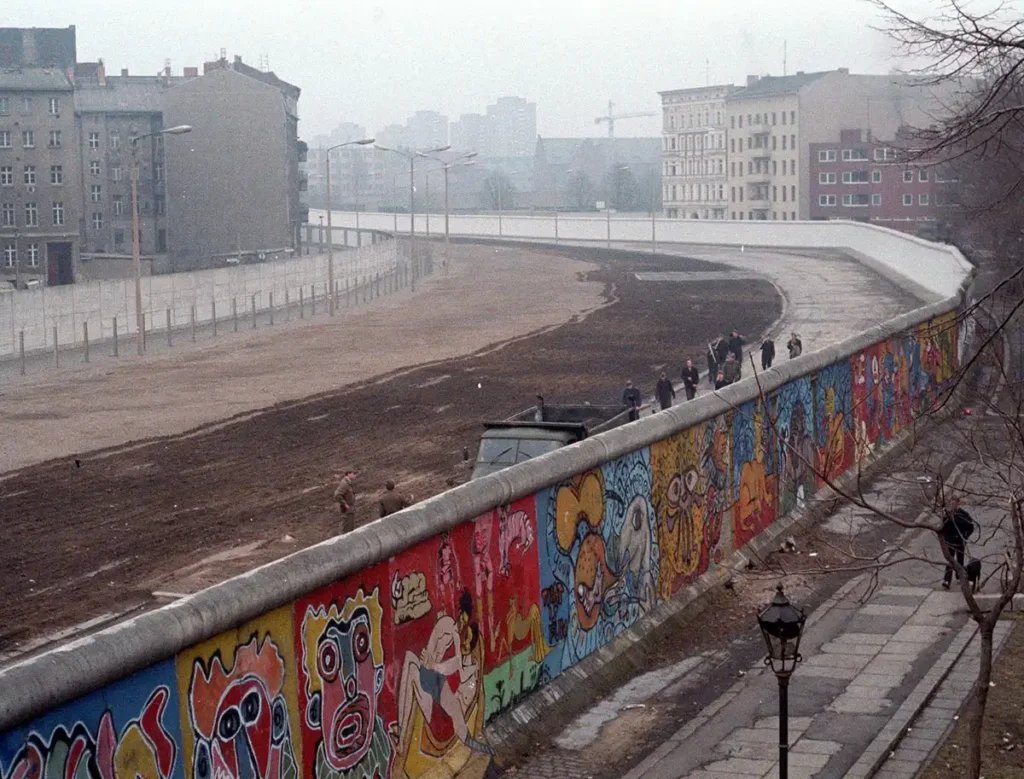
| 1953-62 | Hungary (1956), Sputnik (1957), Berlin Wall (1961), Cuban Missile Crisis (1962) |
| 1963-79 | Vietnam War, Partial Test Ban (1963), NPT (1968), detente: SALT I (1972), Helsinki (1975) |
| 1979-85 | Soviet invasion of Afghanistan, “second Cold War”, Reagan’s defence build-up |
| 1985-91 | Gorbachev’s glasnost and perestroika, INF Treaty (1987), fall of the Berlin Wall (1989), USSR dissolved (1991) |
India’s path: non-alignment
Nehru refused to join either bloc. The Bandung Conference (1955) and the Belgrade summit (1961), with Nasser, Tito, Sukarno and Nkrumah, founded the Non-Aligned Movement. Non-alignment did not mean neutrality: India mediated in Korea, chaired the commission in Indo-China, and took aid from both sides. The 1971 Indo-Soviet Treaty of Peace, Friendship and Cooperation came when the US-China-Pakistan axis threatened India before the Bangladesh war.
Why it still matters
The Cold War shaped borders (two Koreas, a divided Germany until 1990), alliances (NATO’s expansion is still a live issue, as the Ukraine war shows), nuclear arms control, and India’s preference for strategic autonomy, now expressed as multi-alignment with the Quad, SCO and BRICS at once.
Cold War: UPSC angle
For UPSC CSE
Prelims: treaties and dates, NAM founders, crises. Mains GS-I: Cold War and decolonisation, end of the bipolar world; GS-II: relevance of non-alignment.
Cold War UPSC PYQs (Prelims)
Questions UPSC has actually asked, from the official papers. Pick an option to check yourself.
No Prelims question in the Battle IAS bank is directly on this topic yet.
Mains PYQs on this topic
Questions from the official UPSC Mains papers (2023-2026 in the Battle IAS Mains bank), newest first. Each links to a model answer.
- UPSC Mains 2025 · GS Paper II · Q10 · 10 marks
“With the waning of globalization, post-Cold War world is becoming a site of sovereign nationalism.” Elucidate.
Quick quiz
NATO was formed in
After the Berlin blockade.Answer (b)
The Cuban Missile Crisis took place in
October 1962.Answer (c)
The first NAM summit was held at
1961.Answer (b)
FAQs
Why is it called a “cold” war?
Because the superpowers never fought each other directly; conflict ran through proxies, arms races and propaganda.
What was detente?
A period of eased tension in the 1970s marked by arms control treaties like SALT I.
When did the Cold War end?
Most date it to the fall of the Berlin Wall in 1989 and the dissolution of the USSR in December 1991.
Was India neutral in the Cold War?
No. Non-alignment meant independent judgement on each issue, not neutrality.
Spotted an error? Tell us. We correct within 48 hours.
Image: Noir, Wikimedia Commons, CC BY-SA 3.0
How to use this in Mains
If asked: Explain India's policy of non-alignment during the Cold War. (GS-I/II)
Quote: “Nehru refused to join either bloc.”
Use it: Use as a short, strong opening line.