
Chapter 14 · Topic 14.3 · Prelims + Mains3 of 3
Political Philosophies: Communism, Capitalism, Socialism: Forms and effects on society
Key points
- Capitalism brings growth and choice but also inequality and boom-bust cycles.
- Soviet communism industrialised fast but brought repression and stagnation; the USSR collapsed in 1991.
- China and Vietnam mix party rule with markets; India ran a mixed economy and liberalised in 1991.
Prelims box: facts and traps
- Soviet Five-Year Plans: from 1928.
- Deng's reforms: 1978; Doi Moi: 1986.
- Commanding heights: key industries run by the state.
Forms and effects on society
Imagine four families. One runs a shop and keeps its profits but worries about bad years. One works for a state factory, has a secure job and free school, but cannot speak against the government. One pays high taxes but gets free hospitals and good pensions. One lives where both the state and private firms hire workers. These are the four systems in everyday life.
| System | Effects |
|---|---|
| Capitalism | Growth, innovation and consumer choice; inequality and cycles |
| Soviet communism | Rapid industrialisation, literacy, women’s work; repression, famine, stagnation; collapse in 1991 |
| Social democracy | High welfare and equality; high taxes |
| Market socialism | China and Vietnam since reforms: party rule with markets |
| Mixed economy (India) | Public sector ‘commanding heights’ plus private enterprise; 1991 liberalisation |
Effects, one by one
- Capitalism: competition brings new products and lower prices. But wealth gathers at the top, and economies go through cycles of boom and bust, such as the Great Depression after 1929 and the 2008 financial crisis.
- Soviet communism: through Five-Year Plans from 1928, the USSR turned from a farming country into an industrial power. Reading spread and many women joined paid work. But collectivisation caused famine, millions were sent to labour camps, and by the 1970s the economy had stagnated, meaning it stopped growing. The USSR broke up in 1991.
- Social democracy: Nordic countries such as Sweden and Denmark rank high on equality and well-being. The cost is high taxes and a large public sector.
- Market socialism: China under Deng Xiaoping from 1978, and Vietnam with its Doi Moi reforms from 1986, let markets work while the Communist Party kept full political control. Hundreds of millions left poverty, but free speech is limited.
- Mixed economy (India): the state ran the “commanding heights”, the key industries such as steel, power and heavy machinery, while private firms ran most others. In 1991 India liberalised, meaning it cut licences and opened up to trade and foreign investment.
Effects on society as a whole
- Workers: these ideas gave rise to trade unions, labour laws, the eight-hour day and minimum wages.
- Women: socialist movements pushed for women’s work and votes, though equal pay is still unfinished.
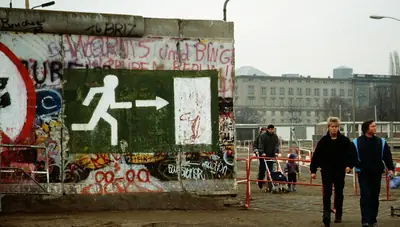
- World politics: the clash between capitalism and communism drove the Cold War from 1945 to 1991.
- Welfare: even capitalist countries borrowed socialist ideas like pensions and free schooling.
Quick comparison
| System | Best at | Weak at | Example |
|---|---|---|---|
| Capitalism | Growth, new ideas | Equality | USA |
| Soviet communism | Fast industry, basic literacy | Freedom, consumer goods | USSR |
| Social democracy | Welfare, equality | Low taxes | Sweden |
| Market socialism | Fast growth, poverty cuts | Political freedom | China, Vietnam |
| Mixed economy | Balance | Slow growth before 1991 | India |
Common doubts
Which system won? No pure system won. Almost every country today runs a mix of markets and state action. The real debate is about the balance.
Why did the Soviet model fail? Central planners could not track the needs of millions of people. Factories met targets but made poor goods, new ideas were slow, and a costly arms race with the USA drained money.
Is India socialist or capitalist? Both, in parts. The Preamble says “socialist”, but since 1991 India has relied much more on markets, while keeping welfare schemes.
What UPSC asks
Prelims: Soviet collapse 1991, Doi Moi, commanding heights. Mains: compare the effects of these systems on society, and India’s mixed path.
Mains box: analysis and answer points
- Compare effects on society: growth, equality, freedom and welfare.
- India's mixed economy: logic before 1991 and change after.
Practice
Write an answer
In 150 words, explain the significance of Political Philosophies with one recent example.
Flashcards (4)
USSR collapsed?
1991.
Nordic model?
Social democracy.
China's system since 1978?
Market socialism under party rule.
India's economic model?
Mixed economy.
 Next chapter · 15. Arab-Israel Conflict →Arab-Israel Conflict: Origins and 1948
Syllabus: GS-I · History of the world will include events from 18th century such as industrial re…