
Chapter 4 · Topic 4.1 · Prelims + Mains1 of 3
Unification of Italy: Background and Mazzini
Key points
- After 1815 Italy was about seven states, mostly under Austrian control.
- Napoleon's rule, the Risorgimento and secret societies (Carbonari) woke national feeling.
- Mazzini, the 'soul' of unification, founded Young Italy (1831) and inspired Indian nationalists.
Prelims box: facts and traps
- 'A geographical expression': Metternich's put-down of Italy.
- Young Italy: 1831; Young Europe: 1834.
- Roman Republic (1849): Mazzini one of three triumvirs; crushed by French troops.
- India link: Lajpat Rai wrote on Mazzini and Garibaldi; Savarkar translated Mazzini's life into Marathi (1907).
Background: a divided peninsula
Today we see Italy as one country with one flag. Two hundred years ago it was like a mohalla where every house has a different owner, and the strongest neighbour, Austria, holds the keys to half of them. The Austrian minister Metternich mocked Italy as ‘a geographical expression’, meaning just a name on a map, not a nation.
After the Congress of Vienna (1815), the meeting where Europe’s kings redrew the map after Napoleon, Italy was split into about seven states, most under Austrian control or influence.
| State | Ruler |
|---|---|
| Kingdom of Piedmont-Sardinia | House of Savoy, the only native Italian dynasty; later the engine of unity |
| Lombardy and Venetia | Ruled directly by Austria |
| Parma, Modena, Tuscany | Duchies under Austrian-linked rulers |
| Papal States | The Pope, central Italy including Rome |
| Kingdom of the Two Sicilies | Bourbons (Naples and Sicily) |
What woke Italian national feeling?
- Napoleon’s rule: he had briefly united much of Italy and brought his Code, with equal laws. People remembered that taste of unity.
- Risorgimento: the word means “resurgence”, or rising again. Writers and poets reminded Italians of Rome’s glory and their shared language and culture.
- Secret societies: groups such as the Carbonari (“charcoal burners”) plotted against foreign rule. They led revolts in 1820–21 and 1831, but these failed because they were small and had no mass support.
- Economic needs: merchants wanted one market, without customs posts at every border.
Mazzini: the soul of unification
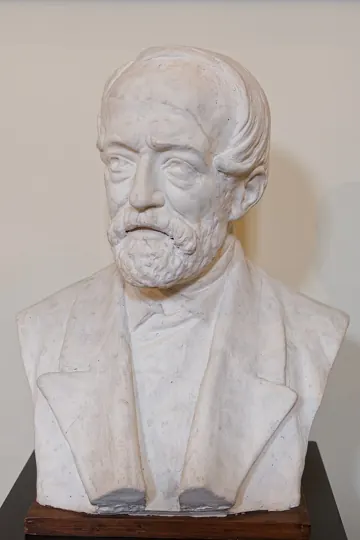
Giuseppe Mazzini is called the “soul” of unification because he gave Italians the idea and the emotion. He spent much of his life in exile, writing and organising.
| Point | Detail |
|---|---|
| Giuseppe Mazzini (1805–72) | Genoese republican, the ‘prophet’ of Italian nationalism |
| Young Italy (1831) | Society for a united, democratic republic; inspired Young Europe (1834) |
| 1848–49 | Revolutions across Italy; Roman Republic (Mazzini a triumvir) crushed by French troops |
| Ideas | Nation as a God-given duty; ‘thought and action’; education of the people |
A triumvir is one of three joint rulers. In 1849 Mazzini was one of the three who led the short-lived Roman Republic, until French troops restored the Pope.
Why Mazzini failed, and why he still mattered
Every rising he planned was crushed, and he wanted a republic, while Italy finally became a kingdom. So in a sense he lost. But without his writings, ordinary Italians might never have felt they were one people. Later leaders built on the feeling he created.
The India link
Mazzini’s ideals deeply inspired Indian nationalists. Lala Lajpat Rai wrote biographies of Mazzini, Garibaldi, Shivaji and Shrikrishna, and V. D. Savarkar translated Mazzini’s life into Marathi (1907). Young Indian revolutionaries saw in Italy proof that a divided land under foreign control could become free and united.
Common doubts
Why was Austria the main obstacle? Austria ruled Lombardy and Venetia directly and backed the rulers of the duchies. Any move towards unity meant fighting Austria, which had one of Europe’s biggest armies.
Why did Piedmont, not another state, lead? Its kings, the House of Savoy, were Italian, not foreign. After 1848 it kept a constitution, so liberals from all over Italy looked to it. It also had a decent army and a growing economy.
What did the Pope have to do with it? The Pope ruled the Papal States in central Italy as a king. Uniting Italy meant taking his land, which upset Catholics across Europe and made France protect him.
What UPSC asks
Prelims: Young Italy 1831, the Carbonari, Metternich’s “geographical expression” line, and Mazzini’s influence on Indian leaders. Mains: the role of ideas and leaders in Italian unification, often compared with Germany.
Mains box: analysis and answer points
- Role of ideas: Mazzini's failures still built the feeling of one Italian people that Cavour and Garibaldi used.
- Obstacles: Austria, the Pope, local rulers, regional differences.
Practice
Write an answer
In 150 words, explain the significance of Unification of Italy with one recent example.
Flashcards (7)
Who called Italy a 'geographical
expression'? Metternich.
Which state led unification?
Piedmont-Sardinia.
Secret society of early revolts?
Carbonari.
Young Italy founded?
1831, by Mazzini.
Who wrote biographies of Mazzini and
Garibaldi? Lala Lajpat Rai.
Roman Republic year?
1849.
Mazzini's political goal?
A united democratic republic.
 Next topic · 4.2 →Unification of Italy: Cavour and Garibaldi
Syllabus: GS-I · History of the world will include events from 18th century such as industrial re…