
Chapter 4 · Topic 4.2 · Prelims + Mains2 of 3
Unification of Italy: Cavour and Garibaldi
Key points
- Cavour (the brain) used the Crimean War and a secret deal with France to defeat Austria in 1859.
- Garibaldi (the sword) took Sicily and Naples with 1,000 Redshirts in 1860 and handed them to the king at Teano.
- Kingdom of Italy: 17 March 1861; Venetia added 1866, Rome 1870.
Prelims box: facts and traps
- Plombières (1858): French help in return for Nice and Savoy.
- Magenta and Solferino (1859): Solferino led Henri Dunant to found the Red Cross.
- Trap: Venetia came through the Austro-Prussian War (1866); Rome when French troops left in 1870.
Cavour: the brain of unification
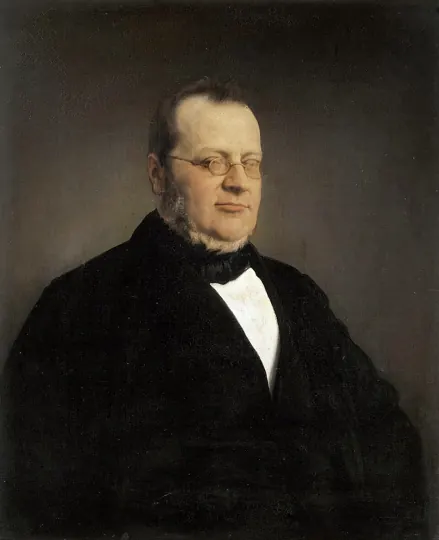
Mazzini’s risings had failed. Cavour learned the lesson: Italians alone could not beat Austria. They needed a strong Italian state and a powerful foreign friend. Cavour was a realist, someone who works with the world as it is, not as he wishes it to be.
| Step | What happened |
|---|---|
| Count Cavour | Prime Minister of Piedmont from 1852 under Victor Emmanuel II; modernised railways, banks and army |
| Crimean War (1855) | Sent troops to win a seat at the Paris peace talks (1856) |
| Plombières (1858) | Secret pact with Napoleon III: French help against Austria in return for Nice and Savoy |
| War of 1859 | Magenta and Solferino; Piedmont gained Lombardy (Peace of Villafranca) |
| 1860 plebiscites | Tuscany, Parma, Modena and Romagna joined Piedmont; Nice and Savoy went to France |
A plebiscite is a vote where people answer one big yes-or-no question, here: “Do you want to join Piedmont?”
Why join the Crimean War, which had nothing to do with Italy? It was like a small shopkeeper sponsoring a big community event just to get a seat at the table with the town’s leaders. At Paris in 1856, Cavour could raise the “Italian question” before the great powers.
A side story worth knowing: the Battle of Solferino (1859) was so bloody that a Swiss businessman, Henri Dunant, who saw the wounded, went on to found the Red Cross.
Cavour was a realist monarchist who used diplomacy and foreign armies, unlike the republican Mazzini.
Garibaldi: the sword of unification
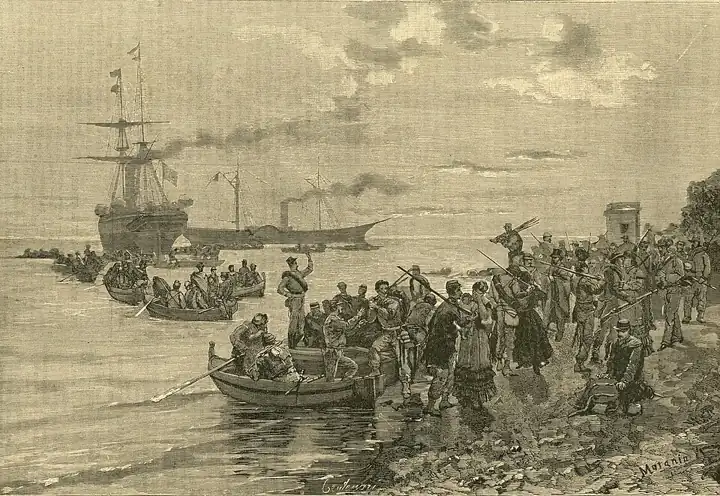
Giuseppe Garibaldi was a guerrilla fighter, a soldier who fights in small, fast-moving bands rather than big armies. His volunteers wore red shirts.
| Step | What happened |
|---|---|
| Expedition of the Thousand (May 1860) | Garibaldi’s Redshirts sailed from Quarto near Genoa to Sicily |
| Conquest of the South | Took Sicily and Naples from the Bourbons |
| Meeting at Teano (October 1860) | Handed the South to Victor Emmanuel II |
| Kingdom of Italy (17 March 1861) | Victor Emmanuel II king; Cavour died in June 1861 |
| Venetia (1866) | Gained after siding with Prussia in the Austro- Prussian War |
| Rome (1870) | Taken when French troops left during the Franco- Prussian War; capital from 1871 |
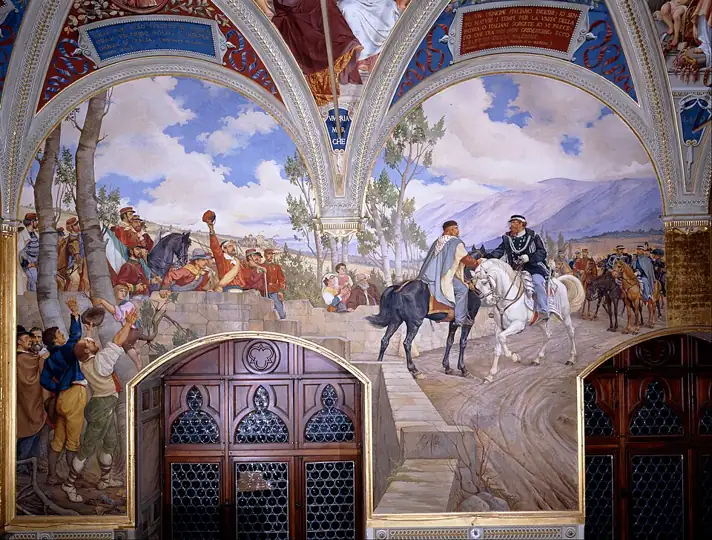
Garibaldi was a republican at heart, yet at Teano he simply gave his conquests to the king. He put a united Italy above his own beliefs, which is why Italians remember him with such love.
Soul, brain and sword
- Mazzini (soul): ideas and emotion; wanted a republic.
- Cavour (brain): diplomacy and planning; wanted a kingdom under Piedmont.
- Garibaldi (sword): fighting and popular energy; gave the south to the king.
None could have done it alone. Their methods even clashed, but together they made Italy.
Common doubts
Why did France help, and why did it stop? Napoleon III wanted to weaken Austria and gain Nice and Savoy. But after the bloody battles of 1859 he feared a long war and a too-strong Italy, so he made a quick peace at Villafranca, leaving Venetia with Austria.
Why did Garibaldi hand over the south instead of ruling it? He knew a split between north and south could give foreign powers a chance to step in. Unity mattered more to him than power.
How were Venetia and Rome finally won? Both came through other people’s wars. Italy sided with Prussia against Austria in 1866 and got Venetia. In 1870 France pulled its troops out of Rome to fight Prussia, and Italian forces walked in.
What UPSC asks
Prelims: Plombières 1858, the Thousand 1860, Teano, 17 March 1861, Rome 1870. Mains: compare the roles of Mazzini, Cavour and Garibaldi, or compare Cavour with Bismarck.
Mains box: analysis and answer points
- Soul, brain, sword: compare Mazzini, Cavour and Garibaldi; their methods clashed but together made Italy.
- Cavour vs Bismarck: diplomacy and foreign help vs Prussia's own army.
Practice
Write an answer
In 150 words, explain the significance of Unification of Italy with one recent example.
Flashcards (10)
Cavour's king?
Victor Emmanuel II.
Why did Piedmont join the Crimean War?
To win a seat at the peace talks.
Pact with Napoleon III?
Plombières, 1858.
Price paid to France?
Nice and Savoy.
Piedmont's gain in 1859?
Lombardy.
Expedition of the Thousand?
Garibaldi, 1860.
Where did Garibaldi meet the king?
Teano, October 1860.
Kingdom of Italy proclaimed?
17 March 1861.
Venetia gained?
1866.
Rome taken?
1870.
 Next topic · 4.3 →Unification of Italy: Impact and limits
Syllabus: GS-I · History of the world will include events from 18th century such as industrial re…