
UPSC Prelims 2026 · GS Paper I: Which of the following statements with regard to Large Language Models (LLMs) used in…
Which of the following statements with regard to Large Language Models (LLMs) used in machine learning is/are correct ?
- 1. LLMs assign probabilities to the next possible words and then pick the one with the highest probability.
- 2. LLMs process data through mathematical optimization to minimise prediction errors.
- 3. LLMs produce unbiased outputs.
Select the answer using the code given below :
Answer (b) & explanation
Statements 1 and 2 are correct (b). Statement 1 is right: a Large Language Model predicts the next word, or token, by giving every candidate a probability, and then picks a likely one. Statement 2 is right: it learns by optimisation, adjusting billions of weights to reduce prediction error on its training text. Statement 3 is wrong: because it learns from human text, it can repeat human bias. So options (a), (c) and (d) fail.
Notice the related risks: hallucination, where an LLM confidently gives false facts, and deepfakes made by generative AI. India's IndiaAI Mission backs Indian-language models such as BharatGen and Sarvam. The "T" in GPT stands for Transformer, the design behind modern LLMs.
Answer as per the official UPSC answer key.
Same theme in UPSC Mains
- MAINS UPSC Mains 2024 · GS Paper IV · Q7There is a technological company named ABC Incorporated which is the second largest worldwide, situated in the Third World. You are the Chief Executive Officer and…
- MAINS UPSC Mains 2024 · GS Paper IV · Q12Dr. Srinivasan is a senior scientist working for a reputed biotechnology company known for its cutting-edge research in pharmaceuticals. Dr. Srinivasan is heading a research team…
- MAINS UPSC Mains 2025 · GS Paper II · Q17“In contemporary development models, decision-making and problem-solving responsibilities are not located close to the source of information and execution defeating the objectives of development.” Critically evaluate.
Related questions from other years
Consider the following statements with regard to involvement of private entities in India’s space programme :
- 1. The Indian National Space Promotion and Authorisation Centre (IN-SPACe) is an autonomous agency formed to facilitate participation of private entities.
- 2. Agnikul Cosmos launched the world’s first flight using 3D-printed rocket engine.
- 3. Skyroot Aerospace has developed liquid fuel for GSLV.
Which of the statements given above is/are correct ?
Answer (c) & explanation
Statements 1 and 2 are correct (c). Statement 1 is right: IN-SPACe (2020) is the single-window, autonomous body under the Department of Space that authorises private space activity. Statement 2 is right: Agnikul's Agnibaan SOrTeD (May 2024) flew on the world's first single-piece 3D-printed semi-cryogenic engine. Statement 3 is wrong: Skyroot builds its own Vikram rockets; it does not make fuel for ISRO's GSLV. So options (a), (b) and (d) fail.
Notice Skyroot's milestone: Vikram-S (2022) was India's first privately built rocket to reach space. The Indian Space Policy, 2023 opened all space activities to private firms, and 100% FDI is allowed in parts of the sector. NSIL is ISRO's commercial arm.
Answer as per the official UPSC answer key.
Which of the following statements with regard to drone swarms is/are correct ?
- 1. They use Terahertz band of frequency to communicate with the command centre.
- 2. Individual drones in the swarm can communicate with other drones in the swarm.
- 3. GPS Spoofing is a commonly used technique to counter drone swarm attack.
Select the answer using the code given below :
Answer (b) & explanation
Statements 2 and 3 are correct (b). Statement 2 is right: in a swarm, the drones talk to each other and share tasks, so the group keeps working even if some are lost. Statement 3 is right: defenders often jam or spoof GPS to send them off course. Statement 1 is wrong: swarms usually use ordinary radio bands; terahertz links are still experimental and short-range. So options (a), (c) and (d) fail.
Notice other counters: laser weapons, like DRDO's directed-energy systems, anti-drone guns and net systems. India showed a 75-drone swarm at the 2021 Army Day parade. Drone wars in Ukraine and during Operation Sindoor (2025) showed how cheap drones can overwhelm costly defences.
Answer as per the official UPSC answer key.
Which of the following statements with regard to GenomeIndia Project is/are correct ?
- 1. It is a part of the Human Genome Project.
- 2. The project is funded by the Department of Biotechnology (DBT), Government of India.
- 3. Its primary aim is to build a catalogue of genetic diversity of the Indian population.
Select the answer using the code given below :
Answer (b) & explanation
Statements 2 and 3 are correct (b). Statement 2 is right: GenomeIndia (2020) is funded by the Department of Biotechnology. Statement 3 is right: it sequenced 10,000 genomes from many Indian communities to build a catalogue of the country's genetic variation, and the data was released in 2025. Statement 1 is wrong: the international Human Genome Project was a separate effort that ended in 2003. So options (a), (c) and (d) fail.
Notice the uses: finding gene variants behind diseases common in India, such as sickle cell and thalassaemia, and building personalised medicine. The data is stored at the Indian Biological Data Centre in Faridabad. A larger follow-up aims to sequence one million genomes.
Answer as per the official UPSC answer key.
Which of the following statements with regard to the National Quantum Mission (NQM) is/are correct ?
- 1. It aims at developing intermediate-scale quantum computers with 50-1000 physical qubits.
- 2. Its implementation includes setting up of four Thematic Hubs (T-Hubs) in academic and national R&D institutes across India.
Select the answer using the code given below :
Answer (c) & explanation
Both statements are correct (c). Statement 1 is right: the National Quantum Mission (2023, under the DST) aims at quantum computers of 50–1,000 physical qubits within eight years. Statement 2 is right: it has four T-Hubs: computing at IISc Bengaluru, communication at IIT Madras, sensing and metrology at IIT Bombay, and materials and devices at IIT Delhi. So options (a), (b) and (d) fail.
Notice the budget: about ₹6,000 crore from 2023-24 to 2030-31. The mission also aims at secure quantum communication over 2,000 km between cities, and satellite-based quantum links. India joined a handful of nations, like the USA, China and France, with such a dedicated mission.
Answer as per the official UPSC answer key.
In the news since
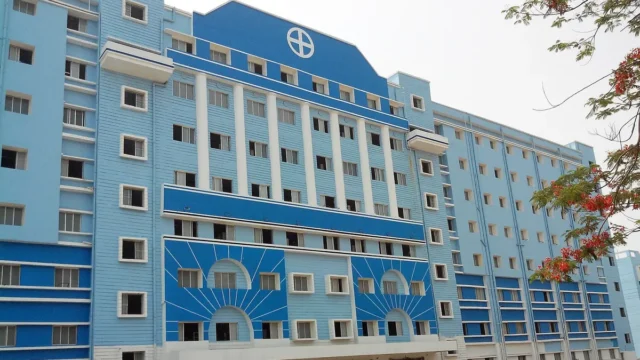
NMC withdraws MSMER-2023: medical colleges lose the fixed penalty rulebook, annual disclosure stays
The National Medical Commission (NMC) has de-notified the Maintenance of Standards of Medical Education Regulations, 2023 (MSMER-2023) by a notification dated 14 October 2026, published in the Gazette on 16 October. Its fixed penalties, including seat cuts and fines of up to ₹5 lakh for false records, go with it. The Annual Disclosure Report stays.
19 Oct 2026
Swavlamban 2026: Navy’s fifth innovation and indigenisation seminar on 26–27 October
At a curtain raiser on 19 October 2026, Vice Chief of the Naval Staff Vice Admiral Ajay Kochhar announced the fifth edition of Swavlamban, the Navy’s flagship innovation and indigenisation seminar. It will be held on 26–27 October at the Manekshaw Centre, New Delhi, where the Navy will release the NAUSETU interface standards and a technology compendium.
19 Oct 2026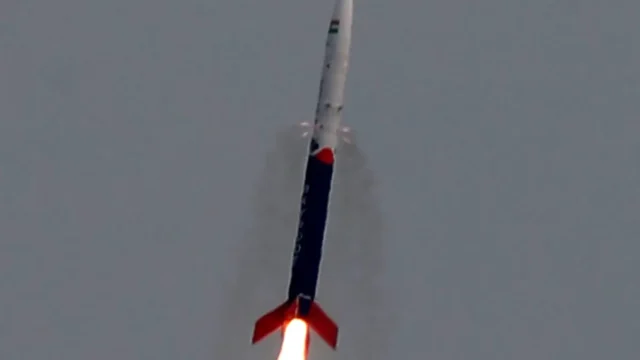
India’s space economy to grow from about $9 billion to $40-45 billion in 7-8 years
On 17 October 2026, Union Minister Dr Jitendra Singh said India’s space economy, worth about USD 9 billion today, should reach USD 40-45 billion in the next seven to eight years. He said the task now is to move from showing what India can do in space to building space companies that can compete and earn worldwide. For that, private firms need steady demand, quick approvals and patient capital. This is the story of space turning from a science mission into an industry.
18 Oct 2026