Topic hub

Science & Technology

Science & Technology: syllabus hub.

Syllabus: UPSC Pre GS1: General Science; Mains GS3: S&T developments

When UPSC asked this

2011: 17 questions11172012: 13 questions12132013: 16 questions13162014: 12 questions14122015: 9 questions1592016: 11 questions16112017: 8 questions1782018: 13 questions18132019: 13 questions19132020: 13 questions20132021: 10 questions21102022: 11 questions22112023: 6 questions2362024: 8 questions2482025: 12 questions25122026: 13 questions2613

Explainers

Previous-year questions

Attempt them here.

UPSC Prelims 2026 · GS Paper I

Which of the following statements with regard to Black Boxes used in modern aircrafts is/are correct ?

  • 1. They carry a beacon emitting red light pulses to facilitate underwater detection.
  • 2. They record both the cockpit voice and flight data.
  • 3. Their memory units are made using either stainless steel or titanium.

Select the answer using the code given below :

Answer (b) & explanation

Statements 2 and 3 are correct (b). Statement 2 is right: the "black box" is really two orange recorders, the cockpit voice recorder and the flight data recorder. Statement 3 is right: their crash-survivable memory sits in stainless steel or titanium shells. Statement 1 is wrong: under water, the locator beacon sends out ultrasonic pulses, about 37.5 kHz, not red light. So options (a), (c) and (d) fail.

Notice why they are orange: to be easy to spot in wreckage. The beacon works for about 30 to 90 days. Black boxes were key in probing the Air India Ahmedabad crash (June 2025); India's AAIB read its data at a new lab in Delhi. Newer rules call for 25-hour voice recording.

Answer as per the official UPSC answer key.

Open this question's page →

UPSC Prelims 2026 · GS Paper I

Consider the following statements with regard to involvement of private entities in India’s space programme :

  • 1. The Indian National Space Promotion and Authorisation Centre (IN-SPACe) is an autonomous agency formed to facilitate participation of private entities.
  • 2. Agnikul Cosmos launched the world’s first flight using 3D-printed rocket engine.
  • 3. Skyroot Aerospace has developed liquid fuel for GSLV.

Which of the statements given above is/are correct ?

Answer (c) & explanation

Statements 1 and 2 are correct (c). Statement 1 is right: IN-SPACe (2020) is the single-window, autonomous body under the Department of Space that authorises private space activity. Statement 2 is right: Agnikul's Agnibaan SOrTeD (May 2024) flew on the world's first single-piece 3D-printed semi-cryogenic engine. Statement 3 is wrong: Skyroot builds its own Vikram rockets; it does not make fuel for ISRO's GSLV. So options (a), (b) and (d) fail.

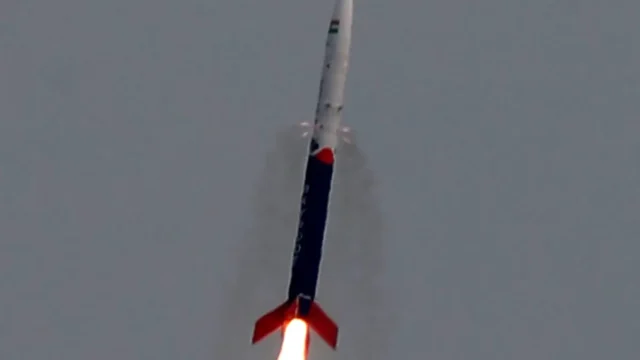
Notice Skyroot's milestone: Vikram-S (2022) was India's first privately built rocket to reach space. The Indian Space Policy, 2023 opened all space activities to private firms, and 100% FDI is allowed in parts of the sector. NSIL is ISRO's commercial arm.

Answer as per the official UPSC answer key.

Open this question's page →

UPSC Prelims 2026 · GS Paper I

Which of the following statements with regard to drone swarms is/are correct ?

  • 1. They use Terahertz band of frequency to communicate with the command centre.
  • 2. Individual drones in the swarm can communicate with other drones in the swarm.
  • 3. GPS Spoofing is a commonly used technique to counter drone swarm attack.

Select the answer using the code given below :

Answer (b) & explanation

Statements 2 and 3 are correct (b). Statement 2 is right: in a swarm, the drones talk to each other and share tasks, so the group keeps working even if some are lost. Statement 3 is right: defenders often jam or spoof GPS to send them off course. Statement 1 is wrong: swarms usually use ordinary radio bands; terahertz links are still experimental and short-range. So options (a), (c) and (d) fail.

Notice other counters: laser weapons, like DRDO's directed-energy systems, anti-drone guns and net systems. India showed a 75-drone swarm at the 2021 Army Day parade. Drone wars in Ukraine and during Operation Sindoor (2025) showed how cheap drones can overwhelm costly defences.

Answer as per the official UPSC answer key.

Open this question's page →

UPSC Prelims 2026 · GS Paper I

Which of the following statements with regard to GenomeIndia Project is/are correct ?

  • 1. It is a part of the Human Genome Project.
  • 2. The project is funded by the Department of Biotechnology (DBT), Government of India.
  • 3. Its primary aim is to build a catalogue of genetic diversity of the Indian population.

Select the answer using the code given below :

Answer (b) & explanation

Statements 2 and 3 are correct (b). Statement 2 is right: GenomeIndia (2020) is funded by the Department of Biotechnology. Statement 3 is right: it sequenced 10,000 genomes from many Indian communities to build a catalogue of the country's genetic variation, and the data was released in 2025. Statement 1 is wrong: the international Human Genome Project was a separate effort that ended in 2003. So options (a), (c) and (d) fail.

Notice the uses: finding gene variants behind diseases common in India, such as sickle cell and thalassaemia, and building personalised medicine. The data is stored at the Indian Biological Data Centre in Faridabad. A larger follow-up aims to sequence one million genomes.

Answer as per the official UPSC answer key.

Open this question's page →

UPSC Prelims 2026 · GS Paper I

Which of the following statements with regard to the National Quantum Mission (NQM) is/are correct ?

  • 1. It aims at developing intermediate-scale quantum computers with 50-1000 physical qubits.
  • 2. Its implementation includes setting up of four Thematic Hubs (T-Hubs) in academic and national R&D institutes across India.

Select the answer using the code given below :

Answer (c) & explanation

Both statements are correct (c). Statement 1 is right: the National Quantum Mission (2023, under the DST) aims at quantum computers of 50–1,000 physical qubits within eight years. Statement 2 is right: it has four T-Hubs: computing at IISc Bengaluru, communication at IIT Madras, sensing and metrology at IIT Bombay, and materials and devices at IIT Delhi. So options (a), (b) and (d) fail.

Notice the budget: about ₹6,000 crore from 2023-24 to 2030-31. The mission also aims at secure quantum communication over 2,000 km between cities, and satellite-based quantum links. India joined a handful of nations, like the USA, China and France, with such a dedicated mission.

Answer as per the official UPSC answer key.

Open this question's page →

UPSC Prelims 2026 · GS Paper I

Which of the following statements with regard to India’s Deep Ocean Mission is/are correct ?

  • 1. It was launched by the Ministry of Ports, Shipping and Waterways, Government of India.
  • 2. Matsya-6000 has been designed to carry 3 people for deep sea exploration.
  • 3. Samudrayaan is a project under this mission.

Select the answer using the code given below :

Answer (b) & explanation

Statements 2 and 3 are correct (b). Statement 2 is right: Matsya-6000 is a submersible designed to take three people to a depth of 6,000 metres. Statement 3 is right: Samudrayaan is the project under the mission that is building it. Statement 1 is wrong: the Deep Ocean Mission (2021) belongs to the Ministry of Earth Sciences, not the shipping ministry. So options (a), (c) and (d) fail.

Notice the mission's other parts: deep-sea mining of polymetallic nodules in the Central Indian Ocean Basin, ocean biodiversity, and climate advisory services. The National Institute of Ocean Technology in Chennai builds Matsya. Only a few countries, such as the USA, China, Japan and France, have crewed deep-sea vehicles.

Answer as per the official UPSC answer key.

Open this question's page →

UPSC Prelims 2026 · GS Paper I

Which of the following statements about DHRUV64 is/are correct ?

  • 1. It is the third chip fabricated under the DIR-V Programme with an overall aim to enable the creation of microprocessors for India.
  • 2. It is India’s first homegrown 1.0 GHz, 64-bit dual-core microprocessor.

Select the answer using the code given below :

Answer (c) & explanation

Both statements are correct (c). Statement 1 is right: DHRUV64, announced in December 2025 by C-DAC, is the third chip fabricated under the Digital India RISC-V (DIR-V) programme, after THEJAS32 and THEJAS64. Statement 2 is right: it is India's first homegrown 1.0 GHz, 64-bit dual-core microprocessor. So options (a), (b) and (d) fail.

Notice the technology: RISC-V is an open-source instruction set, so India can design chips without paying licence fees to owners of ARM or x86 designs. DHRUV64 targets 5G equipment, industrial automation, automotive and IoT uses. Next in line are the Dhanush chips. The India Semiconductor Mission (2021) supports the wider fab and assembly ecosystem.

Answer as per the official UPSC answer key.

Open this question's page →

UPSC Prelims 2026 · GS Paper I

Which one of the following pairs of semiconductor plants in India and their locations is not correctly matched ?

Answer (c) & explanation

The pair HCL-Foxconn : Madhya Pradesh is wrong (c). The HCL–Foxconn joint venture India Chip Ltd. was approved in 2025 near Jewar in Uttar Pradesh, close to the new airport, not in Madhya Pradesh. Option (a) is correct: CG Power with Renesas and STARS is building at Sanand, Gujarat. Option (b) is correct: Tata's assembly and test unit is at Jagiroad, Assam. Option (d) is correct: SiCSem's silicon carbide fab is in Odisha.

Notice the anchor project: Tata and PSMC of Taiwan are building India's first big fab at Dholera, Gujarat, and Micron's assembly unit is at Sanand. These come under the India Semiconductor Mission (2021), which offers about 50% fiscal support.

Answer as per the official UPSC answer key.

Open this question's page →

In the news

GS2 · Health · Education

NMC withdraws MSMER-2023: medical colleges lose the fixed penalty rulebook, annual disclosure stays

The National Medical Commission (NMC) has de-notified the Maintenance of Standards of Medical Education Regulations, 2023 (MSMER-2023) by a notification dated 14 October 2026, published in the Gazette on 16 October. Its fixed penalties, including seat cuts and fines of up to ₹5 lakh for false records, go with it. The Annual Disclosure Report stays.

UPSC angle: Prelims: NMC Act 2019, autonomous boards, Concurrent List Entry 25. · Mains GS-II: regulation of medical education.

19 Oct 2026
GS3 · Defence · Indigenisation

Swavlamban 2026: Navy’s fifth innovation and indigenisation seminar on 26–27 October

At a curtain raiser on 19 October 2026, Vice Chief of the Naval Staff Vice Admiral Ajay Kochhar announced the fifth edition of Swavlamban, the Navy’s flagship innovation and indigenisation seminar. It will be held on 26–27 October at the Manekshaw Centre, New Delhi, where the Navy will release the NAUSETU interface standards and a technology compendium.

UPSC angle: Prelims: NIIO, iDEX, NBCD, NAUSETU, DAP 2020. · Mains GS-III: innovation-led defence self-reliance.

19 Oct 2026
GS3 · Science and Technology · Space

India’s space economy to grow from about $9 billion to $40-45 billion in 7-8 years

On 17 October 2026, Union Minister Dr Jitendra Singh said India’s space economy, worth about USD 9 billion today, should reach USD 40-45 billion in the next seven to eight years. He said the task now is to move from showing what India can do in space to building space companies that can compete and earn worldwide. For that, private firms need steady demand, quick approvals and patient capital. This is the story of space turning from a science mission into an industry.

UPSC angle: Prelims: IN-SPACe, NSIL, Space Policy 2023, FDI caps, Vikram-S. · Mains GS-III: private sector in space, strategic autonomy.

18 Oct 2026
GS2 · Health · Drug pricing

NPPA caps trade margins on 137 anti-cancer drugs: prices to fall up to 70% from 9 November

On 17 October 2026 the National Pharmaceutical Pricing Authority (NPPA) capped trade margins on 137 non-scheduled anti-cancer drugs at 30%, using its special public-interest power under Paragraph 19 of the Drugs (Prices Control) Order, 2013. The Government expects the retail price of these medicines to fall by up to 70%, and the new prices apply from 9 November 2026. The list includes costly immunotherapy drugs such as pembrolizumab and durvalumab.

UPSC angle: Prelims: NPPA, DPCO 2013 Para 19, trade margin, scheduled vs non-scheduled drugs. · Mains GS-II: affordable medicines and health equity.

18 Oct 2026
GS3 · Agriculture · Biofortification

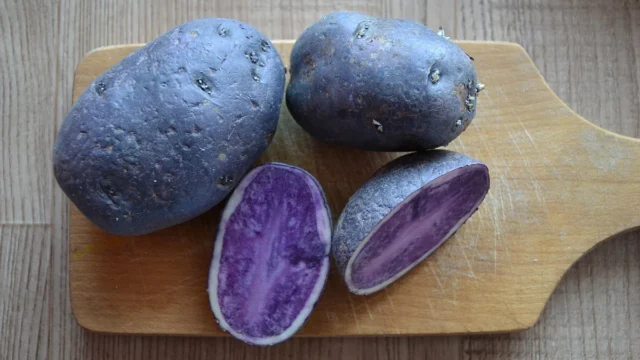
Kufri Jamunia: ICAR-CPRI’s purple potato to fight hidden hunger

A PIB backgrounder of 18 October 2026 puts the spotlight on Kufri Jamunia, a purple-fleshed potato bred by ICAR’s Central Potato Research Institute and released in 2024. It has nearly twice the Vitamin C of a common potato and several times more zinc and iron, along with antioxidants called anthocyanins. The idea is clever: instead of asking people to change what they eat, make the food they already eat more nutritious. That is biofortification.

UPSC angle: Prelims: Kufri Jamunia, CPRI, anthocyanins, biofortification vs fortification. · Mains GS-III: nutrition security; GS-II: hunger.

18 Oct 2026
GS2 · Health · Nutrition

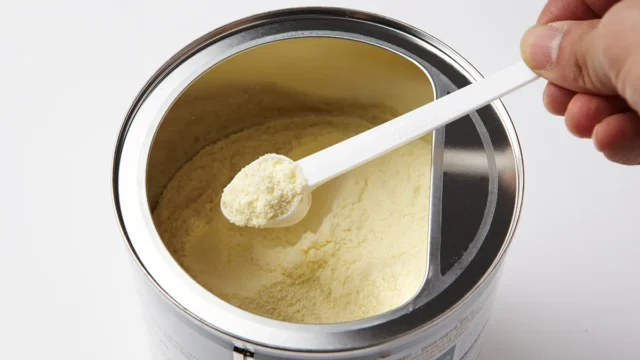
FSSAI draft: no added sucrose or fructose in foods for infants up to six months

On 17 October 2026 FSSAI explained a draft rule that would stop companies from adding sucrose (table sugar) or fructose (fruit sugar) to any product meant for babies up to six months old. The draft amends the Foods for Infant Nutrition Regulations, 2020, was published in the Gazette on 16 October, and is open for public comments for 60 days. The idea is simple: in the first six months a baby needs the right nutrients, not an early taste for sugar.

UPSC angle: Prelims: FSSAI, FSS Act 2006, infant nutrition regulations, IMS Act 1992. · Mains GS-II: child nutrition, preventive health and food regulation.

17 Oct 2026