
Communalism in India: Meaning, Three Stages, Colonial Roots, Post-Independence Riots, Causes and Remedies (UPSC Notes + PYQs)
UPSC has already asked about this. Read the story with these questions in mind.
What communalism is, and is not
Being religious is not communal; nor is pride in one’s faith. Communalism begins when religion becomes the basis of a political identity set against others. Historian Bipan Chandra describes three stages: (1) people of one religion have common worldly interests; (2) these interests differ from those of other religious groups (liberal communalism); (3) they are mutually hostile and cannot be reconciled (extreme communalism, using fear and hatred). The jump from the second to the third stage, in the late 1930s, made Partition likely.
- 1Common worldly interests among followers of one religion
- 2These interests differ from other groups (liberal communalism)
- 3Interests seen as hostile and irreconcilable (extreme communalism)
Colonial roots
- British census categories (from 1871-72) fixed religious identities in official records.
- Colonial historians like James Mill split Indian history into “Hindu” and “Muslim” periods.
- Partition of Bengal (1905) was justified partly on religious lines; the Muslim League formed at Dhaka on 30 December 1906.
- Separate electorates by the Morley-Minto Reforms (1909), extended in 1919 and by the Communal Award (1932).
- Hindu Mahasabha (1915) and RSS (1925) grew alongside the League; the Khilafat-Non-Cooperation unity broke after 1922 with riots such as Kohat (1924).
- The two-nation theory, the Lahore Resolution (1940), Direct Action Day (1946) and Partition violence that killed an estimated several hundred thousand to two million people.
After independence
| Year | Event |
|---|---|
| 1969 | Ahmedabad riots |
| 1984 | Anti-Sikh violence after Indira Gandhi’s assassination, mainly in Delhi |
| 1989-90 | Bhagalpur riots; exodus of Kashmiri Pandits |
| 1992-93 | Babri Masjid demolition (6 December 1992), Bombay riots |
| 2002 | Gujarat violence after the Godhra train fire |
| 2013 | Muzaffarnagar (UP) riots |
| 2020 | North-East Delhi riots |
Causes today
- Political: vote-bank mobilisation on religious lines.
- Economic: competition for jobs and trade; communal riots often hit specific business rivalries.
- Social: segregated neighbourhoods, few inter-religious marriages, stereotypes.
- Media and social networks: rumours and doctored videos spread faster than official denials.
- Administrative: biased or slow policing; low conviction rates in riot cases.
- External: cross-border propaganda and events abroad.
- Electoral polarisation
- Economic rivalry
- Rumours on social media
- Weak or partisan policing
- Past riots not punished
Laws, bodies and committees
- Bharatiya Nyaya Sanhita, 2023: Section 196 (promoting enmity between groups, earlier IPC 153A), Section 299 (outraging religious feelings, earlier IPC 295A).
- Representation of the People Act, 1951, Section 123(3): appeal on religion is a corrupt practice.
- Places of Worship (Special Provisions) Act, 1991: freezes the religious character of places as on 15 August 1947 (Ayodhya excepted).
- National Integration Council (1961).
- Sachar Committee (2006) on the social, economic and educational status of Muslims; Ranganath Misra Commission (2007) on religious and linguistic minorities.
- Tehseen Poonawalla (2018): Supreme Court guidelines against mob lynching, including nodal officers in every district.
Remedies and way forward
Fast, impartial investigation and trial of riot cases; police reforms (Prakash Singh, 2006); diverse police forces; district-level peace committees; action against hate speech regardless of who speaks; fact-checking and platform accountability; mixed schools and housing; and steady economic development that reduces zero-sum competition. Gandhi’s fast in Noakhali and Calcutta (1946-47) and ordinary people who sheltered neighbours during riots remind us that civil society can break the cycle.
How scholars explain communal riots
Riots are not spontaneous outbursts of ancient hatred; research shows that they follow patterns. Historian Bipan Chandra argued that communalism is a modern ideology built on the false belief that religious communities have separate political and economic interests. Political scientist Paul Brass, studying Aligarh, described an “institutionalised riot system”: known people who spread rumours, gather crowds and convert a minor quarrel into violence, often at election time. Varshney, comparing riot-prone and peaceful cities (for example Aligarh with Calicut), found that everyday contact was not enough; cities with strong associational links across communities (traders’ bodies, unions, clubs and parties with mixed membership) kept peace because those networks squashed rumours and policed their own areas. The lesson for administrators is that riots can be prevented when local institutions and police act early.
- Rumour or provocative message
- Mobilisers gather a crowd
- Slow or partisan police response
- No cross-community bodies to calm tension
The national movement’s answer
The national movement tried several routes. The Lucknow Pact (1916) between the Congress and the Muslim League accepted separate electorates in return for joint demands for self-government. The Khilafat and Non-Cooperation movements (1919-22) brought Hindus and Muslims onto a common platform. The Nehru Report (1928) proposed joint electorates with reserved seats, which Jinnah answered with his Fourteen Points (1929). Leaders such as Maulana Abul Kalam Azad, Khan Abdul Ghaffar Khan (with his Khudai Khidmatgars) and M.A. Ansari stood firmly against the two-nation theory. Critics argue the Congress sometimes compromised with communal groups for short-term unity; supporters reply that it kept a secular, inclusive idea of India alive through Partition.
Attempts at a law on communal violence
The Prevention of Communal and Targeted Violence (Access to Justice and Reparations) Bill, 2011, drafted by the National Advisory Council, proposed duties on officials to prevent violence and liability for those who failed. Critics, including several States, said it intruded on law and order (a State subject) and treated communities unequally; it was never passed. Today, communal violence is handled through general criminal law, the Bharatiya Nagarik Suraksha Sanhita’s powers to prevent unlawful assemblies, and Supreme Court directions on hate speech that ask police to register cases on their own (suo motu) without waiting for a complaint.
Communalism in the age of social media
Rumour has always been the spark of communal riots. Social media has made it faster and wider. Edited videos, fake images and messages forwarded in closed groups have preceded violence in several places, and lynchings on child-lifting and cow-smuggling rumours in 2017-18 led the Supreme Court, in Tehseen Poonawalla v. Union of India (2018), to issue preventive, remedial and punitive guidelines, including a nodal officer in each district. The IT Rules require large platforms to remove unlawful content quickly and trace the originator in serious cases. Fact-checking units, quick police communication on social media and digital literacy are now part of riot prevention.
PYQ trend
Mains GS-I asks communalism regularly: impact of post-liberal economy on ethnic identity and communalism (2023), unity in diversity despite communalism and regionalism (2026). Ethics case studies (2024, 2026) put you in charge of a district facing communal tension. Prelims touches it through history (Communal Award, 2012).
Communalism: UPSC angle
For UPSC CSE
Mains GS-I: communalism, regionalism and secularism (direct syllabus line). GS-IV: case studies on communal tension. Essay: unity in diversity.
Communalism UPSC PYQs (Prelims)
Questions UPSC has actually asked, from the official papers. Pick an option to check yourself.
Mahatma Gandhi undertook fast unto death in 1932, mainly because
The Communal Award (August 1932) of British PM Ramsay MacDonald gave separate electorates to the Depressed Classes. Gandhi began a fast unto death in Yerawada jail, which ended with the Poona Pact (September 1932): reserved seats within joint electorates. Answer as per the official UPSC key · Battle IAS PYQ bankAnswer (c) & why
Mains PYQs on this topic
Questions from the official UPSC Mains papers (2023-2026 in the Battle IAS Mains bank), newest first. Each links to a model answer.
- UPSC Mains 2026 · GS Paper I · Q8 · 10 marks
Unity in diversity remains the defining feature of Indian society despite the challenges from communalism and regionalism. Comment.
- UPSC Mains 2023 · GS Paper I · Q20 · 15 marks
Discuss the impact of post-liberal economy on ethnic identity and communalism.
Quick quiz
Separate electorates for Muslims were introduced by the
Morley-Minto Reforms.Answer (b)
The Sachar Committee studied the status of
Report in 2006.Answer (b)
The Places of Worship Act, 1991 freezes the character of places as on
Ayodhya site excepted.Answer (b)
FAQs
Is communalism the same as religiosity?
No. Religiosity is personal faith; communalism turns religion into a hostile political identity.
What is liberal communalism?
Bipan Chandra’s second stage, where groups see their interests as different but not yet hostile.
What did the Supreme Court say on lynching?
In Tehseen Poonawalla (2018) it issued preventive, remedial and punitive guidelines and asked Parliament to consider a separate law.
Which law punishes promoting enmity between groups?
Section 196 of the Bharatiya Nyaya Sanhita, 2023 (earlier Section 153A IPC).
How does communalism differ from regionalism?
Communalism mobilises on religion; regionalism on regional identity and interests.
What is an “institutionalised riot system”?
A term used by Paul Brass for networks of known people who produce and spread communal violence, often for political gain, rather than riots being spontaneous.
Spotted an error? Tell us. We correct within 48 hours.
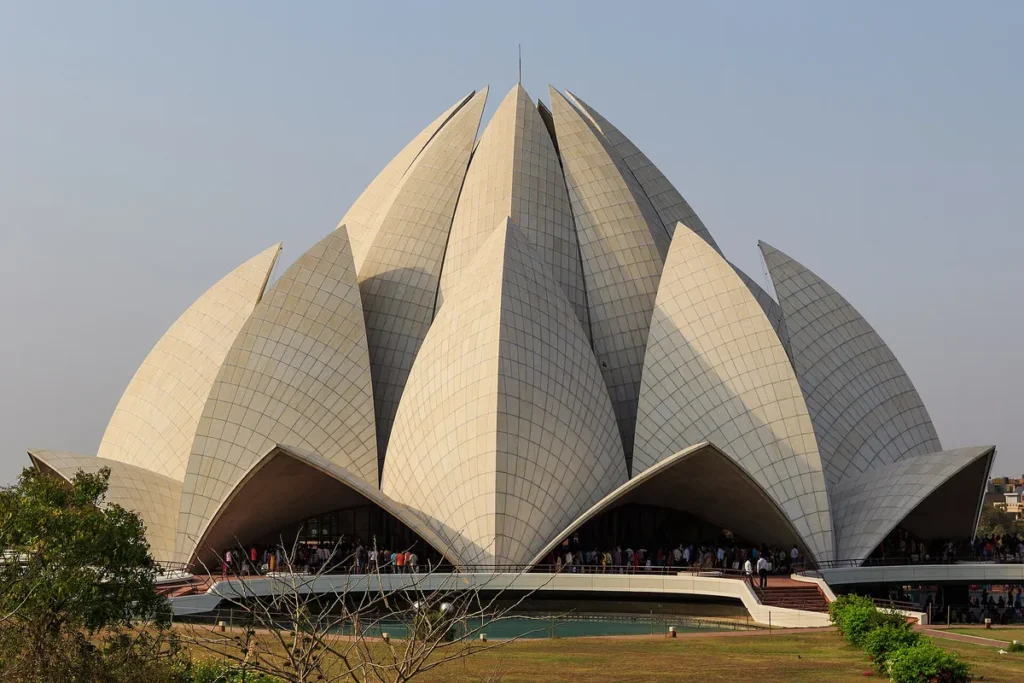
Image: A.Savin, Wikimedia Commons, FAL
How to use this in Mains
If asked: Communalism in India is a product of politics rather than religion. Discuss. (GS-I)
Quote: “Being religious is not communal; nor is pride in one’s faith.”
Use it: A neat definitional line to begin with.
In the news
Forest Rights Act: second regional review conference for eight eastern and central States
On 9 October 2026 the Tribal Affairs Ministry held the second regional review of the Forest Rights Act, 2006 in Kolkata with eight States. Nationally, over 54 lakh claims have been filed, about 25 lakh titles given, about 11 lakh are pending and over 18 lakh rejected. The focus is quick disposal, record updating, CFR rights and PVTG habitat rights.
10 Oct 2026
CAQM flying squads find 17 road-dust violations along Delhi’s Ring Road
On 3 October 2026 four CAQM flying squads inspected 25 stretches, about 35 km, of Delhi's Inner and Outer Ring Road managed by PWD. They found 17 violations of heavy visible road dust and construction and demolition waste. CAQM directed agencies to clean roads regularly to stop traffic from lifting dust back into the air.
4 Oct 2026
‘She-Mart’ cooperative outlets launched in Keralam to link women SHGs to markets
On 26 September 2026 the Union Minister of Cooperation launched She-Mart at Kollam, Keralam. Announced in the Budget, She-Mart links women Self-Help Groups and rural women entrepreneurs directly to buyers. More than 300 She-Mart stores are planned across Kerala, Tamil Nadu and Karnataka, selling local and Bharat Brand products.
26 Sep 2026
9 lakh Community Resource Persons: the frontline of rural service delivery
A PIB backgrounder of 20 September 2026 describes India's rural frontline cadres. Over 9 lakh Community Resource Persons (CRPs), mostly SHG women under DAY-NRLM, work with over 10.40 lakh ASHAs and 10.58 lakh trained Anganwadi Workers. Nearly 4.08 lakh CRPs work on livelihoods as Krishi, Pashu, Matsya and Van Sakhis; the rest on banking, insurance and gender.
20 Sep 2026