
UPPCS Prelims 2019 · GS Paper I: Arrange the following Committees formed for small scale sector in a chronological order and…
Arrange the following Committees formed for small scale sector in a chronological order and select the correct answer from the codes given below :
- Nayak Committee
- Abid Hussain Committee
- S.S. Kohli Committee
- Karve Committee
Answer (c) & explanation
Option (c) is the key. The Karve Committee (IV) on village and small industries reported in 1955, so it comes first. The RBI's P.R. Nayak Committee (I) on credit to small industries reported in 1992. The Abid Hussain Committee (II) on small enterprises reported in 1997. The S.S. Kohli working group (III) on sick small units reported around 2000. The true order is IV, I, II, III, which is not offered; option (c), IV, II, I, III, alone puts Karve first and Kohli last, so it is the best answer. Options (a), (b) and (d) put Nayak or Kohli first. Concept: the MSMED Act, 2006 first defined micro, small and medium enterprises.
Karve (1955) came first; only option (c) begins with IV.
None of the options gives the documented order (Karve 1955, Nayak 1992, Abid Hussain 1995-97, Kohli about 2000, i.e. IV, I, II, III). Option (c) is the closest and is taken as the best answer.
Question as printed in UPPSC's official question booklet. Source: uppsc.up.nic.in
Same theme in UPPCS Mains
- MAINS UPPCS Mains 2024 · GS Paper V · Section B · Q18Organised crime and terrorism are grave challenges to national security. What arrangements have been made in Uttar Pradesh to counter this ? Explain.
- MAINS UPPCS Mains 2025 · GS Paper II · Section A · Q1What role do Joint Parliamentary Committees (JPCs) play in the Indian legislative process ? How do they contribute to effective law-making ? Analyse.
- MAINS UPPCS Mains 2022 · GS Paper II · Section B · Q14Are the committees considered to be useful for Parliamentary work ? Discuss, in this context, the role of the Estimate Committee.
Same theme in UPSC Mains
- MAINS UPSC Mains 2024 · GS Paper II · Q1Examine the need for electoral reforms as suggested by various committees with particular reference to “one nation — one election” principle.
- MAINS UPSC Mains 2026 · GS Paper III · Q13How Indian agriculture has been transformed from food scarcity to food surplus level? Explain the various government policies implemented for diversification of Indian agriculture.
- MAINS UPSC Mains 2026 · GS Paper II · Q20“China's Belt and Road Initiative (BRI) has transformed South Asia from a regional space into a theatre of great power competition.” Analyse the strategic implications of…
In the news: current affairs on this topic
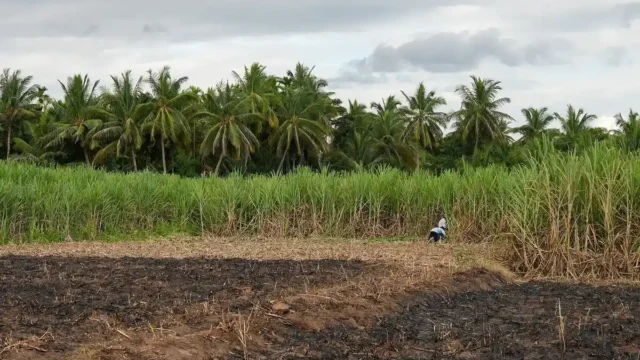
Ramesh Chand committee to examine sugarcane farmers’ and sugar sector issues
On 14 October 2026 the Centre set up a committee under Prof. Ramesh Chand, former NITI Aayog Member, on issues raised by sugarcane farmers. It will examine returns to cane growers, the ex-mill Minimum Selling Price of sugar, how sugar recovery is tested, weighment at mills, and deductions on mechanically harvested cane.
14 Oct 2026Related questions from other years
Which one of the following correctly represents the three key sub-indices of the Financial Inclusion Index (FI-Index) of the Reserve Bank of India (RBI) ?
Answer (c) & explanation
The sub-indices are Access, Usage and Quality (c). The RBI launched the FI-Index in August 2021. It covers banking, investments, insurance, postal services and pension, and gives one value between 0 and 100. Its three parameters are Access (35%), Usage (45%) and Quality (20%). Options (a), (b) and (d) list areas or ideas that are not its sub-indices; GDP contribution and affordability are not parameters.
Notice the logic: usage has the most weight, because an account that is never used does not mean real inclusion. Quality includes financial literacy and consumer protection. The index is published every July, and it has risen steadily, helped by Jan Dhan (2014) and UPI.
Answer as per the official UPSC answer key.
Which one of the following best describes the key objective of India's 'Open Network for Digital Commerce' (ONDC) initiative ?
Answer (c) & explanation
ONDC aims to break the dominance of large platforms (c). The Open Network for Digital Commerce, a DPIIT initiative (2021-22), is an open set of rules, like UPI for shopping. A buyer on one app can buy from a seller listed on another app. This interoperability lets small sellers reach buyers without joining a giant platform. Option (a) is wrong: it does not give the government control of transactions. Option (b) is wrong: private players can join; they are not replaced. Option (d) is wrong: it does not force UPI payments.
Notice ONDC's design: it is a not-for-profit company and part of India's Digital Public Infrastructure, along with Aadhaar, UPI and DigiLocker. It now covers food, groceries and mobility too.
options (a), (b) and (d) use strong words: "all", "replace", "mandate". A public digital platform usually opens a market; it does not take it over.
Answer as per the official UPSC answer key.
Which one of the following statements about Unified Payments Interface (UPI) and Central Bank Digital Currency (Digital Rupee) is not correct ?
Answer (d) & explanation
Statement (d) is not correct (d). Under UPI, money moves between bank accounts; the deposit is a liability of the bank. The Digital Rupee (e₹) is like a currency note in digital form, a direct liability of the RBI, not of users or banks. Option (a) is correct: UPI is a payment system, while the e-rupee is sovereign currency. Option (b) is correct: an e-rupee transfer moves value from wallet to wallet with no separate settlement. Option (c) is correct: e-rupee wallet transactions do not appear in bank statements.
Notice the legal base: the RBI Act was amended in 2022 to let the RBI issue a CBDC. Pilots began that year in wholesale (e₹-W) and retail (e₹-R) forms.
a "not correct" question. Look for the statement that puts the RBI's liability on someone else.
Answer as per the official UPSC answer key.
Which of the following statements about Real-World Assets (RWA) Tokenization are correct ?
- 1. Tokenization is the process of turning real world assets into digital tokens using blockchain technology.
- 2. Tokenization of real world assets offers 24x7 access, promoting financial inclusion.
- 3. Tokenization of real world assets will allow the access to high growth investment opportunities for individuals in India.
Select the answer using the code given below :
Answer (a) & explanation
All three statements are correct (a). Statement 1 is right: tokenization turns a real asset, like a building, bond or gold, into digital tokens recorded on a blockchain. Statement 2 is right: tokens can be traded 24x7, which widens financial inclusion. Statement 3 is right: small, fractional tokens let ordinary individuals get into high-growth investments that once needed crores. So options (b), (c) and (d) fail.
Notice the risks: unclear regulation, cyber threats and weak investor protection. In India, related steps include Fractional Ownership Platforms and REITs and InvITs, which already let small investors own slices of real estate and infrastructure. The RBI is also testing tokenized deposits and government securities in sandbox pilots.
Answer as per the official UPSC answer key.