
Unemployment in India for UPSC: Types, How PLFS Measures It, Causes and Policy Responses (with PYQs)
UPSC has already asked about this. Read the story with these questions in mind.
What is unemployment?
A person is unemployed if they are in the labour force (working or seeking/available for work) but not working. People not seeking work, such as full-time students, are outside the labour force. That is why the unemployment rate = unemployed ÷ labour force, not ÷ total population.
Types of unemployment
| Type | Meaning | Indian example |
|---|---|---|
| Disguised | More people engaged than needed; marginal productivity ≈ zero | Family members on a small farm |
| Seasonal | Work only in certain seasons | Agricultural labour between sowing and harvest |
| Structural | Mismatch between skills and jobs, or lack of capital | Graduates without employable skills |
| Frictional | Temporary, while moving between jobs | Job switchers |
| Cyclical | Due to downturns in the business cycle | Job losses in a recession |
| Educated / open | Visible unemployment among the educated | Youth with degrees seeking salaried work |
Why unemployment cannot be zero: frictional (and some structural) unemployment always exists in a changing economy; economists call the lowest sustainable level the “natural rate”.
How unemployment is measured in India (PLFS)
- PLFS by the National Statistics Office (MoSPI), launched in 2017, replaced the earlier NSSO employment–unemployment rounds.
- Usual status (ps+ss): reference period of the last 365 days; captures long-term status.
- Current Weekly Status (CWS): reference period of the last 7 days; captures short-term unemployment.
- Key indicators: LFPR (labour force ÷ population), WPR (workers ÷ population), UR (unemployed ÷ labour force).
- In answers, quote the latest official PLFS figure rather than an old number.
Why unemployment is a concern in India
Structural reasons usually cited: slow growth of labour-intensive manufacturing, a large share of workers still in low-productivity agriculture, skill mismatch, low female labour force participation, and informality (most jobs lack written contracts or social security). The demographic dividend turns into a burden if jobs do not keep pace with a young labour force.
Policy responses
Typical policy tools: rural employment guarantee (MGNREGA, 2005; the PIB now refers to the VB–G RAM G Act, 2025 framework); self-employment credit (PMEGP, MUDRA); skilling (Skill India, PMKVY, upgraded ITIs under PM-SETU); manufacturing push (PLI schemes); formalisation through labour codes and the e-Shram portal for unorganised workers. In Mains, evaluate these against the causes above.
Unemployment: UPSC angle
For UPSC CSE
Prelims: definitions (disguised unemployment, LFPR, WPR, CWS), PLFS basics, employment schemes. Mains GS-III: “inclusive growth and issues arising from it”, jobless growth, female LFPR, skilling, informal sector.
Unemployment UPSC PYQs (Prelims)
Questions UPSC has actually asked, from the official papers. Pick an option to check yourself.
Disguised unemployment generally means
Disguised unemployment means the marginal productivity of labour is zero: removing some workers would not reduce output. Answer as per the official UPSC key · Battle IAS PYQ bankAnswer (c) & why
Increase in absolute and per capita real GNP do not connote a higher level of economic development, if
Rising GNP does not mean development if poverty and unemployment increase. Development is broader than growth. Answer as per the official UPSC key · Battle IAS PYQ bankAnswer (c) & why
Mains PYQs on this topic
Questions from the official UPSC Mains papers (2023-2026 in the Battle IAS Mains bank), newest first. Each links to a model answer.
- UPSC Mains 2023 · GS Paper III · Q11 · 15 marks
Most of the unemployment in India is structural in nature. Examine the methodology adopted to compute unemployment in the country and suggest improvements.
Quick quiz
Under the PLFS, “Current Weekly Status” uses a reference period of
Usual status uses 365 days.Answer (b)
The unemployment rate is calculated as
LFPR = labour force ÷ population.Answer (b)
Agricultural labourers who find work only during sowing and harvest are an example of
Work available only in certain seasons.Answer (b)
FAQs
What are the types of unemployment in India?
Disguised, seasonal, structural, frictional, cyclical and educated or open unemployment, plus widespread underemployment.
How is unemployment measured in India?
Through MoSPI’s Periodic Labour Force Survey, using usual status (365 days) and current weekly status (7 days).
What is disguised unemployment?
A situation where more people are engaged in work than needed, so the marginal productivity of the extra workers is zero.
Why can unemployment never be zero?
Because some frictional and structural unemployment always exists as people change jobs and the economy changes.
What is the current unemployment rate in India?
Check the latest PLFS release on mospi.gov.in; figures are updated regularly and differ by measure (usual status vs CWS).
Spotted an error? Tell us. We correct within 48 hours.
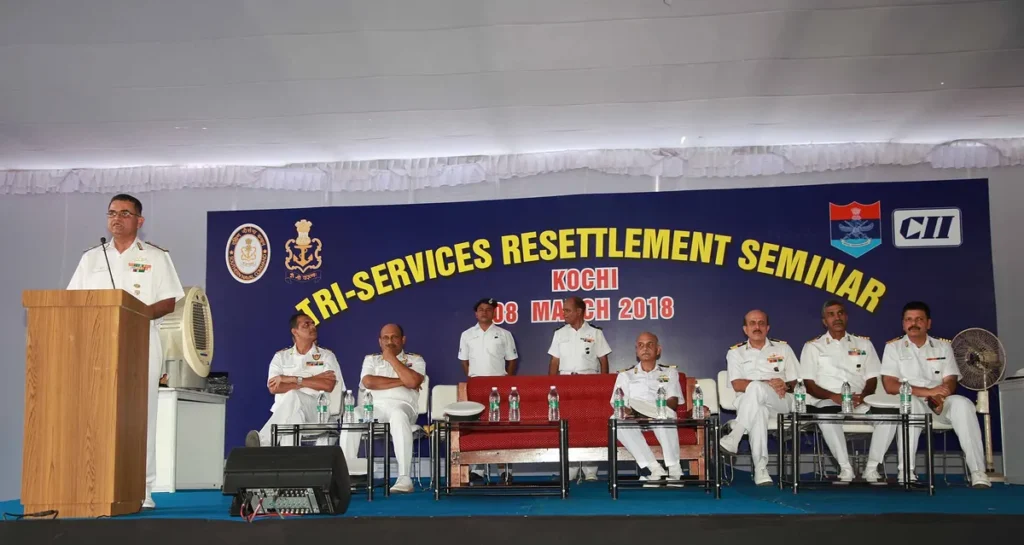
Image: Indian Navy, Wikimedia Commons, GODL-India
How to use this in Mains
If asked: UPSC Mains 2023, GS-III: Most of the unemployment in India is structural in nature. Examine the methodology adopted to compute unemployment in the country and suggest improvements.
Quote: “Why unemployment cannot be zero: frictional (and some structural) unemployment always exists in a changing economy; economists call the lowest sustainable level the “natural rate”.”
Use it: Use to explain the natural rate before structural unemployment.
In the news
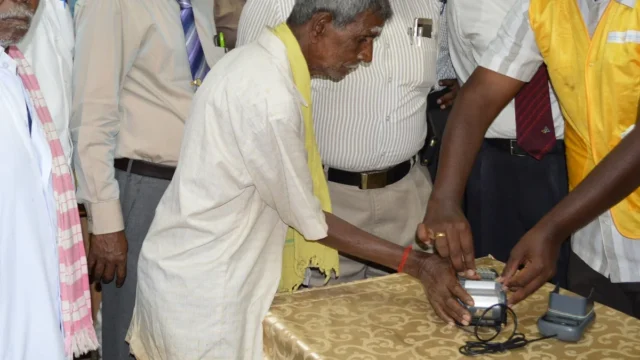
Financial inclusion saturation campaign in 2.70 lakh panchayats and ULBs from 21 October
The Department of Financial Services will run a nationwide campaign from 21 October to 31 December 2026 to saturate financial inclusion schemes in 2.70 lakh gram panchayats and urban local bodies. Bank camps will enrol people in PMJJBY, PMSBY and APY, open Jan Dhan accounts, finish re-KYC and nominations, and spread awareness on digital frauds and unclaimed deposits.
20 Oct 2026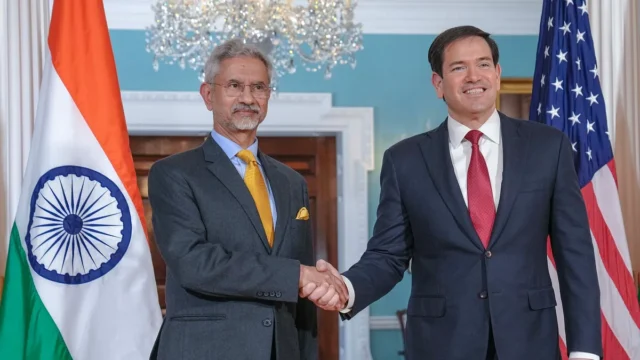
Rubio in Mumbai: India–US trade deal ‘very, very close’; energy and defence on the table
US Secretary of State Marco Rubio began his second India visit of the year in Mumbai on 20 October 2026 and met External Affairs Minister S. Jaishankar on trade, energy, technology and defence. Rubio said the two sides are ‘very, very close’ to a trade deal with ‘a small number of items left’, and praised India’s progress in diversifying energy supplies.
20 Oct 2026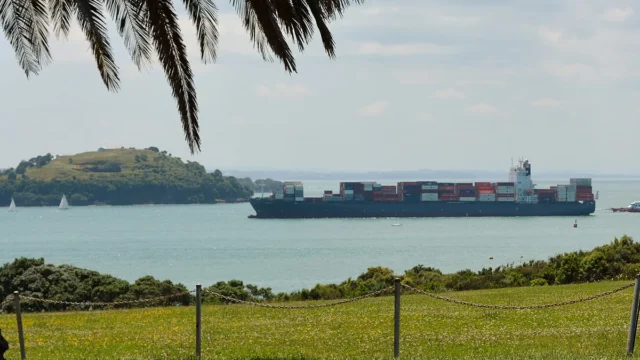
India–New Zealand FTA enters into force: zero duty on all Indian exports from day one
The India–New Zealand Free Trade Agreement came into force on 20 October 2026. From day one, New Zealand charges no customs duty on any Indian export, the first time India has got full duty-free access on all tariff lines at entry into force. New Zealand has also committed to facilitate USD 20 billion of investment into India, while dairy, sugar and edible oils stay protected.
20 Oct 2026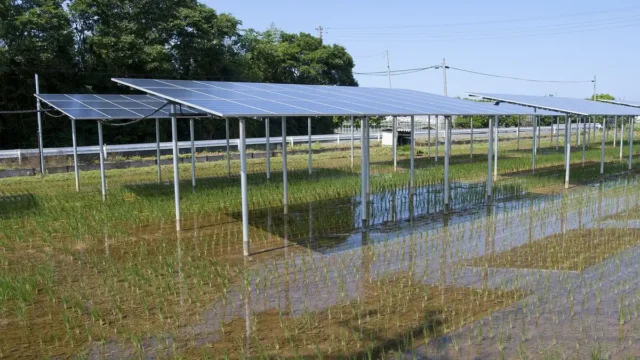
Agrivoltaics: Centre plans a scheme to push solar panels above farms; 5 GW seen in 3–4 years
MNRE Secretary Santosh Kumar Sarangi said on 19 October 2026 that the Centre is planning a central sector scheme to help States adopt agrivoltaics, either standalone or within PM-KUSUM 2.0. He expects capacity to cross 5 GW in three to four years if States notify feed-in tariffs. India hosts the 7th Agrivoltaics World Conference in New Delhi from 21 to 23 October.
20 Oct 2026