
UPSC Mains 2023 GS3 Q11: model answer
Most of the unemployment in India is structural in nature. Examine the methodology adopted to compute unemployment in the country and suggest improvements.
What the question wants
Why unemployment is structural, how it is measured (PLFS), weaknesses, improvements.
How to structure it
Intro: structural unemployment as mismatch between skills/jobs and economic structure. Body: (1) Why structural: farm dependence, skill mismatch, educated unemployment, low manufacturing; (2) Methodology: NSSO surveys to PLFS (2017); usual status (principal and subsidiary, 365 days), current weekly status, current daily status; quarterly urban and annual; LFPR, WPR, UR; (3) Weaknesses: disguised unemployment and underemployment not captured, one hour criterion, unpaid family work counted, informal sector, delays, no demand-side data; (4) Improvements: time-use survey, underemployment measure, monthly PLFS (from 2025), administrative data (EPFO, e-Shram), gender lens. Conclusion: better data, better policy.
- 1(1) Why structural: farm dependence, skill mismatch, educated unemployment, low manufacturing
- 2(2) Methodology: NSSO surveys to PLFS (2017)
- 3Usual status (principal and subsidiary, 365 days), current weekly status, current daily status
- 4Quarterly urban and annual
- 5LFPR, WPR, UR
- 6(3) Weaknesses: disguised unemployment and underemployment not captured, one hour criterion, unpaid family work counted, informal sector, delays, no demand-side data
- 7(4) Improvements: time-use survey, underemployment measure, monthly PLFS (from 2025), administrative data (EPFO, e-Shram), gender lens
Model answer
Structural unemployment arises from a mismatch between the skills workers have and the jobs the economy offers, or from an economy that creates too few productive jobs.
| Measure | Reference period | Employed if |
|---|---|---|
| Usual Status (ps+ss) | Last 365 days | Major time or 30+ days in work |
| Current Weekly Status | Last 7 days | Worked at least 1 hour on any day |
| Current Daily Status | Each day of last 7 | Half-day units of work |
Why India's is largely structural
- About 45% of workers remain in agriculture, with disguised unemployment.
- Manufacturing has not absorbed surplus labour.
- Educated youth face high unemployment while firms report skill shortages.
- Low female labour force participation.
Methodology
Earlier NSSO quinquennial surveys were replaced by the Periodic Labour Force Survey (PLFS) in 2017. It gives quarterly urban estimates and annual estimates for all India, using three measures:
- Usual Status (principal and subsidiary): activity over the last 365 days.
- Current Weekly Status: a person is employed if they worked at least one hour on any day of the past week.
- Current Daily Status: status on each day of the past week, capturing person-days.
It reports the Labour Force Participation Rate, Worker Population Ratio and Unemployment Rate.
Weaknesses
- The one-hour rule counts people with very little work as employed.
- Unpaid helpers in family enterprises are counted as employed, hiding underemployment.
- Quality of work, income and informality are not captured well.
- No regular demand-side data from employers.
- District-level estimates are lacking.
Improvements
- A separate measure of time-related underemployment and low earnings.
- Use administrative data: EPFO payroll, e-Shram and GST.
- Regular establishment surveys like the Quarterly Employment Survey.
- Time Use Surveys to capture women's unpaid work.
- Monthly estimates, which PLFS began in 2025, and district-level data.
Better measurement will reveal the real nature of joblessness and guide skilling and labour-intensive growth.
Keywords, cases and data to drop in
structural unemployment PLFS usual status current weekly status underemployment
Where most answers lose marks
- Not explaining the three status measures.
- Generic suggestions.
Fresh examples from current affairs
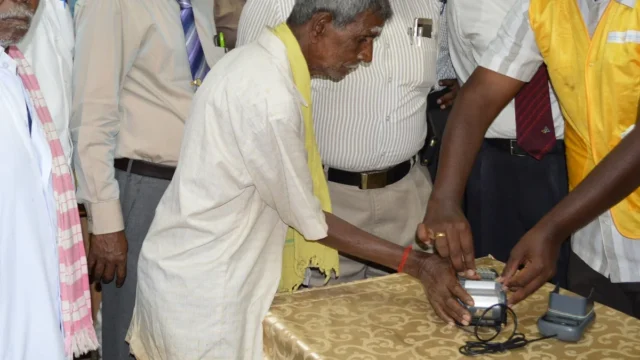
Financial inclusion saturation campaign in 2.70 lakh panchayats and ULBs from 21 October
The Department of Financial Services will run a nationwide campaign from 21 October to 31 December 2026 to saturate financial inclusion schemes in 2.70 lakh gram panchayats and urban local bodies. Bank camps will enrol people in PMJJBY, PMSBY and APY, open Jan Dhan accounts, finish re-KYC and nominations, and spread awareness on digital frauds and unclaimed deposits.
UPSC angle: Prelims: scheme parameters of PMJJBY, PMSBY, APY, PMJDY. · Mains GS-III: inclusive growth and financial inclusion.
20 Oct 2026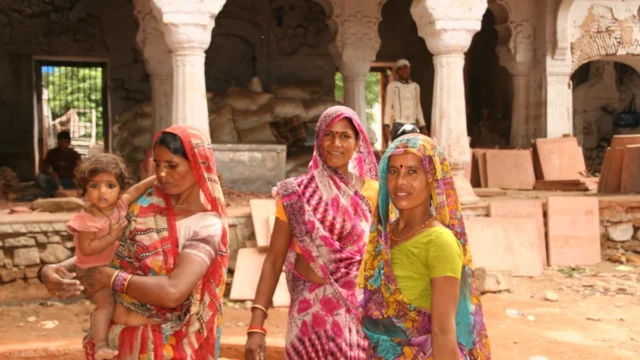
PLFS September 2026: unemployment steady at 5%; urban women’s participation highest since October 2025
The Periodic Labour Force Survey (PLFS) Monthly Bulletin for September 2026, released by MoSPI on 15 October 2026, put the unemployment rate (UR) for people aged 15 and above at 5.0%, the same as in August and 0.2 points lower than a year earlier. The labour force participation rate (LFPR) was 55.5%. Urban female LFPR rose to 25.9%, its highest since October 2025, while rural female UR fell to 3.9%, the lowest of 2026.
UPSC angle: Prelims: LFPR, WPR, UR, CWS vs UPS. · Mains GS-III: jobs, inclusive growth and women’s work.
15 Oct 2026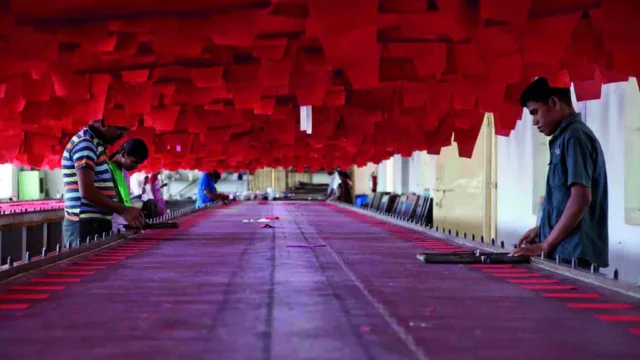
EPFO Amnesty Scheme 2026: deadline 28 December for PF Trust regularisation
EPFO is reminding establishments that the Amnesty Scheme, 2026 for retrospective regularisation of Provident Fund Trust exemption status closes on 28 December 2026. It covers trusts recognised under the Income Tax Act but without a formal exemption order under the EPF Act or the Code on Social Security.
UPSC angle: Prelims: Amnesty dates and legal sections. · Mains GS-III: social security and labour compliance.
13 Oct 2026
VB–G RAM G: 375 permissible rural works notified, 41% more than the previous scheme
The Rural Development Ministry has notified 375 permissible works under the VB-G RAM G Act, 2025, the law that replaced MGNREGA. That is 41% more than the 266 works earlier. Works fall under four pillars: water security (128), core rural infrastructure (111), livelihood infrastructure (98) and disaster preparedness (38), all planned through Gram Sabha-approved village plans.
UPSC angle: Prelims: Act name, 125 days, works count. · Mains GS-II: welfare schemes; GS-III: rural employment.
6 Oct 2026Learn the concept
Question text as printed in the official UPSC question paper: https://www.upsc.gov.in/sites/default/files/QP-CSM-23-GENERAL-STUDIES-PAPER-III-180923.pdf The model answer is original Battle IAS work; use it to learn structure, not to memorise.