
Pulses Mission at one year: output 274 lakh tonnes, imports down 31%
Next story · 11 OctPM in Chennai: ₹13,000-crore projects, metro now in 25 cities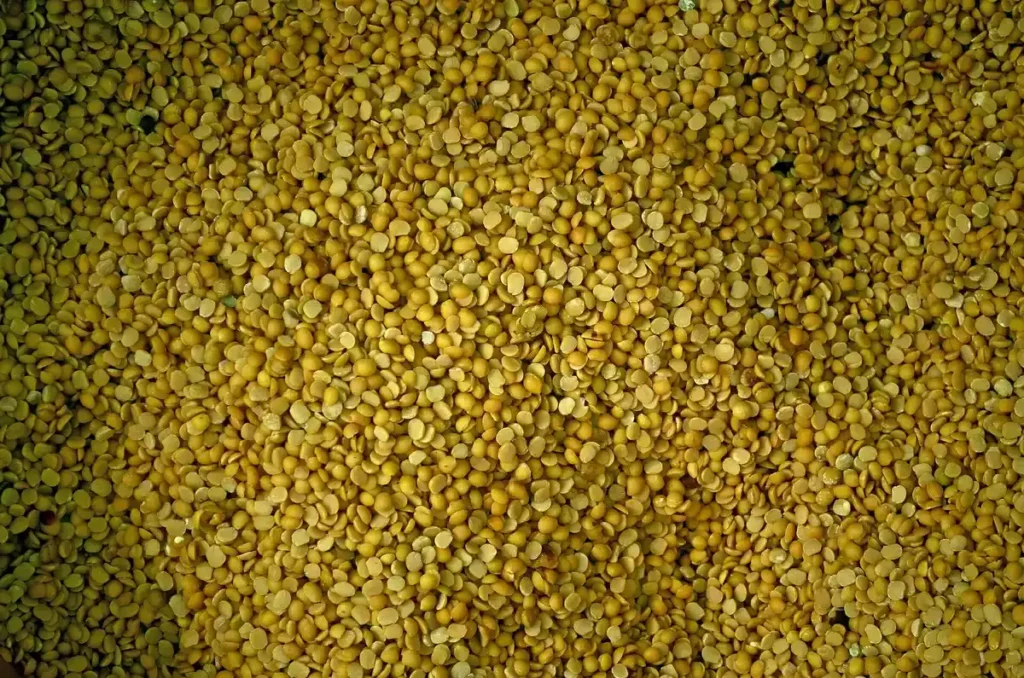
The Mission for Aatmanirbharta in Pulses, launched on 11 October 2025 with ₹11,440 crore till 2030-31, completed one year. Output rose to 274.09 lakh tonnes in 2025-26 and imports fell 31.52% in value. The aim is 350 lakh tonnes by 2030-31, backed by assured purchase of tur, urad and masoor.
- Launched
- 11 Oct 2025
- Outlay
- ₹11,440 crore
- 2030-31 target
- ~350 lakh tonnes
- Focus
- Tur, urad, masoor
The Pulses Mission: what happened?
India grows more pulses than any other country, yet it has long imported dal to fill the gap at home. A year ago the Centre started a six-year mission to close that gap. On its first anniversary PIB put out a backgrounder with the first year’s numbers.
- Production rose from 256.83 lakh tonnes (2024-25) to 274.09 lakh tonnes (2025-26, 3rd Advance Estimates).
- Area under pulses grew from 277.20 to 286.46 lakh hectares, and yield from 926 to 957 kg per hectare.
- Imports fell 31.52% in value, from ₹46,427.60 crore to ₹31,793.59 crore. Exports rose 13.40% to USD 969.53 million (10.01 lakh tonnes).
- Pulses procurement went up from about 18.40 lakh tonnes in 2024-25 to about 31.41 lakh tonnes in 2025-26.
What is the Mission for Aatmanirbharta in Pulses?
- A six-year mission (2025-26 to 2030-31) run by the Ministry of Agriculture & Farmers Welfare, with ₹11,440 crore.
- It works on the whole chain: better seed, more area, higher yield, assured purchase, and processing (dal mills).
- Seed: 87.5 lakh free seed kits and 126 lakh quintals of certified seed over six years, with climate-resilient varieties.
- Area: 35 lakh hectares more, to reach 310 lakh hectares by 2030-31, largely by bringing pulses into rice-fallow land.
- Clusters: a cluster-based approach in 489 districts.
- Processing: 1,000 pulse processing units; 528 already allocated to States and UTs in the first phase.
Why are pulses so important for India?
- Pulses carry 20-25% protein, more than double wheat and nearly three times rice (PIB). For a largely vegetarian population they are the cheapest protein.
- Main growing States: Madhya Pradesh, Maharashtra, Rajasthan, Uttar Pradesh, Gujarat, Andhra Pradesh, Karnataka, Jharkhand, Odisha and West Bengal.
- Imports drain foreign exchange and leave kitchen prices open to shocks abroad. Every tonne grown at home saves dollars.
Who decides farm policy under the Constitution?
- Agriculture is a State subject (Seventh Schedule, List II, Entry 14), so States run extension and field work. The Centre steps in through funding and missions like this one.
- MSP is announced by the Union Government. Assured procurement under this mission is a scheme promise for four years (2025-26 to 2028-29).
- Procurement agencies here are NAFED and NCCF, both national-level cooperative federations.
What do the numbers say after one year?
| Indicator | 2024-25 | 2025-26 |
|---|---|---|
| Production (lakh tonnes) | 256.83 | 274.09 (3rd AE) |
| Area (lakh ha) | 277.20 | 286.46 |
| Yield (kg/ha) | 926 | 957 |
| Imports (₹ crore) | 46,427.60 | 31,793.59 (−31.52%) |
| Exports (USD million) | 855 | 969.53 (+13.40%) |
| Procurement (lakh tonnes) | 18.40 | 31.41 |
How much did MSP rise for the three focus pulses?
| Crop | 2024-25 | 2026-27 | Increase |
|---|---|---|---|
| Tur (arhar) | 7,550 | 8,450 | ₹900 (11.92%) |
| Urad | 7,400 | 8,200 | ₹800 (10.81%) |
| Masoor (lentil) | 6,700 | 7,000 | ₹300 (4.48%) |
How is the Mission meant to work?
From seed to plate
- Certified, climate-resilient seed (SATHI portal tracks it)
- More area in 489 cluster districts, including rice fallows
- Assured purchase at MSP by NAFED and NCCF
- Dal mills add value near the farm
- Less import, steadier prices
Why does the Pulses Mission matter?
| Angle | What to note |
|---|---|
| Economic | Lower import bill (down ₹14,634 crore in one year) and higher exports. |
| Farmers | A guaranteed buyer at MSP removes the main reason farmers avoid pulses: price risk. |
| Nutrition | Cheap protein for households; links to food and nutrition security. |
| Environment | Pulses fix nitrogen and fit rice-fallow land, so they reduce fertiliser need and add a second crop. |
| Governance | Digital tracking: Krishi Mapper geo-tagging, SATHI seed traceability, AgriStack farmer IDs, e-Samriddhi payments. |
What are the challenges in the Pulses Mission?
- Output is 274 lakh tonnes against a 350 lakh tonne target; roughly 76 lakh tonnes more is needed in five years.
- Yield at 957 kg/ha is still well short of the 1,130 kg/ha goal.
- Procurement reached 4.69 lakh of 7.74 lakh registered farmers on the NCCF dashboard (as of 17 June 2026), so many registered growers were not covered.
- The 100% procurement promise runs only till 2028-29; farmers will watch what happens after that.
- Only 18 pulse units are complete under PMKSY so far, against a plan of 1,000 processing units.
What should be done next on the Pulses Mission?
- Keep the procurement promise visible and timely, since it is what changed sowing decisions.
- Push seed-kit distribution in rice fallows faster; 9.25 lakh of 87.5 lakh kits went out in Rabi 2025-26.
- Speed up the 528 allocated processing units so value stays near the farm.
- Use AgriStack and digital crop survey data to target districts where yield is lowest.
What can Prelims ask on the Pulses Mission?
- Launch date 11 Oct 2025; outlay ₹11,440 crore; period 2025-26 to 2030-31.
- Targets: about 350 lakh tonnes, 1,130 kg/ha, 310 lakh hectares by 2030-31.
- 100% procurement of tur, urad and masoor by NAFED and NCCF for four years (2025-26 to 2028-29).
- SATHI = Seed Authentication, Traceability & Holistic Inventory portal.
- Pulses carry 20-25% protein; India is the largest producer of pulses.
How to write about the Pulses Mission in Mains
Practice question (10 marks, 150 words): “Assured procurement, not just higher MSP, is the key to self-reliance in pulses.” Discuss with reference to the Mission for Aatmanirbharta in Pulses.
- Intro: India is the largest producer yet an importer; give the 274.09 lakh tonne figure.
- Body 1: what the Mission does (seed, area, procurement, dal mills).
- Body 2: one-year results in two or three numbers (imports −31.52%, yield 926 to 957).
- Body 3: gaps: target gap, partial farmer coverage, four-year limit.
- Conclusion: price certainty plus seed and processing, not MSP alone.
What should UPPCS aspirants note?
- Uttar Pradesh is named among the major pulse-growing States, so expect a UP-agriculture question on pulses and crop diversification.
- Tie it to UP’s rice-wheat belt: pulses in rice fallows add a crop without new land.
Image: P Jeganathan, Wikimedia Commons, CC BY-SA 3.0
How to use this in Mains
If asked: Can India achieve self-reliance in pulses? Assess recent efforts. (GS-III)
Quote: “Production rose from 256.83 lakh tonnes (2024-25) to 274.09 lakh tonnes (2025-26, 3rd Advance Estimates).”
Use it: Hard data for the body; follow with the 31.52% fall in imports.
Exam angle
Prelims: 350 lakh tonne target, NAFED/NCCF 100% procurement, SATHI portal. · Mains GS-III: self-reliance in pulses, MSP and procurement, food processing.
Practice MCQs
Original practice questions (not PYQs).
Consider the following about the Mission for Aatmanirbharta in Pulses:
1. It runs from 2025-26 to 2030-31.
2. It assures 100% procurement of all pulses for six years.
3. It targets about 350 lakh tonnes of output by 2030-31.
Which of the above are correct?
Answer (b) & explanation
Statement 2 is wrong: 100% procurement covers only tur, urad and masoor, and only for four years (2025-26 to 2028-29). Statements 1 and 3 match the PIB backgrounder of 11 Oct 2026.
SATHI, mentioned under the Pulses Mission, is a portal for
Answer (b) & explanation
SATHI stands for Seed Authentication, Traceability & Holistic Inventory; it tracks seed from production to certification and sale.
Which agencies are authorised to procure tur, urad and masoor under the Mission?
Answer (b) & explanation
PIB names NAFED and NCCF. FCI mainly handles wheat and rice; CCI handles cotton.
Questions students ask about this
When was the Pulses Mission launched?
On 11 October 2025, with ₹11,440 crore for 2025-26 to 2030-31.
What is the production target under the Mission?
About 350 lakh tonnes by 2030-31, with yield of 1,130 kg per hectare on 310 lakh hectares.
Which pulses get 100% procurement?
Tur, urad and masoor, bought by NAFED and NCCF from registered farmers for four years, 2025-26 to 2028-29.
How much did pulse imports fall in 2025-26?
By 31.52% in value, from ₹46,427.60 crore in 2024-25 to ₹31,793.59 crore.
Keep studying
Go deeper
Official source: PIB: PIB Backgrounder: India's Mission for Aatmanirbharta in Pulses, 11 Oct 2026
facts from cited sources only; faculty review pending