
PM Dhan-Dhaanya Krishi Yojana: Convergence of 36 Schemes in 100 Low-Productivity Districts, Selection Criteria, Monitoring and the Aspirational Districts Model (UPSC Notes + PYQs)
UPSC has already asked about this. Read the story with these questions in mind.
- Prelims 2020In India, which of the following can be considered as public investment in agriculture ?Solve it below ↓
- Prelims 2026Which among the following is/are the objective(s) of the Rainfed Area Development (RAD) initiative under the National Mission for Sustainable Agriculture (NMSA) ?Solve it below ↓
The problem it addresses
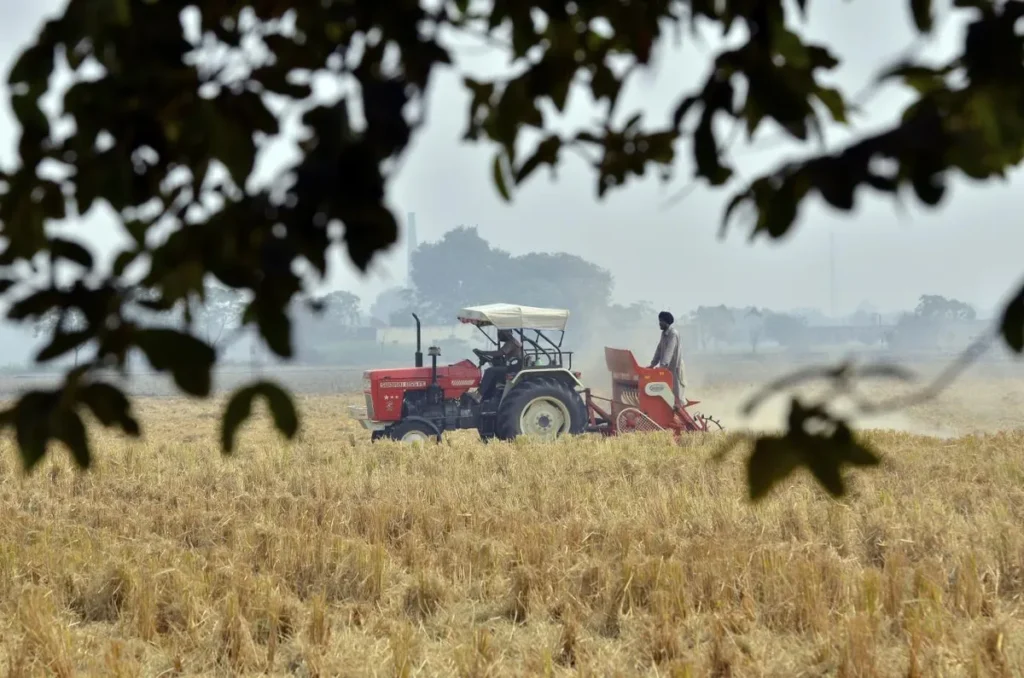
Drive from a district in western Uttar Pradesh to one in Bundelkhand and the farms look different. In one, two or even three crops a year, canal water, a cold store near the market and a bank branch that lends readily. In the other, a single rain-fed crop, little irrigation, no warehouse nearby and a farmer who borrows from a moneylender. Indian agriculture is not one story but hundreds of district stories, and the gap between the best and the worst is wide. Wheat yields in Punjab are more than double those in many eastern districts; rice yields vary several times across the country.
For decades, the response has been a long list of central schemes: one for irrigation, one for seeds, one for soil health, one for credit, one for storage. Each reaches the district through a separate channel with separate targets. The result is often scattered effort: an irrigation tank here, a seed kit there, without a single plan for raising output in that place. The PM Dhan-Dhaanya Krishi Yojana, announced in the Union Budget 2025-26, tries to tie these strands into one knot at the district level.
Key features
- Approval and launch: Cabinet approval on 16 July 2025; launched by the Prime Minister on 11 October 2025, along with the pulses mission.
- Duration and money: six years from 2025-26, with an annual outlay of about ₹24,000 crore drawn from the budgets of the converging schemes.
- Coverage: 100 districts, at least one in every State and Union Territory.
- Convergence: 36 schemes across 11 departments, plus State schemes and local partnerships with the private sector.
- Five aims: raise productivity; promote crop diversification and sustainable practices; expand post-harvest storage at panchayat and block level; improve irrigation; and widen access to short and long-term credit.
- ProductivityHigher yields per hectare
- DiversificationPulses, oilseeds, allied sectors
- StoragePanchayat and block level
- Irrigation and creditWater and institutional loans
How districts are chosen
Selection uses three measurable indicators, so that the scheme reaches places that lag on all fronts:
| Indicator | What it shows |
|---|---|
| Low productivity | Output per hectare well below the national average |
| Low cropping intensity | Land is sown only once a year, usually because water is lacking |
| Low credit disbursement | Farmers get less institutional loans per hectare, pushing them to informal lenders |
The number of districts in each State depends on its share of net cropped area and operational holdings. Many selected districts lie in the rain-fed belts of central and eastern India, the hill States and the North-East.
How it runs on the ground
Each district prepares a District Agriculture and Allied Activities Plan through a District Dhan-Dhaanya Samiti chaired by the District Collector, with progressive farmers as members. The plan is matched to national goals such as crop diversification, water and soil conservation, self-reliance in pulses and oilseeds, and natural and organic farming. Committees at State and national levels oversee it.
Progress is tracked monthly on 117 key performance indicators through a digital dashboard. NITI Aayog reviews and guides the district plans, and central nodal officers visit each district. Districts are ranked, which creates competition among them, a method borrowed from the Aspirational Districts Programme (2018). Agricultural universities and Krishi Vigyan Kendras act as technical partners.
- 1Select 100 districts on three indicators
- 2District Dhan-Dhaanya Samiti prepares plan
- 3Converge 36 schemes of 11 departments
- 4Monthly tracking on 117 KPIs
- 5Ranking and course correction
Schemes that come together
| Need | Examples of converging schemes |
|---|---|
| Water | Pradhan Mantri Krishi Sinchayee Yojana, Per Drop More Crop, watershed projects |
| Soil and inputs | Soil Health Card, National Mission on Natural Farming, seed programmes |
| Credit and risk | Kisan Credit Card, interest subvention, PM Fasal Bima Yojana |
| Storage and markets | Agriculture Infrastructure Fund, cooperative warehouses, e-NAM |
| Allied sectors | Rashtriya Gokul Mission, fisheries and animal husbandry schemes |
| Crops | Pulses and oilseeds missions, horticulture mission |
Why it matters
- Raising the floor: national averages hide the weakest districts. Lifting them gives larger gains for each rupee than pushing already-high yields higher.
- Food and nutrition security: more pulses, oilseeds, millets and livestock in these districts helps both farm income and diets.
- Farmer income: a second crop through irrigation or a better price through storage can transform a small farmer’s year.
- Better use of existing money: convergence avoids duplication and makes schemes work as a package.
- Cooperative federalism: the Centre sets goals, but districts and States plan, which suits farming, a State subject in the Seventh Schedule.
- Climate resilience: many target districts are rain-fed and drought-prone; water harvesting and diverse crops cut risk.
Concerns
- No fresh money: since funds come from existing schemes, critics ask whether the 100 districts gain at the cost of others.
- Coordination is hard: 11 departments have their own rules, timelines and data systems; a Collector must juggle them on top of many other duties.
- Dashboard bias: 117 indicators can push officials to chase numbers that are easy to report rather than real change.
- Land and tenancy: small, fragmented holdings and insecure tenants limit investment, and these issues lie outside the scheme.
- Market prices: higher output without assured prices or market access can push prices down at harvest.
- State capacity: extension services are thin; a single agriculture officer often covers thousands of farmers.
- Rain-fed land, single crop
- Little irrigation
- Weak credit access
- Few storage and markets
- Thin extension services
Way forward
Give districts some untied money so plans are not limited by scheme silos. Strengthen Krishi Vigyan Kendras and digital advisory through Agristack, so that every farmer gets crop and weather advice. Link output growth to storage, processing and farmer producer organisations, so that farmers capture more of the value. Pair the scheme with procurement and price support for pulses and oilseeds. Use independent third-party evaluation in addition to the dashboard. Encourage water-saving crops in water-stressed districts. Above all, measure success by farm incomes and soil and water health, not only by tonnes produced.
PYQ trend
Mains GS-III asks about farm subsidies, technology missions, food security and agricultural marketing. Prelims asks about schemes, public investment in agriculture and sustainable farming practices.
PM Dhan-Dhaanya Krishi Yojana: UPSC angle
For UPSC CSE
Prelims: scheme features, selection criteria. Mains GS-III: agricultural productivity, subsidies, food security, irrigation, credit; GS-II: government schemes and cooperative federalism.
PM Dhan-Dhaanya Krishi Yojana UPSC PYQs (Prelims)
Questions UPSC has actually asked, from the official papers. Pick an option to check yourself.
In India, which of the following can be considered as public investment in agriculture ?
– 1. Fixing Minimum Support Price for agricultural produce of all crops
– 2. Computerization of Primary Agricultural Credit Societies
– 3. Social Capital development
– 4. Free electricity supply to farmers
– 5. Waiver of agricultural loans by the banking system
– 6. Setting up of cold storage facilities by the governments
Select the correct answer using the code given below :
Investment creates lasting assets that raise future output: computerised PACS, trained farmer groups (social capital) and cold storage. MSP, free power and loan waivers are subsidies or transfers; they support current income but build no asset. Economists often blame such subsidies for crowding out farm investment. Answer as per the official UPSC key · Battle IAS PYQ bankAnswer (c) & why
Which among the following is/are the objective(s) of the Rainfed Area Development (RAD) initiative under the National Mission for Sustainable Agriculture (NMSA) ?
– 1. Encouraging monoculture in rainfed areas
– 2. Increasing rice cultivation in irrigated regions
– 3. Enhancing productivity and minimising climatic risks through Integrated Farming Systems (IFS)
Select the answer using the code given below :
RAD is an area-based part of the NMSA. It promotes Integrated Farming Systems: crops grown along with horticulture, livestock, fishery and agro-forestry, so that a farmer in a dry area has more than one source of income when the rain fails. Monoculture raises risk, and irrigated rice has nothing to do with a rainfed programme. Answer as per the official UPSC key · Battle IAS PYQ bankAnswer (d) & why
Mains PYQs on this topic
Questions from the official UPSC Mains papers (2023-2026 in the Battle IAS Mains bank), newest first. Each links to a model answer.
- UPSC Mains 2026 · GS Paper III · Q13 · 15 marks
How Indian agriculture has been transformed from food scarcity to food surplus level? Explain the various government policies implemented for diversification of Indian agriculture.
- UPSC Mains 2026 · GS Paper III · Q14 · 15 marks
Discuss the different types of subsidies and supports provided by the Government of India to agricultural sector. Examine the related issues pertaining to Agreement on Agriculture of World Trade Organisation (WTO).
Quick quiz
Which of the following is NOT a criterion for selecting districts under PMDDKY?
The three criteria are productivity, cropping intensity and credit.Answer (d)
How many districts are covered under PMDDKY?
100 districts; 112 is the Aspirational Districts count.Answer (b)
Who chairs the District Dhan-Dhaanya Samiti?
The District Collector heads the committee.Answer (a)
FAQs
What is PM Dhan-Dhaanya Krishi Yojana?
A six-year central scheme from 2025-26 that converges 36 existing schemes in 100 lagging agricultural districts to raise productivity, diversify crops, build storage, expand irrigation and improve credit.
How are the 100 districts selected?
On low productivity, low cropping intensity and low credit disbursement, with each State’s share based on its net cropped area and operational holdings.
Is PMDDKY a new subsidy scheme?
No. It mainly pools money and efforts from existing schemes and focuses them on chosen districts.
How is it similar to the Aspirational Districts Programme?
Both pick lagging districts, track progress on indicators through dashboards and rank districts to encourage competition.
What is cropping intensity?
The ratio of gross cropped area to net sown area, shown as a percentage. It shows how many times the same land is cropped in a year.
Spotted an error? Tell us. We correct within 48 hours.
Image: CIAT, Wikimedia Commons, CC BY-SA 2.0
How to use this in Mains
If asked: UPSC Mains 2026, GS-III: How Indian agriculture has been transformed from food scarcity to food surplus level? Explain the various government policies implemented for diversification of Indian agriculture.
Quote: “No fresh money: since funds come from existing schemes, critics ask whether the 100 districts gain at the cost of others.”
Use it: A fair counter-view for the body; examiners like that you see the funding question.
In the news
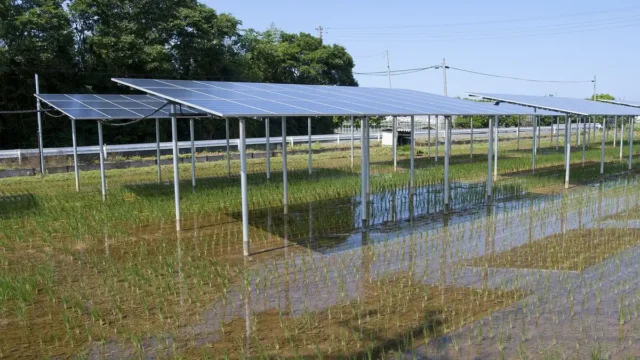
Agrivoltaics: Centre plans a scheme to push solar panels above farms; 5 GW seen in 3–4 years
MNRE Secretary Santosh Kumar Sarangi said on 19 October 2026 that the Centre is planning a central sector scheme to help States adopt agrivoltaics, either standalone or within PM-KUSUM 2.0. He expects capacity to cross 5 GW in three to four years if States notify feed-in tariffs. India hosts the 7th Agrivoltaics World Conference in New Delhi from 21 to 23 October.
20 Oct 2026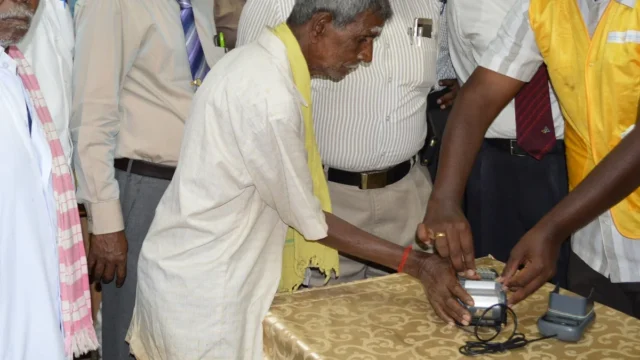
Financial inclusion saturation campaign in 2.70 lakh panchayats and ULBs from 21 October
The Department of Financial Services will run a nationwide campaign from 21 October to 31 December 2026 to saturate financial inclusion schemes in 2.70 lakh gram panchayats and urban local bodies. Bank camps will enrol people in PMJJBY, PMSBY and APY, open Jan Dhan accounts, finish re-KYC and nominations, and spread awareness on digital frauds and unclaimed deposits.
20 Oct 2026
Kufri Jamunia: ICAR-CPRI’s purple potato to fight hidden hunger
A PIB backgrounder of 18 October 2026 puts the spotlight on Kufri Jamunia, a purple-fleshed potato bred by ICAR’s Central Potato Research Institute and released in 2024. It has nearly twice the Vitamin C of a common potato and several times more zinc and iron, along with antioxidants called anthocyanins. The idea is clever: instead of asking people to change what they eat, make the food they already eat more nutritious. That is biofortification.
18 Oct 2026
Oil companies bar sugar-based ethanol for 2026-27; maize incentive cut to ₹2.79 a litre
The oil marketing companies have kept sugar out of India’s ethanol programme for the coming year. The tender issued on 16 October 2026 seeks about 11 billion litres of ethanol for the 2026-27 supply year, but asks for none made from sugarcane juice, sugar syrup or B-heavy molasses, because the Government wants sugar diversion for ethanol cut to zero. Grain must now carry the load, and even the maize incentive has been cut. Read this as a live example of the food-versus-fuel trade-off.
18 Oct 2026