
UPSC Mains 2025 GS4 Q2b: model answer
Keeping the national security in mind, examine the ethical dilemmas related to controversies over environmental clearance of development projects in ecologically sensitive border areas in the country.
What the question wants
Value conflicts in clearing border infrastructure in fragile zones, with examples and a balanced way.
How to structure it
Intro: strategic roads, tunnels and dams in fragile zones. Body: (1) Dilemmas: Security vs ecology, Speed vs due process, Secrecy vs transparency, National interest vs local rights; (2) Reconciling. Conclusion: Security and ecology are not rivals: an unstable mountain is itself a threat.
- 1(1) Dilemmas: Security vs ecology, Speed vs due process, Secrecy vs transparency, National interest vs local rights
- 2(2) Reconciling
Model answer
Roads, tunnels, airstrips and dams in the Himalaya and islands strengthen defence, but these areas are among the most fragile on earth.
Dilemmas
- Security vs ecology: the Char Dham road widening was challenged for slope damage; in 2021 the Supreme Court allowed wider roads citing defence needs.
- Speed vs due process: exemptions from public hearing for strategic linear projects near borders (Forest Conservation Amendment Act, 2023) save time but cut scrutiny.
- Secrecy vs transparency: defence details cannot be fully disclosed, weakening public consultation.
- National interest vs local rights: Great Nicobar project affects Shompen and Nicobarese tribes and leatherback turtle nesting.
- Present vs future: Joshimath land subsidence (2023) shows that careless building can itself create security risks.
Reconciling
- Strategic EIA with experts and the armed forces.
- Slope stabilisation, tunnels instead of cuttings, monitoring.
- Independent oversight committees.
Security and ecology are not rivals: an unstable mountain is itself a threat. The ethical path is careful construction, not no construction.
Keywords, cases and data to drop in
Char Dham case FC Amendment Act 2023 Great Nicobar Joshimath strategic EIA
Where most answers lose marks
- Taking an extreme side.
Fresh examples from current affairs

Supreme Court: no prior approval under Section 17A needed to probe a bribe demand
In a judgment of 16 October 2026, a Supreme Court Bench of Justices S.V.N. Bhatti and N.V. Anjaria held that investigating a bribe demand by a public servant does not need prior approval under Section 17A of the Prevention of Corruption Act. Asking for a bribe, the court said, is not part of discharging official duties.
UPSC angle: Prelims: Sections 7, 7A, 17A and 19 of the PC Act. · Mains GS-II/GS-IV: honest officers versus accountability.
19 Oct 2026
CCPA acts against online sale of explosives: 3,940 sellers delisted from seven platforms
The Central Consumer Protection Authority (CCPA) said on 19 October 2026 that 3,940 sellers of regulated explosives such as ammonium nitrate, picric acid and PETN have been delisted from seven online platforms after its action. It has fined Dial4Trade and ExportersIndia ₹10 lakh per order, and other cases are under hearing or investigation.
UPSC angle: Prelims: CCPA, PESO, CPA 2019 sections, helpline 1915. · Mains GS-II/III: platform liability and security.
19 Oct 2026
Supreme Court: children have a right to the internet, and platforms must block child abuse material
In a judgment of 15 October 2026, the Supreme Court said that the right to access and use the internet is a fundamental right of every person, children included, under Article 21 read with Article 19(1)(a). So the answer to online danger is not to lock children out but to go after the abusive content and the platforms that fail to remove it. The Court ordered a National Hash and URL List Database, two-hour reporting of unknown abuse material, and loss of revenue for platforms that profit from it through paywalls.
UPSC angle: Prelims: Arts. 21 and 19(1)(a); POCSO s.15; IT Act ss.67B and 79; CSEAM. · Mains GS-II: rights of children, regulation of platforms.
18 Oct 2026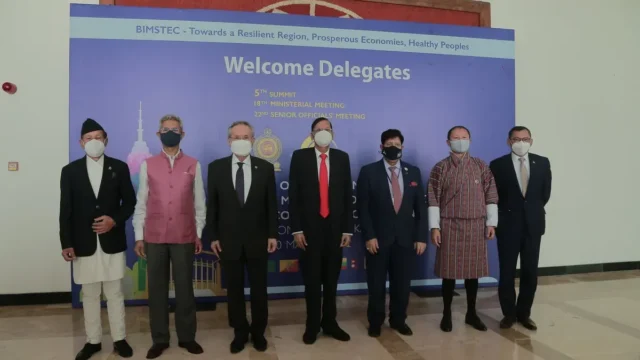
First BIMSTEC Home Ministers Meeting adopts Delhi Declaration on security
India hosted the first BIMSTEC Home Ministers Meeting in New Delhi on 13 October 2026. The seven member States adopted the Delhi Declaration, condemning terrorism including cross-border terrorism, and called for full use of the BIMSTEC anti-terror and mutual legal assistance conventions. A Disaster Management Centre is planned in Jamnagar, Gujarat.
UPSC angle: Prelims: members, HMM, conventions and dates, Jamnagar centre. · Mains GS-II: regional groupings; India's neighbourhood and security cooperation.
13 Oct 2026Learn the concept
Question text as printed in the official UPSC question paper: https://www.upsc.gov.in/sites/default/files/GENERAL-STUDIES-PAPER-IV-QP-CSM-25-010925.pdf The model answer is original Battle IAS work; use it to learn structure, not to memorise.