
Supreme Court: no prior approval under Section 17A needed to probe a bribe demand
Next story · 19 OctPumped storage hydropower: India’s roadmap for 100 GW of ‘water batteries’ by 2035-36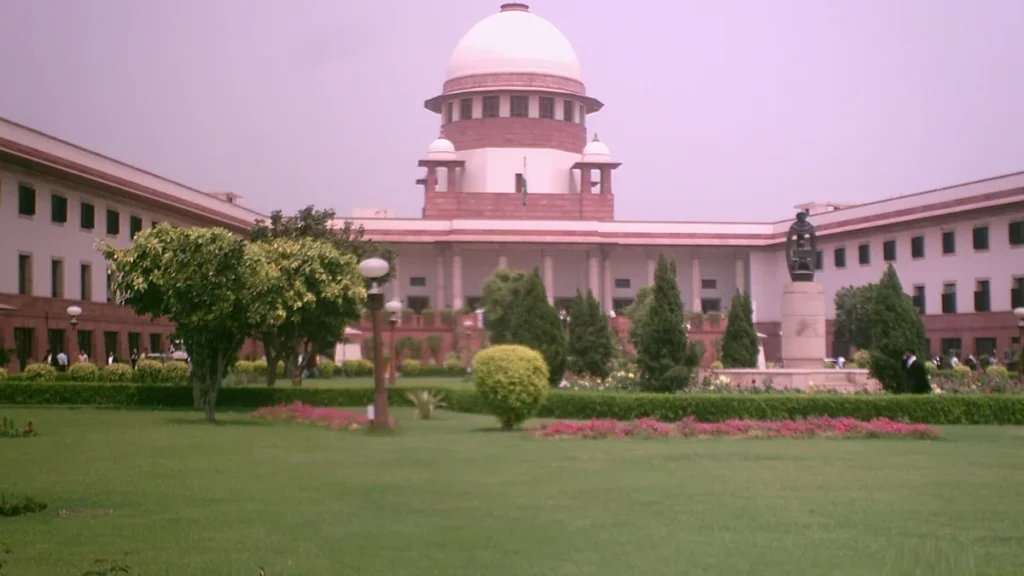
In a judgment of 16 October 2026, a Supreme Court Bench of Justices S.V.N. Bhatti and N.V. Anjaria held that investigating a bribe demand by a public servant does not need prior approval under Section 17A of the Prevention of Corruption Act. Asking for a bribe, the court said, is not part of discharging official duties.
- Judgment
- 16 Oct 2026
- Bench
- Bhatti, Anjaria JJ
- Provision
- Section 17A, PC Act
- Outcome
- Appeal dismissed
Section 17A ruling: what happened?
Section 17A was meant to shield honest officers from harassment over files they cleared in good faith. Corrupt officials, however, try to use it as a shield too. The Supreme Court has now drawn a clear line: a bribe demand is not a ‘decision’, so it gets no protection.
- A Rajasthan police constable, Tejaram, posted in the Deputy SP’s office at Sirohi, argued that his probe began without Section 17A approval.
- A fellow constable’s email complaint of 22 April 2021 alleged a ₹1.5 lakh demand on behalf of the Superintendent of Police, Sirohi.
- Justice Anjaria wrote the judgment upholding the Rajasthan High Court; the Section 7 charge framed by the trial court stands (The Hindu).
- The court said 17A applies only to a ‘decision’ or ‘recommendation’ made in discharge of official duties.
What is Section 17A?
- Added to the PC Act by the 2018 amendment, along with a new Section 7 on ‘undue advantage’.
- Police need the competent authority’s prior approval before probing a public servant’s official decisions or recommendations.
- Approval is not needed when a person is caught on the spot accepting a bribe.
- The approving authority should decide within three months, extendable by one month.
How does Section 17A compare with Section 19?
| Point | Section 17A | Section 19 |
|---|---|---|
| Stage | Before enquiry or investigation | Before a court takes cognisance |
| Purpose | Shield bona fide decisions | Filter frivolous prosecutions |
| Scope | Only decisions and recommendations | All PC Act offences by public servants |
| In this case | Not needed for bribe demand | Sanction granted 8 Dec 2023 |
Which constitutional and legal provisions apply?
- PC Act, 1988, Section 7: taking or seeking undue advantage is punishable.
- Section 7A: using personal influence over a public servant for undue advantage.
- Article 14: protection to officers must rest on a reasonable classification.
- DSPE Act, Section 6A (prior approval for senior officers) was struck down in 2014.
How did this case move?
Timeline of the case
- FIR filed on 4 June 2021
- Constable arrested on 1 September 2021
- Charge sheet filed on 19 January 2024
- Pali special court framed charge, September 2024
- High Court, then Supreme Court, rejected challenges
Which numbers should you remember?
| Number | What it means |
|---|---|
| 2018 | Year Section 17A was inserted in the PC Act |
| 3 + 1 months | Time limit for deciding a 17A approval request |
| January 2026 | Split verdict on 17A’s validity; larger Bench to decide |
This ruling interprets 17A’s reach; the larger question of whether 17A is valid at all is still pending. Earlier rulings list bribery, cheating and misappropriation as acts outside its scope.
Why does this matter?
| Angle | What to note |
|---|---|
| Probity | Stops corrupt officials hiding behind honest-officer protection. |
| Governance | Honest decision-makers still get a shield. |
| Judiciary | Shows purposive reading of anti-graft law. |
| Ethics paper | Good case on integrity versus policy paralysis. |
What are the challenges?
- Approval delays can stall probes and let evidence fade before investigators even begin.
- The line between ‘decision’ and misconduct is often blurry.
- Validity of 17A itself awaits a larger Bench.
- Fear of probes can still slow honest officers’ decisions on big files.
What should be done next?
- Settle 17A’s validity quickly through the larger Bench.
- Make approval timelines binding, with deemed approval on delay.
- Consider independent screening, such as Lokpal or Lokayukta.
- Train investigators on the ‘official duty’ test laid down.
What can Prelims ask on Section 17A?
- Section 17A was inserted by the PC (Amendment) Act, 2018.
- It covers decisions or recommendations made in discharge of official duties.
- No approval needed for on-the-spot arrest while accepting a bribe.
- Section 19: sanction for prosecution, needed before a court takes cognisance.
- Vineet Narain (1997) struck down the ‘single directive’ for CBI probes.
How to write about anti-graft safeguards in Mains
Practice question (10 marks, 150 words): Protecting honest officers without shielding the corrupt is the central dilemma of anti-corruption law. Discuss with reference to Section 17A of the PC Act. (GS-II)
- Intro: 16 Oct 2026 ruling on bribe demands.
- Purpose of 17A: shield bona fide decisions.
- Court’s test: only decisions or recommendations covered.
- Concerns: delays, misuse, pending validity case.
- Way out: time limits, independent screening, clear tests.
Image: Supreme Court of India, New Delhi. Legaleagle86 at English Wikipedia, via Wikimedia Commons, CC BY-SA 3.0
How to use this in Mains
If asked: Critically examine the safeguards available to public servants under India’s anti-corruption law. (GS-II)
Quote: “The decisive phrase in the Section is ‘discharge of official functions or duties’.”
Use it: Use it to explain why 17A covers decisions, not bribe demands; then mention the pending validity case.
If asked: “Fear of investigation leads to policy paralysis.” Comment. (GS-IV)
Quote: “In order that the provision of Section 17A of the PC Act applies, there has to be a ‘decision’ or ‘recommendation’ by a public servant.”
Use it: Shows the shield is narrow; argue that it protects honest choices without covering misconduct.
Exam angle
Prelims: Sections 7, 7A, 17A and 19 of the PC Act. · Mains GS-II/GS-IV: honest officers versus accountability.
Practice MCQs
Original practice questions (not PYQs).
With reference to the Prevention of Corruption Act, 1988, consider the following statements:
1. Section 17A requires prior approval before investigating any offence by a public servant.
2. Section 19 deals with sanction for prosecution.
Which of the statements given above is/are correct?
Answer (b) & explanation
Section 17A applies only to offences relatable to decisions or recommendations made in discharge of official duties, as the Supreme Court reiterated on 16 Oct 2026.
Section 17A was inserted in the Prevention of Corruption Act in
Answer (c) & explanation
It was added by the Prevention of Corruption (Amendment) Act, 2018.
The Supreme Court case that struck down the ‘single directive’ requiring prior approval to probe senior officers is
Answer (a) & explanation
Vineet Narain (1997) struck down the single directive; Subramanian Swamy (2014) later struck down Section 6A of the DSPE Act.
Questions students ask about this
What did the Supreme Court decide?
That probing a bribe demand needs no prior approval under Section 17A, since a bribe demand is not an official decision or recommendation.
Who was the appellant?
Tejaram, a Rajasthan police constable charged under Section 7 of the PC Act.
Is Section 17A still valid?
Yes for now. A January 2026 split verdict sent its validity to a larger Bench.
When is 17A approval not needed?
For on-the-spot arrests while accepting a bribe, and, as now clarified, for bribe demands.
Keep studying
Go deeper
facts from cited sources only; faculty review pending