
Left Wing Extremism (Naxalism) in India: Origins, Causes, the Red Corridor, SAMADHAN Strategy, Development Response and the Road Ahead (UPSC Notes + PYQs)
UPSC has already asked about this. Read the story with these questions in mind.
How the movement began
In May 1967 sharecroppers and tribal peasants in Naxalbari, a village in the Darjeeling district of West Bengal, seized land and clashed with police. The leaders, Charu Majumdar, Kanu Sanyal and Jangal Santhal, broke away from the CPI (Marxist) and in 1969 formed the CPI (Marxist-Leninist). Inspired by Mao, they rejected elections and called for an armed agrarian revolution that would encircle the cities from the countryside. The first phase was crushed in the early 1970s and split into dozens of groups. Two survived and grew: the People’s War Group in Andhra Pradesh and the Maoist Communist Centre in Bihar and Jharkhand. They merged in September 2004 to form the CPI (Maoist), which was banned under the Unlawful Activities (Prevention) Act in 2009.
- 1967Naxalbari uprising
- 1969CPI (ML) formed
- 2004PWG and MCC merge into CPI (Maoist)
- 2009CPI (Maoist) banned under UAPA
- 2010Peak of violence; Tadmetla attack
- 2015National Policy and Action Plan
- 2017SAMADHAN strategy
- 2026Target date to end LWE (31 March)
Why it took root
The movement grew where the State was thin and grievances were thick. The core belt of central and eastern India is forested, hilly and rich in minerals, and home to large Adivasi populations. Several causes overlapped there:
- Land: unfinished land reform, tenancy without rights, and alienation of tribal land to moneylenders and outsiders.
- Forests: colonial and post-colonial forest laws treated forest dwellers as encroachers on land they had used for generations.
- Displacement: dams, mines and industries displaced lakhs of people, with poor compensation and rehabilitation.
- Absent governance: few schools, clinics, roads or courts; officials who seldom visited and police seen as oppressive.
- Exploitation: low tendu wages, bonded labour and caste oppression.
Maoist cadres filled this vacuum with “people’s courts”, fixed wages for tendu collection and protection from forest guards, and won local support.
- Land alienation and failed land reform
- Forest laws against forest dwellers
- Displacement by mines and dams
- Weak schools, health, courts and roads
- Exploitation and caste oppression
The red corridor and its shrinking
At its height in the late 2000s, LWE influence stretched from the Nepal border through Bihar, Jharkhand, Odisha and Chhattisgarh to Andhra Pradesh and Maharashtra, a belt popularly called the “red corridor”. Since 2010 violence has fallen steadily. The Ministry of Home Affairs counted 126 affected districts in 2018, cut the list to 90 and then 70, and its 2025 review put the number at 18, with six “most affected”. The Government set 31 March 2026 as the target date to end LWE. Operations in the Abujhmarh forests and on the Chhattisgarh-Telangana border in 2024-25 killed several top leaders, including the general secretary, and large groups of cadres surrendered.
The policy response
Police and public order are State subjects, so the Centre supports rather than replaces the States. The National Policy and Action Plan of 2015 set out a multi-pronged approach: security operations, development, ensuring the rights of local communities, and public perception management. In 2017 the Home Ministry summarised the security side as SAMADHAN:
| Letter | Meaning |
|---|---|
| S | Smart leadership |
| A | Aggressive strategy |
| M | Motivation and training |
| A | Actionable intelligence |
| D | Dashboard-based key performance indicators |
| H | Harnessing technology |
| A | Action plan for each theatre |
| N | No access to financing |
Development as a weapon
Security forces can clear an area, but only the State’s presence can hold it. Key schemes include:
- Security Related Expenditure scheme, which reimburses States for operations, training and surrendered cadres.
- Special Central Assistance to fill critical gaps in the most affected districts.
- Road Requirement Plan and the Road Connectivity Project for LWE-affected areas, which have built thousands of kilometres of roads.
- Mobile towers in remote villages, Eklavya model residential schools, bank branches and post offices.
- The Aspirational Districts Programme, which covers most affected districts.
Laws matter as much as money. The PESA Act, 1996 gives gram sabhas in Fifth Schedule areas control over minor forest produce and a say in land acquisition, and the Forest Rights Act, 2006 recognises individual and community rights of forest dwellers. Where these laws have been honestly implemented, the Maoists lose their best recruiting argument.
- Forward CRPF and State police camps
- Local battalions and intelligence
- Drones and technology
- Choking of funds (NIA, ED)
- Roads, towers, schools, banks
- PESA and Forest Rights Act
- Aspirational districts
- Surrender and rehabilitation
Rights, law and the hard questions
The conflict has also produced abuses. The State-backed Salwa Judum militia in Chhattisgarh burned villages and displaced thousands; in Nandini Sundar v. State of Chhattisgarh (2011) the Supreme Court ordered it disbanded and barred the use of poorly trained tribal youth as Special Police Officers. A democratic State must defeat armed rebellion while staying within the Constitution, because each excess hands the rebels a new story.
The road ahead
- Hold, not just clear: keep camps, roads and services in cleared areas so cadres cannot return.
- Implement PESA and FRA in letter and spirit, and give gram sabhas real control over minor forest produce and mining decisions.
- Fair displacement: honest consent, compensation and a share in mining revenue through District Mineral Foundations.
- Development without alienation: a road should bring a school and a market, not only a mine.
PYQ trend
Mains asks LWE often in GS-III: causes, the shift in Government strategy, and the 2026 target. GS-IV has used it in a case study. Prelims has not asked it directly in the Battle IAS bank, but laws such as PESA and FRA, and schemes in tribal areas, are fair game.
Left Wing Extremism: UPSC angle
For UPSC CSE
Mains GS-III: “Linkages between development and spread of extremism” is written into the syllabus, so write causes, strategy and way forward with balance. GS-IV: ethical dilemmas of officers in conflict zones.
Left Wing Extremism UPSC PYQs (Prelims)
Questions UPSC has actually asked, from the official papers. Pick an option to check yourself.
No Prelims question in the Battle IAS bank is directly on this topic yet.
Mains PYQs on this topic
Questions from the official UPSC Mains papers (2023-2026 in the Battle IAS Mains bank), newest first. Each links to a model answer.
- UPSC Mains 2025 · GS Paper III · Q10 · 10 marks
The Government of India recently stated that Left Wing Extremism (LWE) will be eliminated by 2026. What do you understand by LWE and how are the people affected by it ? What measures have been taken by the government to eliminate LWE ?
- UPSC Mains 2024 · GS Paper IV · Q9 · 20 marks
With multipronged strategy of the Central and State Governments specially in the last few years, the naxalite problem has been resolved to a large extent in the affected states of the country. However, there are a few pockets in certain states where naxalite problem still persists, mainly due to involvement of foreign countries. Rohit is posted as SP (Special Operations) for the last one year, in one of the districts which is still affected by the naxalite problem. The district administration has taken a lot of developmental works in the recent past in the naxalite affected areas to win the hearts and minds of the people. Over a period of time, Rohit has established an excellent intelligence network to get the real time information regarding the movement of naxalite cadre. To instill confidence in the public and have moral ascendancy over the naxalites, a number of cordons and search operations are being conducted by the police. Rohit, who himself was leading one of the contingents got a message though his intelligence source that about ten hard core naxalites were hiding in a particular village with sophisticated weapons. Without wasting any time, Rohit reached the target village with his team and laid out a foolproof cordon and started carrying out a systematic search. During the search, his team managed to overpower all the naxalites along with their automatic weapons. However, in the meantime, more than five hundred tribal women surrounded the village and started marching towards the target house. They were shouting and demanding the immediate release of insurgents since they are their protectors and saviours. The situation on the ground was becoming very critical as the tribal women were extremely agitated and aggressive. Rohit tried to contact his superior officer, IG (Special Operations) of the state on the radio set and on mobile phone, but failed to do so due to poor connectivity. Rohit was in great dilemma since out of the naxalites apprehended, two were not only hard core top insurgents with prize money of ₹ ten lakhs on their heads, but were also involved in a recent ambush on the security forces. However, if he did not release the naxalites, the situation could get out of control since the tribal women were aggressively charging towards them. In that case, to control the situation Rohit might have to resort to firing which may lead to valuable loss of lives of civilians and would further complicate the situation.
(a) What are the options available with Rohit to cope with the situation?
(b) What are the ethical dilemmas being faced by Rohit?
(c) Which of the options, do you think, would be more appropriate for Rohit to adopt and why?
(d) In the present situation, what are the extra precautionary measures to be taken by the police in dealing with women protesters? - UPSC Mains 2023 · GS Paper III · Q19 · 15 marks
What are the internal security challenges being faced by India? Give out the role of Central Intelligence and Investigative Agencies tasked to counter such threats.
Quick quiz
The Naxalbari uprising of 1967 took place in which present-day State?
Naxalbari is in the Darjeeling district of West Bengal.Answer (b)
CPI (Maoist) was formed in 2004 by the merger of
PWG (Andhra) and MCC (Bihar-Jharkhand) merged in September 2004.Answer (b)
Which judgment ordered the disbanding of Salwa Judum?
Nandini Sundar v. State of Chhattisgarh, 2011.Answer (c)
FAQs
What is Left Wing Extremism?
The armed Maoist movement that seeks to overthrow the Indian State through protracted people’s war, called Naxalism after its birthplace, Naxalbari.
What is the red corridor?
The belt of forested central and eastern India, from Bihar and Jharkhand through Odisha and Chhattisgarh to Andhra Pradesh and Maharashtra, where Maoists were strongest.
What is SAMADHAN?
The Home Ministry’s 2017 security doctrine: smart leadership, aggressive strategy, motivation, actionable intelligence, dashboards, technology, action plans and no access to financing.
Which laws are central to the rights-based response?
The PESA Act, 1996 and the Forest Rights Act, 2006, which give tribal communities control over forests, minor produce and local decisions.
How many districts are affected now?
The Home Ministry’s 2025 review counted 18 affected districts, six of them most affected, down from 126 in 2018.
Spotted an error? Tell us. We correct within 48 hours.
How to use this in Mains
If asked: UPSC Mains 2025, GS-III: The Government of India recently stated that Left Wing Extremism (LWE) will be eliminated by 2026. What do you understand by LWE and how are the people affected by it ? What measures have been taken by the government to eliminate LWE ?
Quote: “The movement grew where the State was thin and grievances were thick.”
Use it: An excellent one-line intro on why LWE took root.
In the news
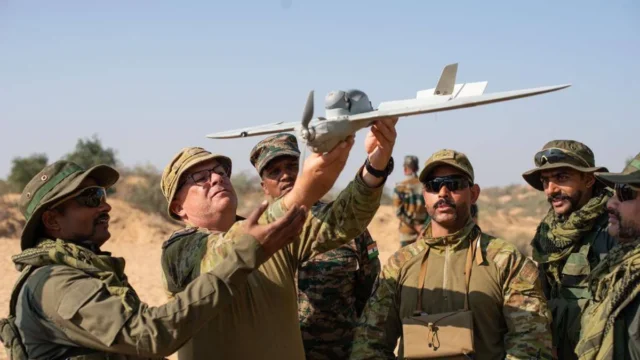
AUSTRAHIND 2026: fifth India–Australia Army exercise begins in Thiruvananthapuram
The fifth edition of the India–Australia joint military exercise AUSTRAHIND began on 19 October 2026 at the Foreign Training Node, Thiruvananthapuram, and runs till 1 November. About 120 soldiers from each army will train for sub-conventional operations in island and coastal terrain under a UN Chapter VII mandate. For the first time, New Zealand has sent observers.
20 Oct 2026
CCPA acts against online sale of explosives: 3,940 sellers delisted from seven platforms
The Central Consumer Protection Authority (CCPA) said on 19 October 2026 that 3,940 sellers of regulated explosives such as ammonium nitrate, picric acid and PETN have been delisted from seven online platforms after its action. It has fined Dial4Trade and ExportersIndia ₹10 lakh per order, and other cases are under hearing or investigation.
19 Oct 2026
Supreme Court: children have a right to the internet, and platforms must block child abuse material
In a judgment of 15 October 2026, the Supreme Court said that the right to access and use the internet is a fundamental right of every person, children included, under Article 21 read with Article 19(1)(a). So the answer to online danger is not to lock children out but to go after the abusive content and the platforms that fail to remove it. The Court ordered a National Hash and URL List Database, two-hour reporting of unknown abuse material, and loss of revenue for platforms that profit from it through paywalls.
18 Oct 2026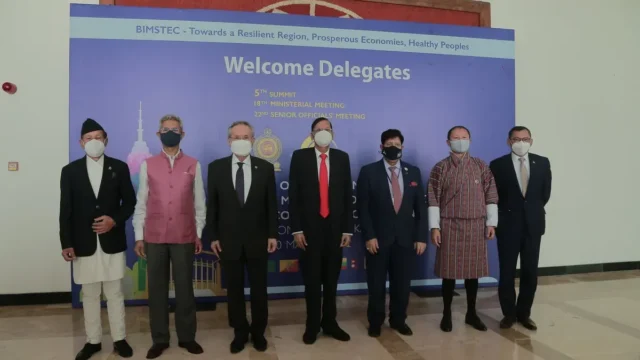
First BIMSTEC Home Ministers Meeting adopts Delhi Declaration on security
India hosted the first BIMSTEC Home Ministers Meeting in New Delhi on 13 October 2026. The seven member States adopted the Delhi Declaration, condemning terrorism including cross-border terrorism, and called for full use of the BIMSTEC anti-terror and mutual legal assistance conventions. A Disaster Management Centre is planned in Jamnagar, Gujarat.
13 Oct 2026