
UPSC Mains 2023 GS2 Q11: model answer
“The Constitution of India is a living instrument with capabilities of enormous dynamism. It is a constitution made for a progressive society.” Illustrate with special reference to the expanding horizons of the right to life and personal liberty.
What the question wants
Show the Constitution's dynamism through the judicial expansion of Article 21.
How to structure it
Intro: Constitution as a living document; Art. 21. Body: (1) From A.K. Gopalan (1950) narrow view to Maneka Gandhi (1978): 'procedure established by law' must be just, fair, reasonable; (2) Rights read into Art. 21: livelihood (Olga Tellis), clean environment (Subhash Kumar), education (Mohini Jain, Unni Krishnan, then Art. 21A), health, speedy trial (Hussainara), privacy (Puttaswamy 2017), dignity, right to die with dignity (Common Cause 2018), sexual orientation (Navtej Johar 2018), shelter, legal aid, against custodial torture (D.K. Basu); (3) Other tools: amendments, basic structure. Conclusion: dynamism with restraint.
- 1(1) From A.K. Gopalan (1950) narrow view to Maneka Gandhi (1978): 'procedure established by law' must be just, fair, reasonable
- 2(2) Rights read into Art. 21: livelihood (Olga Tellis), clean environment (Subhash Kumar), education (Mohini Jain, Unni Krishnan, then Art. 21A), health, speedy trial (Hussainara), privacy (Puttaswamy 2017), dignity, right to die with dignity (Common Cause 2018), sexual orientation (Navtej Johar 2018), shelter, legal aid, against custodial torture (D.K. Basu)
- 3(3) Other tools: amendments, basic structure
Model answer
Article 21 says no person shall be deprived of life or personal liberty except according to procedure established by law. Its growth through judicial interpretation shows why the Constitution is a living instrument.
- 1950A.K. Gopalan: narrow reading
- 1978Maneka Gandhi: fair, just, reasonable
- 1985Olga Tellis: livelihood
- 1997D.K. Basu: custodial safeguards
- 2017Puttaswamy: privacy
- 2018Common Cause; Navtej Johar
- 2024Right against climate change effects
From a narrow to a broad reading
- A.K. Gopalan (1950): any procedure laid down by law was enough.
- Maneka Gandhi (1978): the procedure must be just, fair and reasonable; Articles 14, 19 and 21 form a 'golden triangle'.
Rights read into Article 21
- Livelihood: Olga Tellis (1985), pavement dwellers.
- Speedy trial and legal aid: Hussainara Khatoon (1979).
- Against custodial violence: D.K. Basu (1997) guidelines.
- Clean environment: Subhash Kumar (1991), M.C. Mehta cases.
- Education: Unni Krishnan (1993), leading to Article 21A by the 86th Amendment (2002).
- Health and emergency care: Parmanand Katara (1989).
- Privacy: K.S. Puttaswamy (2017), nine judges.
- Dignity in death: Common Cause (2018), passive euthanasia and living wills.
- Sexual autonomy: Navtej Singh Johar (2018) decriminalised consensual same-sex relations.
- Against climate change: M.K. Ranjitsinh (2024) recognised a right against its adverse effects.
Why this matters for a progressive society
- New threats, from surveillance to pollution, are met without formal amendment.
- Directive Principles have been given force through Article 21.
- Marginal groups, such as prisoners, slum dwellers and transgender persons (NALSA, 2014), gain protection.
Caution: some rights remain hard to enforce, and courts must avoid overreach into policy.
The story of Article 21 shows the Constitution growing with society, as its framers intended.
Keywords, cases and data to drop in
Article 21 Maneka Gandhi golden triangle Puttaswamy living document
Where most answers lose marks
- Listing cases without explaining the shift.
- Missing Gopalan to Maneka transition.
Fresh examples from current affairs
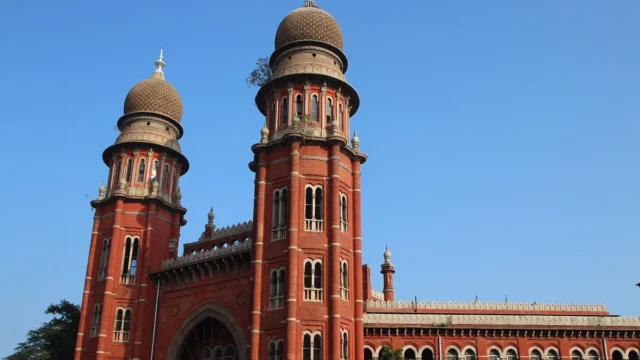
Conversion does not carry over a quota: Supreme Court on Tamil Nadu’s BC Muslim certificates
On 15 October 2026, in The Secretary to Government v. Sameer Ahamed N., the Supreme Court upheld the Madras High Court’s quashing of a 2024 Tamil Nadu order. That order let converts to Islam from Backward, Most Backward, Denotified and Scheduled Caste communities get Backward Class Muslim certificates and use the 3.5% BC Muslim quota. The Court said conversion to Islam does not by itself make a person a member of any of the seven notified BC Muslim communities.
UPSC angle: Prelims: Articles 15(4), 16(4), 341, 342A; SC Order 1950. · Mains GS-II: conversion and reservation debate.
21 Oct 2026
Supreme Court: children have a right to the internet, and platforms must block child abuse material
In a judgment of 15 October 2026, the Supreme Court said that the right to access and use the internet is a fundamental right of every person, children included, under Article 21 read with Article 19(1)(a). So the answer to online danger is not to lock children out but to go after the abusive content and the platforms that fail to remove it. The Court ordered a National Hash and URL List Database, two-hour reporting of unknown abuse material, and loss of revenue for platforms that profit from it through paywalls.
UPSC angle: Prelims: Arts. 21 and 19(1)(a); POCSO s.15; IT Act ss.67B and 79; CSEAM. · Mains GS-II: rights of children, regulation of platforms.
18 Oct 2026
₹1,423 crore over three years for implementing PCR and SC/ST Atrocities Acts; 217 exclusive special courts
The Centre released ₹1,423.30 crore to States and UTs over 2022-23 to 2024-25 to implement the Protection of Civil Rights Act, 1955 and the SC/ST (Prevention of Atrocities) Act, 1989. States report 217 Exclusive Special Courts in 15 States and UTs. Yet 65,646 cases were registered in 2024 and 3,92,006 were pending trial at year end.
UPSC angle: Prelims: PCR Act year; Art. 17. · Mains: Why do atrocity cases see low conviction?
1 Oct 2026
DPDP Rules, 2025 notified: data protection law now fully in force
Compliance timelines matter for small firms. The independence of the Data Protection Board is the main criticism to note.
UPSC angle: Prelims: DPDP terms. · Mains: data protection.
17 Nov 2025Learn the concept
Question text as printed in the official UPSC question paper: https://www.upsc.gov.in/sites/default/files/QP-CSM-23-GENERAL-STUDIES-PAPER-II-180923.pdf The model answer is original Battle IAS work; use it to learn structure, not to memorise.