
India to accede to the Southern Indian Ocean Fisheries Agreement (SIOFA)
Next story · 14 OctIDBI Bank strategic sale: Fairfax arm wins 60.72% stake for ₹52,878 crore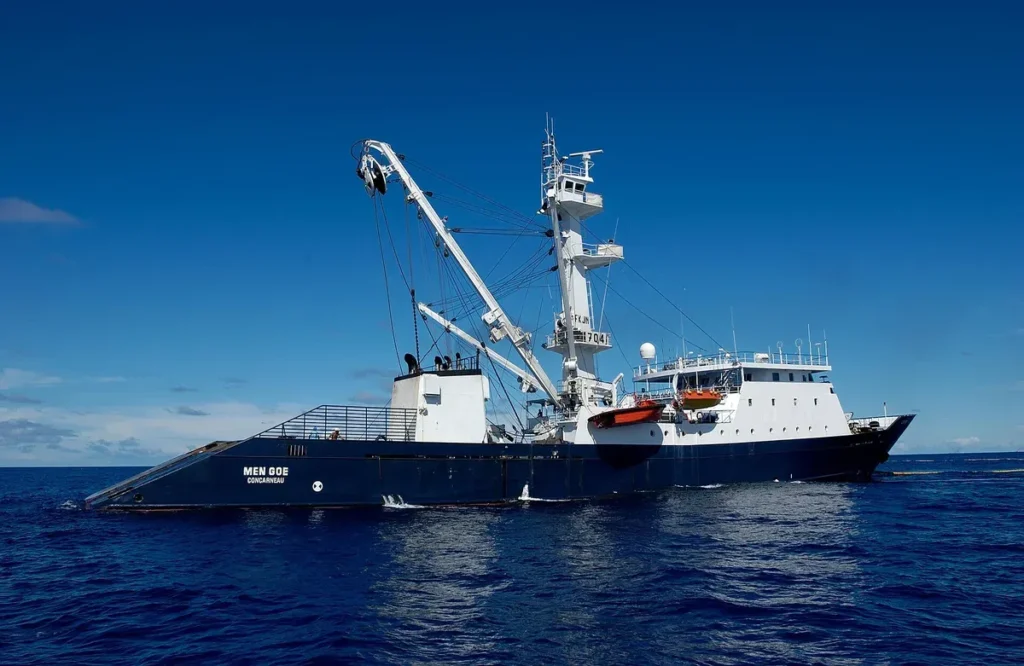
On 14 October 2026 the Centre approved India’s accession to the Southern Indian Ocean Fisheries Agreement. India, a Cooperating Non-Contracting Party since 2022, will become a full Contracting Party. Indian vessels can then fish squids, toothfish, alfonsino and other non-migratory stocks in the SIOFA area and join its scientific and compliance bodies.
- Decision
- 14 Oct 2026
- Now
- Cooperating Non-Contracting Party
- New status
- Contracting Party
- Stocks
- Squid, toothfish, alfonsino
India’s accession to SIOFA: what happened?
Fishing beyond national waters is governed by regional fisheries bodies. A country that is not a full member has little say in catch rules and science. India issued Guidelines for High Sea Fisheries in December 2025; joining SIOFA gives those guidelines a regional framework in the southern Indian Ocean.
- On 14 October 2026 the Centre approved India’s accession to the Southern Indian Ocean Fisheries Agreement (SIOFA). India moves from Cooperating Non-Contracting Party (since 2022) to full Contracting Party.
- Indian-flagged vessels can then fish squids, toothfish, alfonsino and other non-migratory stocks in the SIOFA area, and India joins the Scientific and Compliance Committees and the High Seas Boarding and Inspection Scheme.
What is SIOFA?
- A Regional Fisheries Management Organisation (RFMO) for the southern Indian Ocean.
- It covers fish, molluscs, crustaceans and other sedentary species in its area.
- It excludes highly migratory species listed in Annex I of UNCLOS, and sedentary species under coastal-State jurisdiction (Article 77(4) of UNCLOS).
- It has adopted a High Seas Boarding and Inspection (HSBI) Scheme, set to be implemented.
How does SIOFA differ from IOTC?
| Body | Covers | India’s status |
|---|---|---|
| Indian Ocean Tuna Commission (IOTC) | Highly migratory tuna and tuna-like species | Contracting Party since 1996 |
| Southern Indian Ocean Fisheries Agreement (SIOFA) | Non-migratory stocks such as squids, toothfish, alfonsino | CNCP since 2022; accession approved 14 Oct 2026 |
Which constitutional entry and treaty rules apply?
- Seventh Schedule, List I Entry 57: “Fishing and fisheries beyond territorial waters.” High seas fishing policy is a Union subject.
- UNCLOS Annex I species (highly migratory) fall outside SIOFA; they are for tuna bodies such as IOTC.
- UNCLOS Article 77(4) sedentary species under coastal-State jurisdiction are also outside SIOFA.
Who fishes the high seas today?
| Country/region | Share |
|---|---|
| China | 21% |
| Taiwan | 13% |
| Japan | 11% |
| South Korea | 11% |
| Spain | 8% |
High seas are about 65% of the global ocean (PIB backgrounder).
What does full membership change for India?
From CNCP to Contracting Party
- CNCP since 2022: limited role in decisions
- Accession approved (14 Oct 2026)
- Full seat in Scientific Committee and Compliance Committee
- Access to scientific data, research and stock assessments
- Authorised fishing by Indian-flagged vessels; part of HSBI Scheme
Why does India’s accession to SIOFA matter?
| Angle | What to note |
|---|---|
| Economic | Opens high-value non-migratory stocks to Indian fishers and enterprises. |
| Blue economy | Pushes a fleet that now stays largely within 60 to 80 nautical miles to go further out. |
| Strategic | A recognised presence on the high seas next to the big distant-water fleets. |
| Security | HSBI Scheme participation adds to coastal and maritime security. |
| Sustainability | A voice in stock assessments and in action against illegal, unreported and unregulated (IUU) fishing. |
What are the challenges in India’s accession to SIOFA?
- India’s fleet mostly works close to its coast; rights mean little without vessels, gear and crew for deep-sea trips.
- Five fleets already dominate high seas catch; Indian entrants will compete with experienced operators.
- Membership brings duties: catch reporting, inspection and compliance rules apply to Indian vessels too.
- Sustainable limits set by the Scientific Committee may cap how much new fishing is allowed.
What should be done next on India’s accession to SIOFA?
- Build deep-sea fishing capacity under the December 2025 high seas guidelines.
- Train crews and set up catch-reporting systems before vessels go out.
- Use the Scientific Committee seat to bring Indian research into stock assessments.
- Seek access agreements in other countries’ EEZs, as the Ministry suggests.
What can Prelims ask on India’s accession to SIOFA?
- SIOFA = RFMO for non-migratory stocks in the southern Indian Ocean.
- India: CNCP since 2022; accession approved 14 Oct 2026.
- IOTC: tuna and tuna-like species; India a party since 1996.
- Excluded: UNCLOS Annex I species; sedentary species under Art 77(4).
- High seas about 65% of the ocean; China 21% leads.
- List I Entry 57: fishing beyond territorial waters.
How to write about India’s accession to SIOFA in Mains
Practice question (10 marks, 150 words): “India’s blue economy cannot stay within sight of its coast.” Discuss in the light of India’s accession to SIOFA. (150 words)
- Intro: accession approved; CNCP since 2022.
- What SIOFA gives: species access, committee seats, data, HSBI.
- Why now: December 2025 guidelines; fleet within 60 to 80 nautical miles; big five dominate.
- Challenges: capacity, compliance, catch limits.
- Conclusion: capacity building plus rule-based fishing.
Image: Marc Taquet, Wikimedia Commons, CC BY 4.0
How to use this in Mains
If asked: Why should India engage more with Regional Fisheries Management Organisations? Discuss in the context of the blue economy. (GS-III)
Quote: “A country that is not a full member has little say in catch rules and science.”
Use it: Use it as your 'why join' argument in the body, then add India's December 2025 high-seas guidelines.
Exam angle
Prelims: SIOFA vs IOTC, India's status, species, UNCLOS references. · Mains GS-III: blue economy and fisheries; GS-II: international agreements.
Practice MCQs
Original practice questions (not PYQs).
With reference to the Southern Indian Ocean Fisheries Agreement (SIOFA), consider the following statements:
1. It manages highly migratory tuna species in the Indian Ocean.
2. India was a Cooperating Non-Contracting Party before the October 2026 decision to accede.
Which of the statements given above is/are correct?
Answer (b) & explanation
PIB, 14 Oct 2026: tuna is for IOTC; India has been a CNCP of SIOFA since 2022.
"Fishing and fisheries beyond territorial waters" is listed in
Answer (a) & explanation
Constitution of India, Seventh Schedule, List I Entry 57.
Questions students ask about this
What is SIOFA?
The Southern Indian Ocean Fisheries Agreement, a regional fisheries body for non-migratory stocks in the southern Indian Ocean.
What was India's status in SIOFA before October 2026?
A Cooperating Non-Contracting Party, since 2022.
Which species can Indian vessels fish under SIOFA?
Squids, toothfish, alfonsino and other non-migratory fish stocks in its area.
How is SIOFA different from IOTC?
IOTC manages highly migratory tuna and tuna-like species; SIOFA covers non-migratory stocks. India has been in IOTC since 1996.
Keep studying
Go deeper
Official source: PIB: Central Government approves India's accession to Southern Indian Ocean Fisheries Agreement (SIOFA), 14 Oct 2026
facts from cited sources only; faculty review pending