Topic hub

Environment & Ecology

Environment & Ecology: syllabus hub.

Syllabus: UPSC Pre GS1: Environmental Ecology, Biodiversity & Climate Change; Mains GS3

PYQ trends

Questions per year and the most repeated subtopics.

Explainers

Previous-year questions

Attempt them here.

UPSC Prelims 2026 · GS Paper I

Which of the following statements with regard to Green Hydrogen is/are correct ?

  • 1. It is decarbonized hydrogen obtained from natural gas reforming combined with carbon capture and storage (CCS).
  • 2. It is produced using electrolysis of water with electricity generated by renewable energy.
  • 3. National Green Hydrogen Mission of India aims for abatement of nearly 50 MMT of annual greenhouse gas emissions by 2030.

Select the answer using the code given below :

Answer (b) & explanation

Statements 2 and 3 are correct (b). Statement 2 is right: green hydrogen comes from splitting water by electrolysis, using renewable power. Statement 3 is right: the National Green Hydrogen Mission (2023) targets 5 MMT of green hydrogen a year by 2030 and about 50 MMT of avoided CO₂-equivalent emissions each year. Statement 1 is wrong: hydrogen from natural gas with carbon capture is blue hydrogen. So options (a), (c) and (d) fail.

Notice the colours: grey hydrogen from gas without capture (most hydrogen today), brown from coal, and pink from nuclear power. The mission's SIGHT programme supports electrolyser making. Uses include fertilisers, refineries, steel and shipping fuel.

Trap

1 says "decarbonized", which sounds green. Gas with CCS is blue.

One trap spotted is one mark saved. The PYQ Book lines up every trap UPSC has set, so you walk in prepared. Try the free sample

Answer as per the official UPSC answer key.

Open this question's page →

UPSC Prelims 2026 · GS Paper I

Which of the following statements in relation to NIRANTAR (National Institute for Research and Application of Natural Resources to Transform, Adapt and Build Resilience), a platform of institutions under the Ministry of Environment, Forest and Climate Change, is/are correct ?

  • 1. Ecosystem Survey and Analysis is a vertical under this platform, the lead institute of which is Botanical Survey of India, Kolkata.
  • 2. Research and Management of Ecosystem Service is a vertical under this platform, the lead institute of which is Central Zoo Authority, New Delhi.
  • 3. Capacity Development Support is a vertical under this platform, the lead institute of which is Indian Institute of Forest Management, Bhopal.

Select the answer using the code given below :

Answer (b) & explanation

Statements 1 and 3 are correct (b). NIRANTAR groups the Environment Ministry's institutes into verticals. Statement 1 is right: Ecosystem Survey and Analysis is led by the Botanical Survey of India, Kolkata, with bodies like the FSI and ZSI. Statement 3 is right: Capacity Development Support is led by the Indian Institute of Forest Management, Bhopal. Statement 2 is wrong: Research and Management of Ecosystem Service is led by ICFRE, Dehradun; the Central Zoo Authority is only a member. So options (a), (c) and (d) fail.

Notice the purpose: pooling institutes avoids duplicate work and links research to climate adaptation and resilience. Other Ministry bodies include the Wildlife Institute of India (Dehradun) and GBPNIHE for the Himalaya.

Trap

the Central Zoo Authority does sit in that vertical, but as a member, not the lead.

Answer as per the official UPSC answer key.

Open this question's page →

UPSC Prelims 2026 · GS Paper I

Consider the following statements with reference to India’s response to climate change :

  • I. India’s Long-Term Low Emission Development Strategy (LT-LEDS) is a crucial tool for achieving net-zero emissions by 2070.
  • II. India’s 4th Biennial Update Report (BUR-4) submitted in December, 2024 recorded around 8% decrease in Greenhouse gas emissions in 2020 over 2019.
  • III. Climate-resilient development necessarily depends on quick and short-term achievement of emission reduction targets.

Which of the following relationships among the above statements is/are correct ?

  • 1. Statement I is empirically supported by statement II.
  • 2. Statement III contradicts the approach implicit in statement I.
  • 3. Statement I and statement III together establish the premise of long-term sustainability.

Select the answer using the code given below :

Answer (b) & explanation

Relationships 1 and 2 are correct (b). Relationship 1 is right: the LT-LEDS (2022) lays out India's path to net zero by 2070, and BUR-4 reported a fall of about 7.9% in 2020 emissions over 2019, real data in line with that path. Relationship 2 is right: Statement III wants quick, short-term cuts, while the LT-LEDS is a long, gradual plan, so III contradicts I. Relationship 3 is wrong: two contradicting statements cannot together set a premise. So options (a), (c) and (d) fail.

Notice the cause of the 2020 fall: the COVID-19 lockdowns, not a lasting trend. India's updated NDC (2022) targets cutting emissions intensity of GDP by 45% from 2005 levels by 2030. Biennial Transparency Reports now replace BURs.

Trap

"together establish" sounds positive, but two statements that clash cannot form one premise.

Answer as per the official UPSC answer key.

Open this question's page →

UPSC Prelims 2026 · GS Paper I

With respect to the Western Hoolock Gibbons, which of the following statements is/are correct ?

  • 1. A Sanctuary in North-east India is home to this ape species listed as Endangered in the International Union for Conservation of Nature (IUCN) Red List.
  • 2. They have specialized brachiation and can easily swing between trees.
  • 3. They possess a strong and heavy build like gorillas, yet are remarkably agile tree climbers.

Select the answer using the code given below :

Answer (b) & explanation

Statements 1 and 2 are correct (b). Statement 1 is right: India's only ape, the western hoolock gibbon, is Endangered on the IUCN Red List and gives its name to the Hollongapar Gibbon Sanctuary in Assam. Statement 2 is right: gibbons move by brachiation, swinging arm over arm through the canopy. Statement 3 is wrong: they are "lesser apes", slim and light, about 6–9 kg, nothing like a heavy gorilla. So options (a), (c) and (d) fail.

Notice their habits: they live in pairs with their young and sing loud duets at dawn. They are found south of the Brahmaputra in the North-East. Rail lines cutting through Hollongapar have raised concern, and canopy bridges were proposed to help them cross.

Answer as per the official UPSC answer key.

Open this question's page →

UPSC Prelims 2026 · GS Paper I

Which of the following best explain(s) the rationale for protecting mangrove ecosystems in the context of climate resilience ?

  • 1. Mangroves reduce tidal energy and store freshwater, making them ideal sites for paddy cultivation in saline estuarine belts.
  • 2. Their salt-sensitive roots filter seawater, making mangroves key to converting coastal land into freshwater aquaculture zones.
  • 3. By withstanding tidal surges and offering biomass resources, mangroves function both as natural bio-shields and livelihood bases for rural communities.

Select the answer using the code given below :

Answer (d) & explanation

Only statement 3 explains the rationale (d). Statement 3 is right: by withstanding tidal surges and cyclones, mangroves act as natural bio-shields, and they offer biomass, such as fish, crabs, honey and fuel, for coastal villages. Statement 1 is wrong: mangroves do not store fresh water for paddy. Statement 2 is wrong: they are salt-tolerant, not salt-sensitive. Clearing them for farms or aquaculture ponds is exactly what harms them. So options (a), (b) and (c) fail.

Notice the proof: mangroves cut deaths in the 1999 Odisha super-cyclone and the 2004 tsunami. They also store much blue carbon. India's largest mangrove forest is the Sundarbans; the MISHTI scheme (2023) aims to plant more along the coast.

Trap

statement 2 says "salt-sensitive". Mangroves live in salt water because they tolerate it.

Answer as per the official UPSC answer key.

Open this question's page →

UPSC Prelims 2026 · GS Paper I

Which of the following statements with regard to the arrival of Amur Falcons at Doyang Lake in Nagaland each year from Mongolia is/are correct ?

  • 1. It showcases how sustained local conservation efforts can contribute to the arrival and protection of international migratory birds.
  • 2. It reflects the global success of advanced tracking technologies that guide migratory birds back to their stopover sites.
  • 3. It confirms that Amur Falcons have adapted to permanent residency in India due to favourable habitat changes.

Select the answer using the code given below :

Answer (a) & explanation

Only statement 1 is correct (a). Statement 1 is right: around 2012, villages near Doyang in Nagaland, once known for mass hunting of the birds, turned into protectors, so the falcons now roost safely. Statement 2 is wrong: satellite tags only track the birds; they do not guide them. Statement 3 is wrong: Amur falcons stay only a few weeks, so they are not permanent residents. So options (b), (c) and (d) fail.

Notice their journey: they breed in Mongolia, Siberia and northern China, rest in Nagaland, then cross the Arabian Sea to winter in southern Africa, one of the longest raptor migrations. Pangti village is called the "Falcon Capital of the World". Tagged birds have been named after these villages.

Answer as per the official UPSC answer key.

Open this question's page →

UPSC Prelims 2026 · GS Paper I

With reference to Madhav National Park, which of the following statements is/are correct ?

  • 1. It was declared a Tiger Reserve in India in 2025.
  • 2. Sakhya Sagar, which is designated as a Ramsar Site, is situated within this National Park.
  • 3. Its area is shared between Madhya Pradesh and Rajasthan.

Select the answer using the code given below :

Answer (b) & explanation

Statements 1 and 2 are correct (b). Statement 1 is right: Madhav National Park in Shivpuri district became India's 58th tiger reserve in March 2025. Statement 2 is right: Sakhya Sagar lake inside it was named a Ramsar site in 2022. Statement 3 is wrong: the park lies wholly in Madhya Pradesh, not shared with Rajasthan. So options (a), (c) and (d) fail.

Notice MP's place as the "Tiger State", with the most tigers and nine reserves, including Kanha, Bandhavgarh, Pench and Panna. The NTCA approves tiger reserves under the Wild Life (Protection) Act. Kuno, also in MP, is home to India's reintroduced cheetahs. India has about 75% of the world's wild tigers.

Trap

Shivpuri is near the Rajasthan border, which makes "shared" sound believable.

Answer as per the official UPSC answer key.

Open this question's page →

UPSC Prelims 2026 · GS Paper I

Consider the following statements about Rhynchostylis retusa (Foxtail orchid) :

  • 1. It is an epiphytic orchid.
  • 2. The species is endemic to North-east India.
  • 3. It is the State flower of Arunachal Pradesh and Assam.

Which of the statements given above is/are correct ?

Answer (b) & explanation

Statements 1 and 3 are correct (b). Statement 1 is right: the foxtail orchid grows on tree trunks and branches, using the tree only for support, so it is epiphytic, not a parasite. Statement 3 is right: it is the State flower of Arunachal Pradesh and of Assam, where it is the kopou phool, worn in Bihu dances. Statement 2 is wrong: it is not endemic; it grows across South and South-East Asia. So options (a), (c) and (d) fail.

Notice the North-East's orchid wealth: Arunachal alone has over 600 orchid species, and Sikkim's state flower, the Noble Dendrobium, is also an orchid. The Tipi Orchid Research Centre is in Arunachal. All wild orchids trade under CITES Appendix II.

Trap

it is famous in the North-east, but "endemic" means found nowhere else.

Answer as per the official UPSC answer key.

Open this question's page →

In the news

GS3 · Energy · Infrastructure

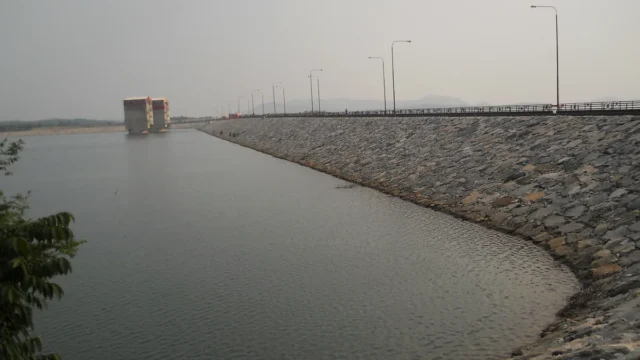
Pumped storage hydropower: India’s roadmap for 100 GW of ‘water batteries’ by 2035-36

A PIB backgrounder of 19 October 2026 explains how pumped storage projects (PSPs) will store solar and wind power for India’s grid. India runs 7.43 GW of pumped storage today, is building 15.87 GW more and has an assessed potential of 345.38 GW. A roadmap aims to add about 100 GW between 2025-26 and 2035-36.

UPSC angle: Prelims: PSP types, CEA, ISTS waiver, IRENA ranking. · Mains GS-III: storage and the clean energy transition.

19 Oct 2026
GS3 · Environment · Biodiversity

NBA shares Rs 1.19 crore with 29 State Biodiversity Boards from use of crop genetic resources

On 17 October 2026 the National Biodiversity Authority (NBA) said it had shared ₹1.19 crore with 29 State Biodiversity Boards and one UT Biodiversity Council. The money came from seed companies that used Indian maize, rice, pearl millet and cotton for research and commercial hybrids. As the crops were bought from markets and the original holders could not be traced, the amount was split in proportion to each State’s cultivation area. The release comes two days before the CBD COP 17 opens in Yerevan.

UPSC angle: Prelims: NBA, BD Act 2002, Nagoya Protocol, BMCs, CBD COP 17. · Mains GS-III: benefit sharing and community-led conservation.

18 Oct 2026
GS3 · Economy · Energy and agriculture

Oil companies bar sugar-based ethanol for 2026-27; maize incentive cut to ₹2.79 a litre

The oil marketing companies have kept sugar out of India’s ethanol programme for the coming year. The tender issued on 16 October 2026 seeks about 11 billion litres of ethanol for the 2026-27 supply year, but asks for none made from sugarcane juice, sugar syrup or B-heavy molasses, because the Government wants sugar diversion for ethanol cut to zero. Grain must now carry the load, and even the maize incentive has been cut. Read this as a live example of the food-versus-fuel trade-off.

UPSC angle: Prelims: E20, NPB 2018, molasses grades, feedstocks. · Mains GS-III: energy security vs food security; farm incomes.

18 Oct 2026
GS3 · Agriculture and Blue economy

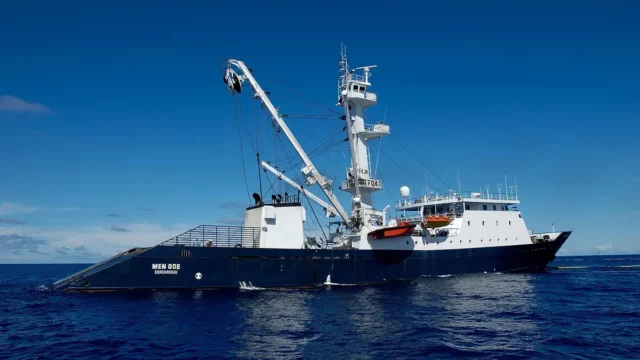
India to accede to the Southern Indian Ocean Fisheries Agreement (SIOFA)

On 14 October 2026 the Centre approved India's accession to the Southern Indian Ocean Fisheries Agreement. India, a Cooperating Non-Contracting Party since 2022, will become a full Contracting Party. Indian vessels can then fish squids, toothfish, alfonsino and other non-migratory stocks in the SIOFA area and join its scientific and compliance bodies.

UPSC angle: Prelims: SIOFA vs IOTC, India's status, species, UNCLOS references. · Mains GS-III: blue economy and fisheries; GS-II: international agreements.

14 Oct 2026
GS2 · Social justice (tribal rights)

Forest Rights Act: second regional review conference for eight eastern and central States

On 9 October 2026 the Tribal Affairs Ministry held the second regional review of the Forest Rights Act, 2006 in Kolkata with eight States. Nationally, over 54 lakh claims have been filed, about 25 lakh titles given, about 11 lakh are pending and over 18 lakh rejected. The focus is quick disposal, record updating, CFR rights and PVTG habitat rights.

UPSC angle: Prelims: FRA provisions, PVTG habitat rights. · Mains GS-II: welfare of STs; GS-III: forest governance.

10 Oct 2026
GS3 · Environment (biodiversity governance)

National Biodiversity Authority shares ₹2.02 crore Access and Benefit-Sharing money from seed companies

The National Biodiversity Authority distributed ₹2.02 crore of Access and Benefit-Sharing money, paid by seed companies using crops such as rice, tomato and okra, among 27 State Biodiversity Boards and 3 UT councils by cultivation area. Its total ABS disbursement has now reached ₹202 crore, ahead of CBD COP 17 in Yerevan from 19 October 2026.

UPSC angle: Prelims: ABS, KMGBF targets, COP 17 venue. · Mains GS-III: biodiversity conservation and benefit-sharing.

10 Oct 2026