
Bijnor’s ‘sugarcane leopards’: 444 counted, sterilisation proposed to curb conflict
Next story · 19 OctAllahabad HC orders STF check of documents of all UP government school teachers of Classes 1–8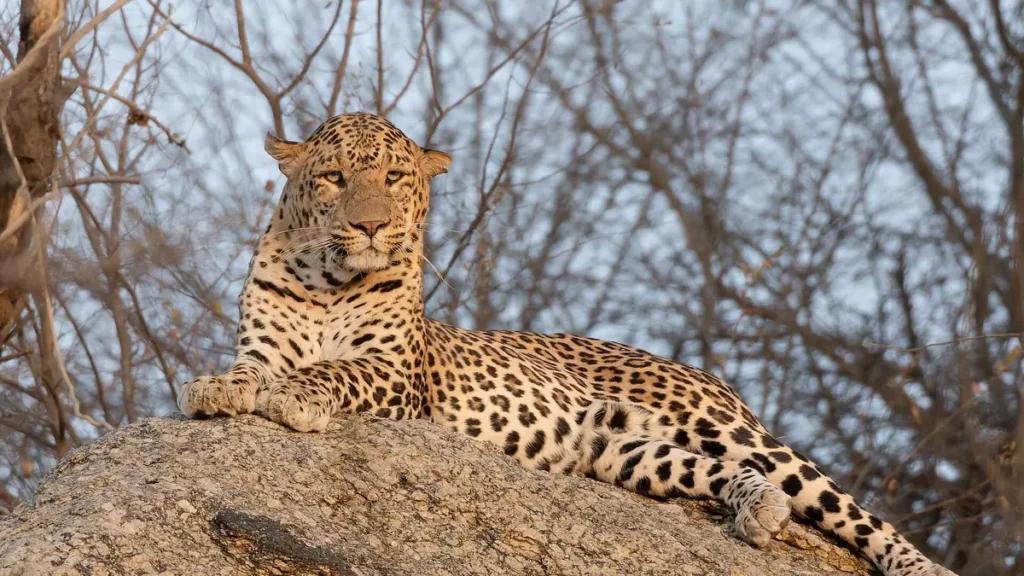
UP forest officials have proposed sterilising leopards in Bijnor, where a survey last year counted 444 leopards in affected areas. Leopard attacks in Bijnor and Moradabad have killed 11 people and injured 30 this year, and 92 leopards have been captured, the Indian Express reported on 18 October 2026. The State has sought the Centre’s view.
- Bijnor estimate
- 444 leopards
- 2026 toll
- 11 dead, 30 hurt
- Captured in 2026
- 92
- Villages affected
- 786
Leopards in Bijnor: what happened?
In Bijnor’s tall sugarcane, a leopard can live a few metres from a village without being seen, until it attacks. A father in Beeruwala village lost one of his two children this way. Officials now say cages and captures alone are not enough.
- Forest officials warn the leopard population could triple in five years if left unchecked (Indian Express, 18 Oct 2026).
- Conflict incidents in Bijnor rose from 7 in 2015 and 11 in 2016 to 172 in 2024 and 122 in 2025.
- Of the 444 leopards, 222 are female and half of those are of breeding age.
- UP’s Chief Conservator of Forests Anuradha Vemuri has written to the Centre to consider the sterilisation proposal.
Why are leopards moving into Bijnor’s farms?
- Nearly half of Bijnor’s farmland is under dense sugarcane, giving leopards cover to hide and breed.
- More tigers in nearby Rajaji and Corbett Tiger Reserves push leopards out of forests.
- Livestock gives a steady prey base; leopards move between Bijnor and Moradabad along the Ramganga.
- Leopards raised in cane fields gradually lose their natural fear of humans.
How do 2025 and 2026 compare?
| Point | 2025 | 2026 (so far) |
|---|---|---|
| Leopards captured, Bijnor and Moradabad | 52 | 92 (67 in Bijnor) |
| Deaths: Bijnor / Moradabad | 9 / 1 | 7 / 4 |
| Injured: Bijnor / Moradabad | 22 / 1 | 9 / 21 |
Which constitutional and legal provisions apply?
- Wildlife (Protection) Act, 1972: the leopard is in Schedule I.
- Section 11 lets the Chief Wildlife Warden permit capture of animals dangerous to human life.
- Officials want MoEFCC’s go-ahead before any sterilisation programme starts.
- Articles 48A and 51A(g): State and citizens must protect wildlife.
How would the sterilisation plan work?
Forest Department’s proposal
- Sterilise 15% of leopards every year
- Cover 75% of them in five years
- Relocate some leopards to designated areas
- Population stabilises near 755
- Without action, numbers could reach 1,336
Which numbers should you remember?
| Number | What it means |
|---|---|
| 4,000 sq km | Area of Bijnor district |
| 80% | Estimated survival rate of leopard cubs |
| 10% | Annual death rate among adult leopards |
High cub survival and low adult deaths are why officials expect numbers to keep rising without intervention.
Why does this matter?
| Angle | What to note |
|---|---|
| Human-wildlife conflict | Leopards now thrive in farmland, far outside forests. |
| Conservation paradox | Tiger recovery in reserves pushes leopards into villages. |
| Policy | Sterilising wild big cats is a new, untested tool. |
| UP geography | Terai and Ramganga belt links Uttarakhand reserves with UP farms. |
What are the challenges?
- Sterilising wild leopards at scale is untested and costly.
- Capture and relocation can simply shift conflict to other districts.
- Villagers fear stepping out at night; children are most at risk.
- Dense cane makes trapping hard; cages often stay empty.
What should be done next?
- Run a scientific pilot with expert oversight before scaling up.
- Set up quick-response teams and early warnings in affected villages.
- Promote lighting, group movement and secure cattle sheds.
- Pay fair and fast compensation for deaths, injuries and livestock loss.
What can UPPCS ask on this?
- Indian leopard (Panthera pardus fusca) is a Schedule I animal under the WPA, 1972.
- Bijnor and Moradabad fall in the Rohilkhand forest zone.
- Leopards usually breed once in two years, with two to four cubs.
- Rajaji and Corbett Tiger Reserves lie close to Bijnor, in Uttarakhand.
- Leopards move between Bijnor and Moradabad along the Ramganga river.
How to write about human-wildlife conflict in Mains
Practice question (8 marks, 125 words): Human-leopard conflict in western Uttar Pradesh is a side-effect of both farming patterns and conservation success. Examine. (UPPCS GS-VI)
- Intro: 444 leopards in Bijnor; 11 deaths in 2026.
- Causes: sugarcane cover, livestock, tiger spillover.
- Responses so far: 92 captures; sterilisation proposal.
- Concerns: ethics, cost, shifting the conflict.
- Way out: science-led pilot, village safety, compensation.
Image: An Indian leopard on a rock, Jawai, Rajasthan. Tisha Mukherjee, Wikimedia Commons, CC BY-SA 4.0
Read all of October 2026 in the monthly UP current affairs compilation →
How to use this in Mains
If asked: Discuss the causes of rising human-leopard conflict in Uttar Pradesh. (GS-VI)
Quote: “Officials said one reason for the leopards moving into the non-forested areas of Bijnor district is the effective conservation efforts in nearby Rajaji Tiger and Corbett Tiger Reserves, leading to an increase in tiger populations there.”
Use it: Use it to show conservation success can create new conflict; add sugarcane cover and prey.
If asked: Is fertility control a viable tool for managing wildlife conflict? (GS-VI)
Quote: “It recommended sterilisation of 75% of the leopard population in this period, at a rate of 15% each year.”
Use it: Present the plan and its numbers; weigh them against cost, ethics and the need for the Centre’s approval.
Exam angle
UPPCS GS-VI: human-leopard conflict in Bijnor and Moradabad, WPA 1972, conservation policy.
Practice MCQs
Original practice questions (not PYQs).
Under the Wildlife (Protection) Act, 1972, as amended in 2022, the Indian leopard is listed in
Answer (a) & explanation
The leopard has the highest protection under Schedule I.
Leopards in the news in western Uttar Pradesh move between Bijnor and Moradabad along which river?
Answer (a) & explanation
Officials say leopards use sugarcane cover to move along the Ramganga (Indian Express).
Consider the following statements:
1. A Forest Department survey counted 444 leopards in Bijnor’s affected areas.
2. The department proposed sterilising 15% of the leopards every year.
3. The State can start sterilisation without seeking the Centre’s approval.
How many of the statements given above are correct?
Answer (b) & explanation
Statements 1 and 2 are correct. Officials have sought the Union Environment Ministry’s go-ahead.
Questions students ask about this
How many leopards are there in Bijnor?
A Forest Department survey last year counted 444 in affected areas, 222 of them female.
Why are leopards entering villages?
Sugarcane cover, livestock as prey and tiger growth in nearby reserves push them into farmland.
What is the sterilisation proposal?
Sterilise 15% of leopards a year, 75% over five years, to cap numbers near 755.
Has it been approved?
Not yet. UP has written to the Centre to consider the proposal.
Keep studying
facts from cited sources only; cross-checked; faculty review pending