
Core sector grows 7.9% in September 2026; iron ore, electricity and coal lead
Next story · 21 OctConversion does not carry over a quota: Supreme Court on Tamil Nadu’s BC Muslim certificates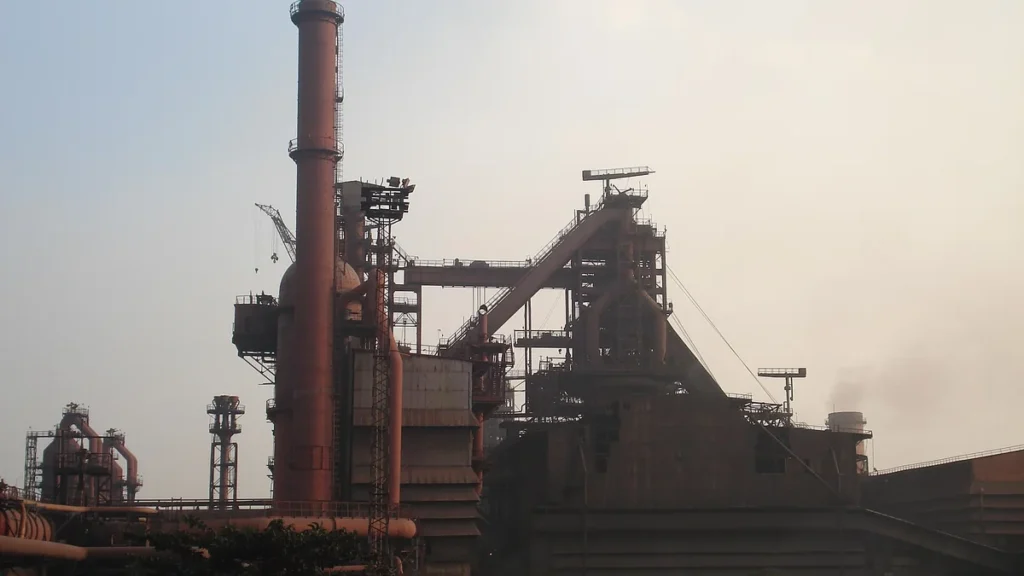
The Index of Core Industries (ICI), base year 2022-23, grew 7.9% year-on-year in September 2026, up from a revised 5.9% in August, the Commerce Ministry said on 21 October 2026. Iron ore (18.4%), electricity (11.4%) and coal (10.7%) led, while fertilizers, natural gas and crude oil shrank. Growth for April–September 2026 was 5.1%, double the 2.5% of a year earlier.
- September 2026
- 7.9%
- August 2026 (final)
- 5.9%
- Apr–Sep 2026
- 5.1%
- Base year
- 2022-23
Core sector data: what happened?
Core industries are the steel, power, coal and cement that every factory, road and home depends on. When they grow fast, the rest of industry usually follows a few weeks later. That is why this index, released before the IIP, is watched so closely.
- ICI rose 7.9% in September 2026 over September 2025 (provisional), PIB, 21 Oct 2026.
- August’s index was revised from 119.2 to 120.4, lifting growth from 4.8% to 5.9%.
- Coal, refinery products, steel and iron ore have been the main drivers in recent months.
- October 2026 data will be released on 20 November 2026.
What is the Index of Core Industries?
- A monthly index by the Office of the Economic Adviser (DPIIT), Ministry of Commerce and Industry.
- It tracks basic industries: coal, crude oil, natural gas, refinery products, fertilizers, steel, cement, electricity and, in this release, iron ore.
- The series now uses 2022-23 as its base year.
- Released on the 20th of the following month (or the next working day), ahead of the IIP.
Which industries rose and which fell in September 2026?
| Industry | Growth (y-o-y) |
|---|---|
| Iron ore | 18.4% |
| Electricity | 11.4% |
| Coal | 10.7% |
| Refinery products | 10.3% |
| Cement | 9.8% |
| Steel | 4.9% |
| Fertilizers, natural gas, crude oil | Negative |
Which institutions and rules apply?
- Office of the Economic Adviser, DPIIT compiles the ICI.
- The IIP is compiled by the National Statistics Office (NSO), MoSPI.
- Collection of Statistics Act, 2008 gives the legal basis for official data collection.
- Base revisions follow the national statistical system’s move to newer base years.
What does the data not tell us?
- Part of the jump may be a base effect if September 2025 was weak.
- Falling crude oil and natural gas output raises import dependence.
- Fertilizer contraction can hurt rabi input supply.
- Provisional figures are often revised, as August was.
What should policy focus on?
- Push domestic oil and gas exploration under OALP and HELP.
- Keep power and coal supply steady for the winter peak and rabi season.
- Watch fertilizer production and imports before sowing.
- Use infrastructure spending to sustain cement and steel demand.
What can Prelims ask on the ICI?
- ICI compiled by the Office of the Economic Adviser, DPIIT.
- IIP compiled by NSO, MoSPI.
- Base year of the current ICI series: 2022-23.
- Release: 20th of the following month.
- Sept 2026: 7.9%; Apr–Sep 2026: 5.1%.
How to write about core sector data in Mains
Practice question (10 marks, 150 words): What do core sector indicators reveal about the state of the Indian economy? Discuss with reference to recent data. (GS-III)
- Intro: ICI 7.9% in Sept 2026; 5.1% in H1.
- Drivers: iron ore, electricity, coal, refinery products, cement.
- Weak spots: crude oil, gas, fertilizers.
- Meaning: infrastructure push, power demand; base effects.
- Conclusion: sustain capex, fix energy output.
Image: Bokaro Steel Plant, Jharkhand. SuLTan0203, Wikimedia Commons, CC BY-SA 3.0
How to use this in Mains
If asked: Discuss the importance of core industries for India’s manufacturing growth. (GS-III)
Quote: “Coal, Refinery Products, Steel and Iron Ore have been the major drivers of overall growth of ICI during recent months.”
Use it: Use it as your data line; link to infrastructure capex.
If asked: Why does India’s domestic oil and gas output matter? (GS-III)
Quote: “Fertilizers, Natural Gas, and Crude Oil witnessed negative growth in September 2026.”
Use it: Quote it to show the energy gap even as overall growth rises.
Exam angle
Prelims: ICI vs IIP, compiling agencies, base year. · Mains GS-III: industrial growth and energy security.
Practice MCQs
Original practice questions (not PYQs).
The Index of Core Industries in India is compiled by the
Answer (c) & explanation
The ICI is compiled by the Office of the Economic Adviser, DPIIT, Ministry of Commerce and Industry.
Consider the following statements about core sector data for September 2026:
1. The ICI grew by 7.9%.
2. Crude oil output grew faster than coal.
3. The current ICI series uses 2022-23 as base year.
How many of the statements given above are correct?
Answer (b) & explanation
Statements 1 and 3 are correct. Crude oil output contracted while coal grew 10.7%.
Which agency compiles the Index of Industrial Production (IIP)?
Answer (b) & explanation
The IIP is compiled by the NSO under MoSPI.
Questions students ask about this
How much did the core sector grow in September 2026?
7.9% year-on-year (provisional).
Which industries led?
Iron ore, electricity, coal, refinery products and cement.
Which declined?
Fertilizers, natural gas and crude oil.
When is the next release?
20 November 2026, for October data.
Keep studying
Go deeper
Official source: PIB, 21 Oct 2026: Provisional Index of Core Industries for September 2026 and Final Index for August 2026 with Base Year 2022-23
facts from cited sources only; faculty review pending