
Rubio at Jamnagar: US pitches oil and Venezuelan crude to India’s ‘refining superpower’
Next story · 21 OctPolice Commemoration Day 2026: Shah pays tribute, sets drug-free India target of 2029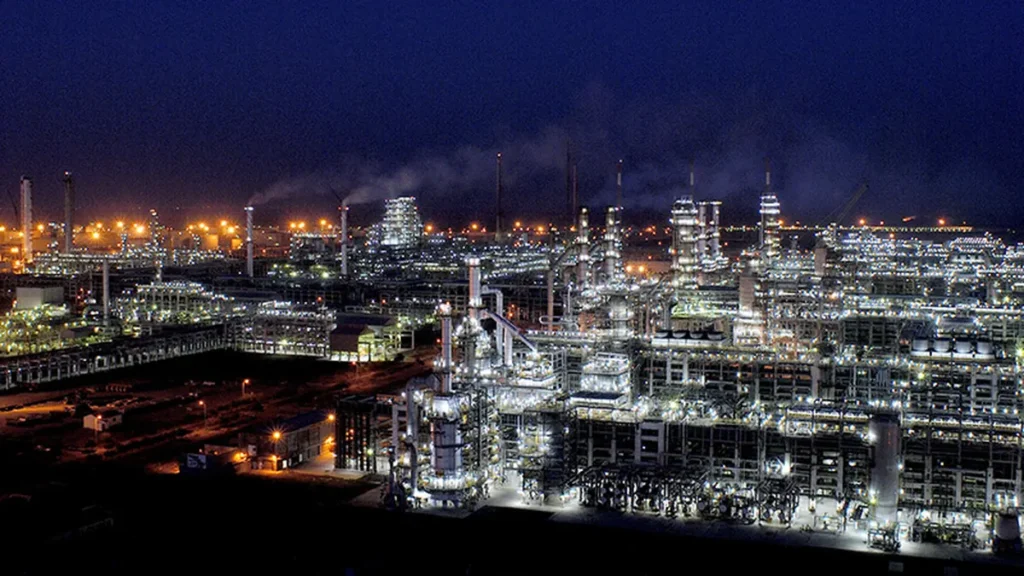
UPSC has already asked about this. Read the story with these questions in mind.
US Secretary of State Marco Rubio visited Reliance’s Jamnagar refinery complex in Gujarat on 21 October 2026, a day after calling India a ‘refining superpower’. He wants India to buy more US oil and refine more Venezuelan crude. In Mumbai on 20 October, External Affairs Minister S. Jaishankar also held an unannounced India–US–UAE meeting on energy and connectivity, with the Strait of Hormuz blocked.
- Jamnagar visit
- 21 Oct 2026
- Refinery capacity
- 68.2 mtpa
- India’s crude import dependence
- Over 88%
- Trilateral
- India–US–UAE
Rubio at Jamnagar: what happened?
Yesterday’s story was the trade deal. Today’s is oil. When the top US diplomat flies to a private refinery, it tells you how central India’s refining muscle has become in a world where West Asian oil routes are under threat.
- 20 Oct 2026: Rubio said he discussed possible Indian oil purchases from the US with Jaishankar in Mumbai (The Hindu).
- Jaishankar met Rubio and UAE Foreign Minister Abdullah bin Zayed separately and then together; he called it a ‘useful exchange’ on energy and connectivity.
- 21 Oct 2026: Rubio arrived in Jamnagar to tour the Reliance refinery; he said Indian refiners can process heavy crude as more Venezuelan oil comes online (The Hindu, PTI).
- Readouts did not mention I2U2 or the India–Middle East–Europe Economic Corridor (IMEC) (The Hindu).
Why does Washington care about Jamnagar?
- Jamnagar is the world’s largest single-location refinery complex: 68.2 mtpa, of which 35.2 mtpa is for exports (Indian Express).
- Reliance is India’s largest exporter of diesel and jet fuel, a swing supplier when West Asian or Russian supply is disrupted.
- Reliance is part of a planned new refinery in Brownsville, Texas, announced by President Trump in March.
- Its complex refineries can process heavy grades such as Venezuela’s, which the US now wants to sell.
How has India’s crude basket shifted?
| Point | Position (Oct 2026) |
|---|---|
| Russian oil | About 45–50% of India’s intake (The Hindu) |
| Russia + US + Venezuela | Two-thirds of imports last month |
| US rank | Fifth-largest crude supplier, after Russia, Iraq, Saudi Arabia, UAE |
| US sanctions law | Up to 100% tariff on buyers of Russian energy; waived last week |
Which constitutional and legal provisions apply?
- Article 73: the Union’s executive power covers foreign affairs and agreements.
- Union List Entries 10 and 41: foreign affairs; trade and commerce with foreign countries.
- Union List Entry 53: regulation and development of oilfields and mineral oil resources; petroleum products.
- US secondary sanctions are domestic US law; India follows only UN Security Council sanctions.
What are the challenges?
- US crude is lighter and travels farther, so freight can make it costlier than Russian or Gulf oil.
- Few Indian refineries can handle very heavy grades such as Venezuela’s Merey.
- Buying more US energy to close a trade deal can look like policy under pressure.
- The Hormuz blockade threatens Gulf supply and LPG imports at the same time.
What should be done next?
- Keep crude buying commercial: price, grade and freight should decide, not pressure.
- Fill and expand Strategic Petroleum Reserves at Visakhapatnam, Mangaluru and Padur.
- Use the UAE partnership for storage and long-term contracts.
- Revive ONGC Videsh’s upstream stakes in Venezuela if sanctions allow.
What can Prelims ask on India’s oil diplomacy?
- Jamnagar (Gujarat): 1.4 million barrels a day; complexity index 21.1 (Reliance).
- India imports over 88% of its crude oil.
- Strait of Hormuz links the Persian Gulf to the Gulf of Oman.
- I2U2 = India, Israel, UAE, US (2021); IMEC announced at G20 New Delhi, 2023.
- ISPRL caverns: Visakhapatnam, Mangaluru, Padur.
How to write about energy security in Mains
Practice question (10 marks, 150 words): India’s crude oil diplomacy shows how it balances energy security with strategic autonomy. Discuss with reference to recent US outreach. (GS-II)
- Intro: Rubio at Jamnagar, 21 Oct 2026; ‘refining superpower’ remark.
- Pressures: Russian oil, US sanctions law and its waiver, trade deal.
- India’s logic: 88% import dependence, price, refinery fit.
- Options: diversification, SPRs, UAE partnership, upstream stakes.
- Conclusion: buy on commercial terms; keep options open.
Image: Jamnagar Refinery at night. Reliance Industries, Wikimedia Commons, CC BY-SA 4.0
How to use this in Mains
If asked: Discuss the factors that shape India’s crude oil import basket. (GS-III)
Quote: “For India, crude procurement is essentially linked to energy security, affordability and the refining sector’s requirements.”
Use it: Use it as your core argument, then add the Russia, US and Venezuela numbers.
If asked: Examine the significance of minilateral groupings such as I2U2 for India. (GS-II)
Quote: “The U.S., India, and UAE have real opportunities to advance cooperation on energy, trade, technology, and regional connectivity.”
Use it: Quote the US Ambassador’s line, then note that the readouts skipped I2U2 and IMEC.
Exam angle
Prelims: Jamnagar, Hormuz, I2U2, IMEC, SPR sites. · Mains GS-II/III: energy security vs strategic autonomy; India–US–UAE.
Practice MCQs
Original practice questions (not PYQs).
Consider the following statements:
1. Jamnagar is the world’s largest single-location refinery complex.
2. India imports over 88% of its crude oil requirement.
3. The US is currently India’s largest supplier of crude oil.
How many of the statements given above are correct?
Answer (b) & explanation
Statements 1 and 2 are correct. The US is the fifth-largest supplier, behind Russia, Iraq, Saudi Arabia and the UAE (Indian Express).
The Strait of Hormuz connects
Answer (b) & explanation
Hormuz links the Persian Gulf to the Gulf of Oman and the Arabian Sea; a large share of Gulf oil passes through it.
I2U2 is a grouping of
Answer (b) & explanation
I2U2 brings together India, Israel, the UAE and the USA, formed in 2021.
Questions students ask about this
Why did Rubio visit Jamnagar?
To discuss more Venezuelan crude being refined at Reliance’s refinery and more US energy sales to India.
What did Rubio call India?
A ‘refining superpower’.
Who met in the India–US–UAE meeting?
Jaishankar, Rubio and UAE Foreign Minister Abdullah bin Zayed, in Mumbai on 20 October.
How much crude does India import?
Over 88% of its requirement.
Keep studying
Go deeper
facts from cited sources only; faculty review pending