
TDB backs QNu Labs with ₹150 crore to build India’s quantum-secure and sensing network stack
Next story · 16 OctRevised scheme for National Sports Federations: ₹7,386.74 crore, Olympic Training Centres and up to ₹50 crore for events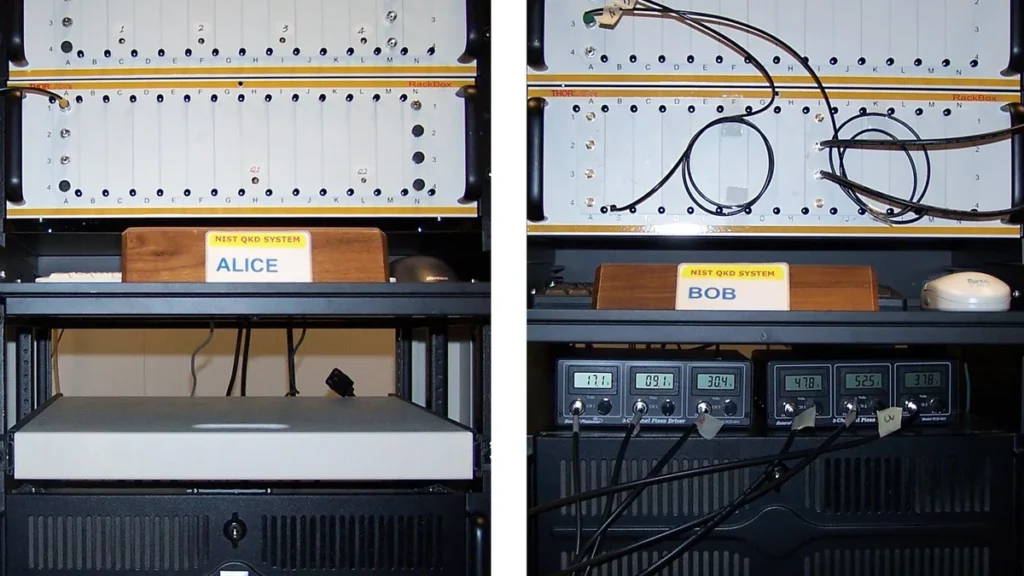
UPSC has already asked about this. Read the story with these questions in mind.
The Technology Development Board (TDB) under the Department of Science and Technology signed an agreement on 16 October 2026 to give ₹150 crore to QNu Labs, Bengaluru, from the Research, Development and Innovation (RDI) Fund. The ₹300 crore project will build an indigenous technology backbone for India’s Quantum Secure and Sensing Networks (IQSN). It aims to take technologies from Technology Readiness Level (TRL) 4–5 to TRL 9, with the money given as optionally convertible debt.
- TDB support
- ₹150 crore
- Project cost
- ₹300 crore
- TRL target
- 4–5 to 9
- Instrument
- Optionally Convertible Debt
QNu Labs and TDB: what happened?
Ordinary encryption is like a very hard lock: a strong enough computer might one day pick it. Quantum security works differently. It uses the laws of physics to show whether anyone has even touched the key. That is why governments are treating it as strategic technology.
- 16 Oct 2026: TDB (DST) signed the agreement with QNu Labs under the RDI Fund (PIB).
- The programme rests on four pillars: identity security, location integrity, network security and time integrity.
- It covers chip-based and satellite-based quantum key distribution (QKD), quantum magnetometers and atomic clocks.
- The goal is a ‘sovereign’ quantum-security and sensing stack for defence, telecom, finance and critical infrastructure.
What is quantum-secure communication?
- QKD sends encryption keys encoded in quantum states of light, usually single photons.
- Under the no-cloning principle, an unknown quantum state cannot be copied, so an eavesdropper disturbs it and is detected.
- Post-quantum cryptography (PQC) is the other route: new mathematical codes that even quantum computers should not break.
- TRL is a 1–9 scale. TRL 4–5 means tested in a lab; TRL 9 means proven in real operation.
What will each pillar build?
| Pillar | Technologies |
|---|---|
| Identity security | Quantum-secure physical unclonable functions (PUFs), quantum-safe trusted platform modules |
| Location integrity | Quantum magnetometers, anti-spoofing, GPS-denied navigation |
| Network security | Chip-based and satellite-based QKD, encryption modules |
| Time integrity | Atomic clocks, QKD-authenticated time sync |
Which missions and laws apply?
- National Quantum Mission (2023-24 to 2030-31; ₹6,003.65 crore): computing, communication, sensing and materials.
- RDI Scheme: a ₹1 lakh crore fund for private-sector research, development and innovation in sunrise sectors.
- Technology Development Board Act, 1995: TDB funds the commercialisation of indigenous technology.
- IT Act, 2000, Section 70: protection of critical information infrastructure (NCIIPC).
What are the challenges?
- Moving from lab prototype to a field-proven system is costly and slow.
- QKD needs special hardware and has distance limits on fibre, which is why satellites matter.
- Global standards for QKD and PQC are still being settled.
- India has only a small pool of trained quantum engineers.
What should be done next?
- Set Indian testing and certification standards through bodies such as TEC and STQC.
- Use government procurement by defence, telecom and banks as early buyers.
- Combine QKD with post-quantum cryptography instead of choosing one.
- Fund quantum courses and fellowships linked to NQM hubs.
What can Prelims ask on quantum security?
- QKD relies on quantum principles such as no-cloning; eavesdropping can be detected.
- TRL scale: 1 (basic principle) to 9 (proven in operation).
- National Quantum Mission: approved in 2023 with an outlay of ₹6,003.65 crore.
- TDB: a statutory body under DST, set up under the TDB Act, 1995.
How to write about quantum technology in Mains
Practice question (10 marks, 150 words): Quantum technologies can transform national security. Discuss India’s preparedness. (GS-III)
- Intro: TDB–QNu Labs ₹150 crore deal, 16 Oct 2026.
- Uses: secure communication, timing, navigation, device identity.
- Policy: National Quantum Mission, RDI Fund.
- Gaps: lab-to-market, standards, talent.
- Conclusion: build the whole stack in India, step by step.
Image: Quantum key distribution equipment. National Institute of Standards and Technology, Wikimedia Commons, public domain
How to use this in Mains
If asked: How can India build self-reliance in critical technologies? (GS-III)
Quote: “Building indigenous capabilities across these interconnected domains is important for strengthening India’s technological self-reliance and long-term security.”
Use it: Quote the TDB Secretary, then use the QNu example.
If asked: What are the security uses of quantum technology? (GS-III)
Quote: “Reliable and tamper-resistant time synchronisation is essential for telecommunications, financial systems, critical infrastructure and defence applications.”
Use it: Use it to show that quantum tech is about timing and navigation too, not only codes.
Exam angle
Prelims: QKD, TRL, NQM, TDB. · Mains GS-III: quantum technology and security.
Practice MCQs
Original practice questions (not PYQs).
Quantum key distribution (QKD) is considered secure mainly because
Answer (b) & explanation
Measuring an unknown quantum state disturbs it, so eavesdropping shows up.
Consider the following statements:
1. TRL 9 means a technology is proven in actual operation.
2. The Technology Development Board works under the Department of Science and Technology.
Which of the statements given above is/are correct?
Answer (c) & explanation
Both are correct.
Under the TDB–QNu Labs agreement, support is given in the form of
Answer (c) & explanation
PIB states that the support is given through Optionally Convertible Debt.
Questions students ask about this
What did TDB sign with QNu Labs?
An agreement for ₹150 crore support from the RDI Fund for a ₹300 crore quantum programme.
What is IQSN?
India’s Quantum Secure and Sensing Networks, the indigenous technology backbone the project aims to build.
What are the four pillars?
Identity security, location integrity, network security and time integrity.
What is TRL?
Technology Readiness Level, a 1–9 scale from basic research to proven operation.
Keep studying
Go deeper
Official source: PIB, 16 Oct 2026: TDB-DST signs agreement with QNu Labs for ₹150 crore RDI support to strengthen India’s indigenous quantum-secure technology ecosystem
facts from cited sources only; faculty review pending