
Badr pact: Pakistan, Türkiye, Qatar and Indonesia sign a defence-industry MoU in Doha
Next story · 22 OctArmy’s new Land Warfare Doctrine: what it is and why the Army is rewriting it now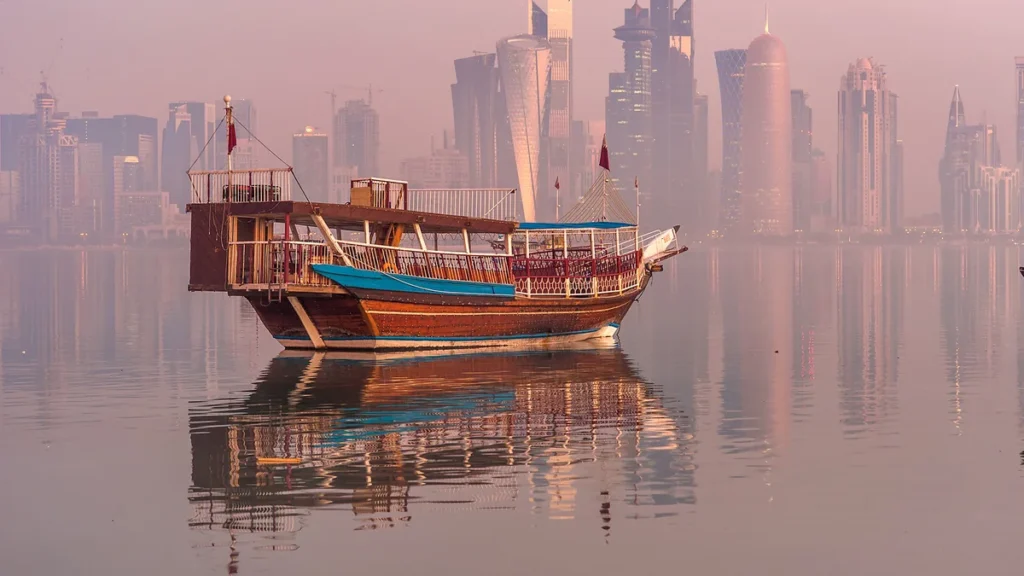
On 21 October 2026, Pakistan, Türkiye, Qatar and Indonesia signed the ‘Badr’ Memorandum of Understanding in Doha to cooperate in defence manufacturing, training and research. It is not a mutual-defence treaty. But it comes weeks after the full text of the Makkah Joint Defence Agreement of Pakistan, Saudi Arabia and Türkiye became public, and together they show a Pakistan-linked defence web forming in West Asia as the US steps back.
- Signed
- 21 Oct 2026, Doha
- Members
- Pakistan, Türkiye, Qatar, Indonesia
- Nature
- Non-binding MoU
- Related pact
- Makkah agreement, 16 Articles
Badr pact: what happened?
Think of this as a new club being built on the edge of India’s neighbourhood. No one is promising to go to war for anyone yet, but they are agreeing to build weapons, train and research together.
- 21 Oct 2026: defence ministers of Pakistan (Khawaja Asif) and Türkiye (Yaşar Güler), Qatar’s Deputy PM Sheikh Saud bin Abdulrahman and Indonesia’s Deputy Defence Minister Yusuf Jauhari signed the MoU in Doha (The Hindu).
- Aim, as per Qatar’s defence ministry: defence manufacturing, defence capabilities, technical training and R&D.
- The name recalls the Battle of Badr (624 CE), the first major battle of early Muslims.
- It comes amid tension in the Gulf and signs of another round of US–Iran fighting.
What is the Makkah defence pact it builds on?
- Signed on 7 August 2026 by Pakistan, Saudi Arabia and Türkiye; Türkiye sent it to its Parliament for ratification on 20 October, which made the full text public (Indian Express).
- Article 2: an armed attack on one means the others ‘shall immediately assist’ by ‘all means’ they can provide. It does not bind anyone to use force.
- Article 7: technology sharing, joint development and joint production of weapons.
- The three are ‘core parties’ for 10 years, with room for more members.
How do these pacts compare with real alliances?
| Pact | Mutual defence? | Use of force named? |
|---|---|---|
| NATO (1949) | Yes, Article 5 | Yes, ‘including the use of armed force’ |
| Makkah agreement (2026) | Yes, Article 2 | No; ‘all means’ left open |
| Badr MoU (2026) | No | No; industry, training, R&D only |
Which legal principles apply?
- Article 51 of the UN Charter recognises the right of individual and collective self-defence.
- An MoU is usually not a binding treaty under the Vienna Convention on the Law of Treaties (1969); it records intent.
- In India, treaty-making is an executive act under Article 73, with Parliament’s power under Article 253 to implement treaties.
- Defence exports and joint production by members will still depend on each country’s export-control laws.
Why should India watch this closely?
- Pakistan gains access to Turkish, Qatari and Saudi defence industry and money.
- Türkiye’s drones and naval ships could reach Pakistan faster through joint production.
- Indonesia and Qatar are India’s partners; India must keep those ties insulated.
- Gulf states once relied on the US umbrella; a shrinking umbrella opens space for such blocs.
What should India do next?
- Deepen defence ties with Saudi Arabia, the UAE, Oman and Qatar through training and industry links.
- Push the BrahMos and Akash export model with ASEAN partners such as Indonesia and the Philippines.
- Use IMEC and I2U2 to stay central to Gulf economics.
- Track Article 7-type technology flows to Pakistan diplomatically.
What can Prelims ask on West Asian defence pacts?
- Badr MoU: Pakistan, Türkiye, Qatar, Indonesia; Doha, 21 Oct 2026.
- Makkah Joint Defence Agreement: Pakistan, Saudi Arabia, Türkiye; 16 Articles.
- Saudi–Pakistan Strategic Mutual Defence Agreement: September 2025.
- UN Charter Article 51: self-defence.
- Doha is on the east coast of the Qatar peninsula, on the Persian Gulf.
How to write about West Asian security blocs in Mains
Practice question (10 marks, 150 words): New Pakistan-linked defence arrangements in West Asia have implications for India. Discuss. (GS-II)
- Intro: Badr MoU (21 Oct 2026) and the Makkah agreement.
- Nature: capacity building, not NATO-style defence.
- Implications: Pakistan’s access to defence industry; Gulf ties; ASEAN.
- India’s options: Gulf defence ties, IMEC, exports to ASEAN.
- Conclusion: watch, engage, do not overreact.
Image: A dhow in Doha Bay with the West Bay skyline, Qatar. Alex Sergeev (asergeev.com), Wikimedia Commons, CC BY-SA 3.0
How to use this in Mains
If asked: Analyse the changing security order in West Asia and its implications for India. (GS-II)
Quote: “The Mecca pact is a concrete step to building a new regional security architecture in West Asia as the US protective umbrella shrinks.”
Use it: Use it as your opening line, then add Badr and India’s Gulf partnerships.
If asked: Distinguish between defence cooperation agreements and mutual-defence alliances. (GS-II)
Quote: “This clause does not bind any party to the use of force in case of third-party aggression, and instead leaves the means of assistance open.”
Use it: Quote it to show why the Makkah pact is not NATO.
Exam angle
Prelims: members and places of the new pacts; UN Charter Article 51. · Mains GS-II: West Asian security architecture and India.
Practice MCQs
Original practice questions (not PYQs).
The ‘Badr’ Memorandum of Understanding signed in October 2026 includes which of the following countries?
1. Pakistan
2. Saudi Arabia
3. Qatar
4. Indonesia
Select the correct answer using the code given below.
Answer (b) & explanation
The Badr MoU was signed by Pakistan, Türkiye, Qatar and Indonesia. Saudi Arabia is in the separate Makkah agreement.
Consider the following statements about the Makkah Joint Defence Agreement:
1. It binds every member to use armed force if another member is attacked.
2. It provides for joint production of defence equipment.
Which of the statements given above is/are correct?
Answer (b) & explanation
Article 2 promises help ‘by all means’ but does not mandate force; Article 7 covers joint production.
The right of collective self-defence is recognised in which Article of the UN Charter?
Answer (c) & explanation
Article 51 recognises the inherent right of individual or collective self-defence.
Questions students ask about this
What is the Badr pact?
A non-binding MoU of Pakistan, Türkiye, Qatar and Indonesia on defence industry, training and R&D, signed in Doha on 21 October 2026.
Is it a military alliance?
No. It has no mutual-defence clause.
How is it linked to the Makkah pact?
Both are Pakistan-linked; the Makkah pact with Saudi Arabia and Türkiye has a loose mutual-assistance clause.
Why does it matter for India?
It widens Pakistan’s access to defence industry and finance in West Asia.
Keep studying
Go deeper
facts from cited sources only; faculty review pending