
Any voter can prosecute a candidate for a false affidavit: Supreme Court on Section 125A of the RP Act
Next story · 24 OctAI face checks in VB-G RAM G: upgraded NMMS app to stop fake attendance in the rural jobs scheme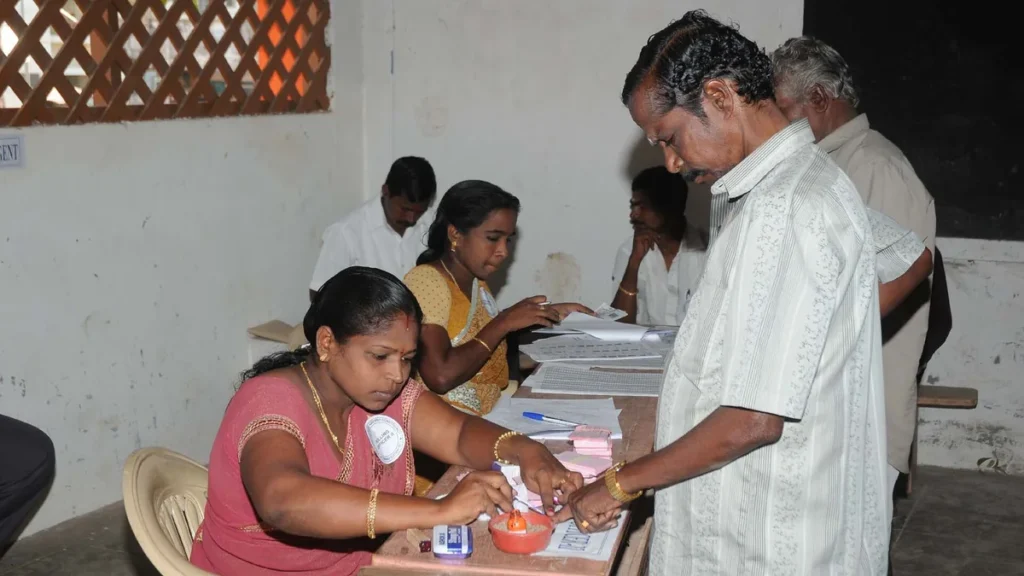
UPSC has already asked about this. Read the story with these questions in mind.
The Supreme Court has held that any private citizen, including an ordinary voter, can file a criminal complaint against a candidate who hides information or gives false details in the nomination affidavit. A Bench of Justices Dipankar Datta and Sheel Nagu ruled that the bar in Section 195 of the CrPC, which allows only a public servant to complain for certain offences, does not apply to Section 125A of the Representation of the People Act, 1951. The Hindu reported the ruling on 24 October 2026. For you, it links three exam favourites: the voter’s right to know, candidate affidavits and electoral reform.
- Law
- RP Act 1951, Section 125A
- Penalty
- Up to 6 months, fine, or both
- Offence
- Non-cognisable, bailable
- Bench
- Justices Datta and Nagu
Section 125A ruling: what happened?
A candidate signs an affidavit about assets, education and criminal cases. Until now, a lie in it was easy to ignore because few believed an ordinary voter could take it to court. That doubt is now gone.
- 16 Oct 2026: the Supreme Court decided Rajkumar Madki v. Shailendra Beldale, an appeal against a Karnataka High Court order that had quashed a voter’s private complaint.
- The Court held that a private complaint under Section 125A is maintainable; Section 195 CrPC lists specific offences, and Section 125A is not among them.
- Its reasoning: Section 125A came in from 24 August 2002; Section 195 was amended in April 2006, and Parliament still did not add Section 125A to it.
- The Court also said Election Commission guidelines and press notes are respected, but interpreting statutes is the courts’ job.
What is Section 125A?
- It punishes a candidate who, to get elected, fails to give the information required under Section 33A, gives false information, or conceals information in the nomination paper or affidavit.
- Punishment: imprisonment up to six months, or fine, or both, ‘notwithstanding anything contained in any other law’.
- The affidavit (Form 26) covers criminal antecedents, assets and liabilities, and educational qualifications.
- It grew out of Union of India v. ADR (2002) and PUCL v. Union of India (2003), where the Supreme Court tied disclosure to the voter’s right to know under Article 19(1)(a).
What changes after the ruling?
| Point | Before (Karnataka HC view) | Now (Supreme Court) |
|---|---|---|
| Who can complain | Only a public servant, like the Returning Officer | Any person, including a voter |
| Section 195 CrPC | Treated as a bar | Does not apply to Section 125A |
| Route | Through official channels | Direct private complaint before a magistrate |
| ECI press notes | Seen as guiding the route | Not binding on courts |
What is the constitutional and legal angle?
- Article 19(1)(a): the voter’s right to know about candidates is part of free expression (ADR, 2002).
- Article 324: the Election Commission superintends elections, but cannot rewrite what a statute means.
- Section 33A, RP Act: the duty to disclose; Section 125A: the penalty for breaking it.
- S. Krishnamoorthy v. Sivakumar (2015): hiding criminal antecedents can amount to ‘undue influence’, a ground to set aside an election.
What are the challenges?
- The penalty is light; a sentence below two years does not by itself disqualify a legislator under Section 8(3).
- Rivals may file motivated complaints to harass candidates in the middle of a campaign.
- Criminal trials are slow, so a verdict may come after the legislator’s term ends.
- Returning Officers do not verify the truth of an affidavit at the scrutiny stage.
What should be done?
- Raise the punishment, as the Law Commission’s 244th Report (2014) recommended, to a minimum of two years.
- Make a conviction under Section 125A a ground for disqualification.
- Cross-check affidavits with income tax, land and court records after nomination.
- Fast-track courts for election offences, so cases end within the term.
What can Prelims ask on Section 125A?
- Section 125A of the RP Act, 1951: false affidavit; up to six months, fine, or both.
- Section 33A: the right to information on candidates, inserted in 2002.
- Section 195 CrPC: cognisance only on a public servant’s complaint for listed offences.
- ADR (2002) and PUCL (2003): the voter’s right to know.
- The offence is non-cognisable and bailable.
How to write about candidate affidavits in Mains
Practice question (10 marks, 150 words): ‘The voter’s right to know is meaningless without a way to punish false disclosure.’ Discuss in light of the Supreme Court’s ruling on Section 125A. (GS-II)
- Intro: the October 2026 ruling in one line.
- Body 1: legal journey from ADR (2002) to Section 33A and 125A.
- Body 2: what the ruling changes: locus standi for voters.
- Body 3: limits: light penalty, slow trials, misuse.
- Way forward: 244th Report, disqualification, verification, fast-track courts.
Image: A polling officer marking indelible ink on a voter’s finger at Kanyakumari, Tamil Nadu, 13 April 2011. Election Commission of India, via Wikimedia Commons, GODL-India
How to use this in Mains
If asked: Discuss the measures needed to curb criminalisation of politics in India. (GS-II)
Quote: “No court would be barred from taking cognisance of an alleged offence under Section 125-A, even on the complaint lodged by a private person.”
Use it: Quote it to show that the voter now has a direct legal tool against false disclosure.
If asked: Examine the role of the voter’s right to information in a healthy democracy. (GS-II)
Quote: “Voters must be educated and well-informed about the contesting candidates, including the latter’s assets, educational qualifications and criminal antecedents.”
Use it: Use it as the opening line, then link to ADR (2002) and Section 33A.
Exam angle
Prelims: Sections 33A and 125A of the RP Act; Section 195 CrPC; ADR (2002), PUCL (2003). · Mains GS-II: electoral reforms, criminalisation of politics.
Practice MCQs
Original practice questions (not PYQs).
Consider the following statements about Section 125A of the Representation of the People Act, 1951:
1. It punishes a candidate for giving false information in the nomination affidavit.
2. The maximum punishment is imprisonment for two years.
3. The Supreme Court has held that a private person can file a complaint under it.
Which of the statements given above are correct?
Answer (b) & explanation
The maximum term is six months, or fine, or both. In October 2026 the Supreme Court held that private complaints are maintainable.
The voter’s right to know the criminal antecedents and assets of candidates was linked by the Supreme Court to which Article?
Answer (b) & explanation
In Union of India v. ADR (2002) and PUCL (2003), the Court linked the right to know to freedom of speech and expression under Article 19(1)(a).
Section 195 of the Code of Criminal Procedure, 1973 deals with:
Answer (b) & explanation
Section 195 bars courts from taking cognisance of listed offences except on a written complaint by the public servant concerned (or a court, for some offences).
Questions students ask about this
Can an ordinary voter now prosecute a candidate for a false affidavit?
Yes. The Supreme Court held that a private complaint under Section 125A is maintainable and Section 195 CrPC does not bar it.
What is the punishment under Section 125A?
Imprisonment up to six months, or a fine, or both.
What information does a candidate’s affidavit contain?
Criminal antecedents, assets and liabilities, and educational qualifications.
Which case first gave voters the right to know about candidates?
Union of India v. Association for Democratic Reforms (2002), followed by PUCL v. Union of India (2003).
Keep studying
Go deeper
Official source: Supreme Court of India: judgment dated 16 Oct 2026 (Section 125A, RP Act)
facts from cited sources only; faculty review pending