
Legislative Council polls in four States: why only six States have a second chamber
Next story · 24 OctJaishankar in Baku: India and Azerbaijan try to reset ties strained over Operation Sindoor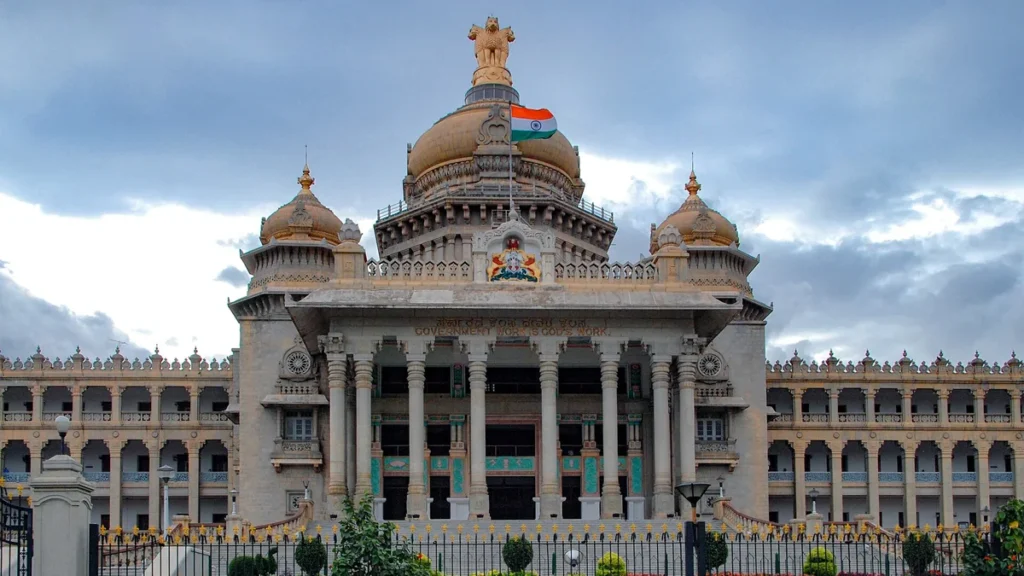
UPSC has already asked about this. Read the story with these questions in mind.
Polling for 28 seats in the Legislative Councils of Uttar Pradesh, Bihar, Maharashtra and Karnataka took place on 23 October 2026, with results due on Tuesday. Only six States, these four plus Telangana and Andhra Pradesh, have a second House. The Indian Express explained on 24 October why these bodies exist and why they are debated. It is a high-yield Prelims area: Articles 169 and 171, who votes, and how the Council differs from the Rajya Sabha.
- Polls
- 28 seats, 4 States
- States with Councils
- 6
- Create/abolish
- Article 169
- Size
- ≤ 1/3 of MLAs, ≥ 40
Council polls: what happened?
Not every adult can vote in these elections. In graduates’ and teachers’ seats, your degree or your job decides whether you are a voter.
- 23 Oct 2026: elections to 28 seats in the Councils of UP, Bihar, Maharashtra and Karnataka; results on Tuesday.
- Parties treat these polls as a barometer of support among educated groups and professionals.
- The polls are not fought on party symbols, but parties back candidates.
- In Tamil Nadu, the Council was abolished in 1986 and its revival has been debated since.
What is a Legislative Council?
- The upper House of a State legislature, also called the Vidhan Parishad.
- Origins: the Government of India Act, 1935 set up two-House legislatures in provinces; Bengal’s Council first met in 1937.
- Like the Rajya Sabha, it is a permanent House; one-third of members retire every two years.
- In the Constituent Assembly, some saw it as a check by wise heads; others as a burden on public money.
How does it compare with the Rajya Sabha?
| Point | Rajya Sabha | Legislative Council |
|---|---|---|
| Basis | Article 80 | Articles 169, 171 |
| Minimum age | 30 years | 30 years |
| Money Bill | Can delay 14 days | Can delay 14 days |
| Ordinary Bill | Joint sitting if deadlock | No joint sitting; Assembly prevails |
What does the Constitution say?
- Article 168: a State legislature has the Governor and one or two Houses.
- Article 169: Parliament may create or abolish a Council by law if the Assembly passes a resolution by a majority of total membership and two-thirds of members present and voting; this is not a constitutional amendment under Article 368.
- Article 171: size not more than one-third of MLAs and not less than 40; one-third by local bodies, one-twelfth by graduates, one-twelfth by teachers, one-third by MLAs, the rest nominated by the Governor.
- Elections use proportional representation by single transferable vote.
What are the challenges?
- Seen as a parking place for leaders who lose direct elections.
- It can only delay, not stop, Assembly bills, so its value is questioned.
- Extra cost to the State exchequer.
- Creation or abolition swings with the ruling party’s politics.
What should be done?
- A national policy on when States should have Councils, as a parliamentary committee has suggested.
- Fill nominated seats with real experts in literature, science, art and social service.
- Use Councils for detailed committee scrutiny of bills.
- Clean graduates’ and teachers’ electoral rolls regularly.
What can Prelims ask on Legislative Councils?
- Six States: UP, Bihar, Maharashtra, Karnataka, Telangana, Andhra Pradesh.
- Article 169: special majority in the Assembly, then a law by Parliament.
- Article 171: graduates and teachers each elect one-twelfth.
- Teachers must have taught for three years in institutions not lower than secondary school.
- Members serve six years; the House is never dissolved.
How to write about Legislative Councils in Mains
Practice question (10 marks, 150 words): ‘Legislative Councils are neither necessary nor sufficient for better law-making in the States.’ Critically examine. (GS-II)
- Intro: October 2026 polls; only six States have Councils.
- Body 1: arguments for: second look, expert voice, check on haste.
- Body 2: arguments against: limited powers, cost, political parking.
- Body 3: Article 169 politics: Tamil Nadu, Andhra Pradesh.
- Conclusion: national policy and stronger committee role.
Image: Vidhana Soudha, seat of the Karnataka Legislature, Bengaluru. Moheen Reeyad, Wikimedia Commons, CC BY-SA 4.0
How to use this in Mains
If asked: Discuss the utility of Legislative Councils in States. (GS-II)
Quote: “Elections to the Legislative Council are seen as a political barometer by parties, indicating support among educated groups and professionals.”
Use it: Use it to show the political, not just legislative, role of Councils.
If asked: Examine the debate in the Constituent Assembly on second chambers in States. (GS-II)
Quote: “Other members questioned the very need for a body with fewer powers, seeing it as a burden on public expenditure.”
Use it: Quote it for the ‘against’ side of your answer.
Exam angle
Prelims: Articles 168, 169, 171; composition; six States. · Mains GS-II: bicameralism, State legislatures.
Practice MCQs
Original practice questions (not PYQs).
Consider the following statements about Legislative Councils:
1. A law under Article 169 to create a Council is not deemed an amendment under Article 368.
2. One-twelfth of members are elected by graduates.
3. A Council can be dissolved by the Governor.
Which of the statements given above are correct?
Answer (a) & explanation
A Council is a permanent House and cannot be dissolved; one-third of members retire every two years.
Which of the following States has a Legislative Council (October 2026)?
Answer (c) & explanation
The six States are UP, Bihar, Maharashtra, Karnataka, Telangana and Andhra Pradesh.
The total strength of a State Legislative Council cannot be less than:
Answer (b) & explanation
Article 171 says not less than 40 and not more than one-third of the Assembly’s strength.
Questions students ask about this
How many States have a Legislative Council?
Six: UP, Bihar, Maharashtra, Karnataka, Telangana and Andhra Pradesh.
Who can create or abolish a Council?
Parliament, by law, after the State Assembly passes a resolution by special majority (Article 169).
Who votes in graduates’ constituencies?
People living in the State who have been graduates for at least three years.
Can a Council stop a Money Bill?
No. It can delay it by only 14 days.
Keep studying
Go deeper
facts from cited sources only; faculty review pending